

Building a Strong Defense: The Role and Impact of Security Operations Centers (SOCs)
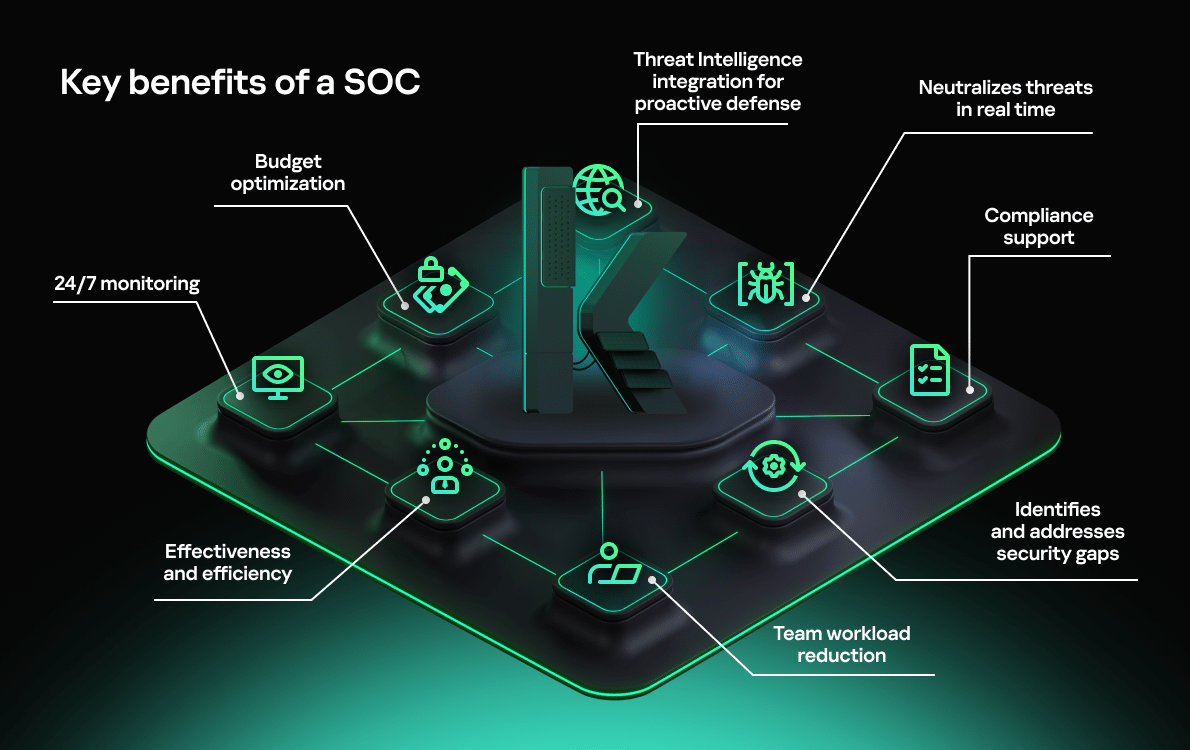
In today’s increasingly digital landscape, the significance of cybersecurity cannot be overstated. As businesses navigate a world fraught with cyber threats, establishing a Security Operations Center (SOC) has emerged as a strategic priority. A SOC serves not just as a fortress against cyber attacks but also as a command center for threat detection and response. Here, we’ll unpack the primary drivers for establishing a SOC, explore its essential functions, and highlight the critical importance of human expertise in cybersecurity management.
Why Establish a Security Operations Center?
The impetus to set up a SOC stems from several pressing needs within organizations. A recent global study by Kaspersky involving senior IT security specialists from over 500 companies provides valuable insights. A striking 50% of participants highlighted the primary aim of strengthening their cybersecurity posture. As cyber threats grow in sophistication, a robust SOC becomes vital for safeguarding sensitive information and maintaining operational integrity.
Key Motivations for SOC Establishment
-
Combatting Sophisticated Threats: With 45% of surveyed organizations indicating the need to counter increasingly dangerous cyber threats, a well-functioning SOC becomes essential for real-time threat assessment and mitigation.
-
Enhancing Detection and Response: An emphasis on quicker response times and improved detection methods drives 41% of companies to establish SOCs. This need is further fueled by the growing complexity of IT infrastructures, including the expansion of endpoints and software applications.
-
Regulatory Compliance: With 39% of organizations citing the need to adhere to regulatory requirements, a SOC becomes crucial in maintaining compliance while safeguarding against penalties tied to data breaches.
- Gaining a Competitive Edge: Notably, 33% of organizations believe that possessing a robust SOC can provide them with an advantage over their competitors in a crowded market.
These motivations suggest that larger enterprises are particularly attuned to the need for comprehensive security measures, reflecting their heightened operational and regulatory pressures.
Continuous Monitoring: The Heart of SOC Functionality
As organizations look to establish SOCs, continuous monitoring stands out as the leading requirement—cited by 54% of participants. This approach ensures that security teams can detect anomalies in real time, thus preventing escalating incidents and bolstering overall cyber resilience.
The Shift Toward Outsourced vs. Internal SOCs
Interestingly, companies planning to fully outsource their SOC operations show a deeper interest in "lessons learned" methodologies, focusing on knowledge acquisition and adaptive strategies. In contrast, those opting to develop internal SOCs are more inclined toward stringent access management, aiming for tighter control over their security operations.
The Essential Role of Human Expertise in SOC Technology Choices
While technology plays a crucial role in the effectiveness of a SOC, the human element remains irreplaceable. Organizations often choose advanced technologies like Threat Intelligence Platforms (48%), Endpoint Detection and Response (42%), and Security Information and Event Management systems (40%). These tools help automate data collection and operational tasks, yet they fundamentally rely on skilled security professionals for context interpretation and decision-making.
Tech Adoption Trends
Larger enterprises typically adopt more sophisticated technologies—averaging 5.5 technologies per SOC—while smaller entities integrate around 3.8. This trend reflects varying operational needs and resource availability, underlining the importance of tailoring technology choices according to company size and objectives.
Roman Nazarov, Head of SOC Consulting at Kaspersky, emphasizes that successful SOC development involves more than just deploying technology. “Companies must prioritize the careful planning of processes, clear goal-setting, and effective resource distribution,” he notes. This structured approach allows human analysts to focus on critical tasks, transforming the SOC into a proactive element of the cybersecurity strategy.
Kaspersky’s Recommendations for SOC Implementation
To navigate the complexities of establishing an effective SOC, Kaspersky offers several recommendations:
-
Leverage Consulting Expertise: Engaging with Kaspersky SOC Consulting can provide invaluable insights during the initial setup or enhancement of existing security operations, helping companies streamline processes for greater efficacy.
-
Utilize Advanced SIEM Solutions: Investing in Kaspersky SIEM can significantly boost security performance. This solution aggregates and analyzes log data across IT infrastructures, offering contextual enrichment and actionable threat intelligence insights.
-
Comprehensive Threat Protection: Organizations can protect themselves from a wide variety of threats through Kaspersky’s product lines, designed to deliver real-time protection, threat visibility, and effective response capabilities.
- Empower Cybersecurity Teams with Threat Intelligence: Equipping teams with detailed threat intelligence enables timely identification and understanding of cyber risks, enhancing the organization’s overall cybersecurity posture.
Explore Further
For organizations looking to enhance their operational security, an in-depth engagement with Kaspersky’s range of solutions and services can provide the necessary tools and methodologies to build a robust and efficient SOC. To discover more, visit the Kaspersky SOC offerings here.
In the evolving landscape of cybersecurity, a well-planned and executed SOC can be the linchpin that ensures safety and resilience against ever-evolving threats.


