The internet is evolving rapidly, and two of the most talked-about technologies shaping its future are Web3 and the Metaverse. These innovations aim to create a more immersive, decentralized, and user-controlled digital environment where individuals can interact, create, trade, and collaborate online.
Built on blockchain technology and powered by cryptocurrencies, Web3 and the metaverse represent the next stage of internet evolution beyond traditional websites and centralized platforms.
In this article, we explore what Web3 and the metaverse are, how they work, and why they could transform the digital world.
Understanding Web3
Web3 refers to the next generation of the internet built on decentralized technologies, particularly blockchain networks.
Unlike traditional web platforms where companies control user data, Web3 aims to give users greater ownership of their digital assets and online identity.
Blockchain platforms such as Ethereum enable developers to create decentralized applications (dApps) that operate without centralized control.
Key characteristics of Web3 include:
- Decentralization
- User ownership of digital assets
- Blockchain-based applications
- Token-based economies
These features aim to create a more open and transparent internet ecosystem.
What Is the Metaverse?
The metaverse refers to a virtual digital environment where people interact with each other through avatars in immersive online spaces.
Instead of browsing traditional websites, users enter virtual worlds where they can:
- Attend events
- Play games
- Work remotely
- Shop in virtual stores
- Socialize with others
Technology companies like Meta are investing heavily in building immersive digital environments.
The metaverse combines several technologies, including:
- Virtual reality (VR)
- Augmented reality (AR)
- Blockchain
- Digital assets
Together, these technologies create interactive virtual worlds.
How Blockchain Powers Web3 and the Metaverse
Blockchain technology plays a critical role in enabling decentralized digital ecosystems.
Digital Ownership
Blockchain allows users to own digital assets such as virtual land, collectibles, and avatars.
These assets are often represented as non-fungible tokens (NFTs).
NFTs provide proof of ownership and authenticity for digital items.
Decentralized Applications (dApps)
Web3 applications run on decentralized networks instead of centralized servers.
This reduces reliance on large tech companies and increases transparency.
Token-Based Economies
Cryptocurrencies allow users to buy, sell, and trade digital goods in the metaverse.
For example, cryptocurrencies such as Bitcoin are used as digital currencies in blockchain ecosystems.
Tokens may also represent governance rights in decentralized platforms.
Real-World Applications of Web3 and the Metaverse
Although still developing, Web3 and the metaverse are already being used in various industries.
Gaming
Blockchain-based games allow players to own in-game assets and trade them on open marketplaces.
Players can earn digital tokens while participating in virtual worlds.
Virtual Real Estate
Users can buy and sell virtual land in metaverse platforms.
These digital properties may host virtual businesses, art galleries, or events.
Digital Fashion and Art
Artists and designers are creating digital clothing, collectibles, and artwork that exist entirely in virtual environments.
NFT marketplaces allow creators to sell these digital assets globally.
Remote Work and Collaboration
Virtual offices and meeting spaces allow teams to collaborate in immersive environments.
Employees can interact through avatars and virtual workspaces.
Benefits of Web3 and the Metaverse
These technologies offer several potential advantages.
Greater User Control
Users maintain ownership of their digital assets and online identities.
Decentralized Systems
Platforms are not controlled by a single organization, reducing centralized power.
New Economic Opportunities
Creators and entrepreneurs can earn income through digital assets and virtual businesses.
Immersive Online Experiences
The metaverse provides new ways for people to interact, work, and socialize online.
Challenges and Risks
Despite their promise, Web3 and the metaverse face several challenges.
Technical Complexity
Building and maintaining decentralized systems requires advanced technical knowledge.
Security Risks
Blockchain platforms can still be vulnerable to hacking and scams.
Regulatory Uncertainty
Governments are still determining how to regulate digital assets and decentralized platforms.
Adoption Barriers
Virtual reality hardware and blockchain technologies may take time to become widely accessible.
The Future of Web3 and the Metaverse
Many experts believe Web3 and the metaverse could transform the digital economy.
Future developments may include:
Interconnected Virtual Worlds
Different metaverse platforms allowing users to move assets between virtual environments.
AI-Powered Virtual Experiences
Artificial intelligence enhancing virtual environments and interactions.
Decentralized Identity Systems
Users controlling digital identities without relying on centralized platforms.
Digital Economies
Virtual marketplaces where users buy and sell digital goods globally.
Final Thoughts
Web3 and the metaverse represent a major shift in how people interact with the internet. By combining blockchain technology, digital ownership, and immersive virtual environments, these innovations have the potential to create entirely new forms of digital interaction and economic activity.
Although the technology is still evolving, Web3 and the metaverse may become foundational components of the future internet.
Understanding these trends today can help businesses, developers, and users prepare for the next generation of digital experiences.
SEO FAQs
Q: What is Web3?
Web3 is a decentralized version of the internet built on blockchain technology.
Q: What is the metaverse?
The metaverse is a virtual digital world where people interact through avatars in immersive environments.
Q: How are cryptocurrencies used in the metaverse?
Cryptocurrencies are used to buy digital assets, trade items, and participate in virtual economies.
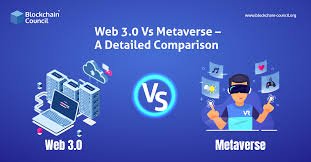
Q: Are Web3 and the metaverse the same thing?
No. Web3 focuses on decentralized internet infrastructure, while the metaverse focuses on immersive virtual environments.