

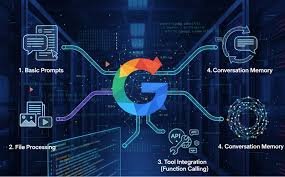
Artificial Intelligence is no longer limited to large tech companies. Today, developers and businesses can easily build AI-powered applications using modern tools, frameworks, and APIs.
From chatbots and recommendation systems to automation tools and smart applications, AI development and APIs are making it faster and easier to bring intelligent solutions to life.
In this guide, we’ll explore how AI development works, the role of APIs, tools you need, and how to build scalable AI applications.
What Is AI Development?
AI development involves creating systems that can perform tasks requiring human intelligence, such as:
- Understanding language
- Recognizing images
- Making predictions
- Automating decisions
Organizations like OpenAI and Google provide powerful tools and platforms for AI development.
What Are AI APIs?
AI APIs allow developers to access pre-built AI models without building them from scratch.
Benefits of AI APIs
- Faster development
- Reduced complexity
- Lower costs
- Easy integration
Types of AI APIs
Natural Language Processing (NLP)
- Chatbots
- Text generation
- Sentiment analysis
Computer Vision
- Image recognition
- Object detection
Speech APIs
- Voice recognition
- Text-to-speech
Recommendation Systems
- Personalized content
- Product suggestions
Popular AI Development Tools
TensorFlow
Best for: Building custom ML models
PyTorch
Best for: Research and flexibility
OpenAI API
Best for: Language and generative AI
Google AI Services
Best for: Cloud-based AI solutions
How to Build an AI Application
Step 1: Define the Problem
Identify what you want your AI to solve.
Step 2: Choose the Right Tools
Select frameworks or APIs.
Step 3: Collect and Prepare Data
Clean and organize your dataset.
Step 4: Build or Integrate AI Models
Use APIs or train your own model.
Step 5: Test and Optimize
Ensure accuracy and performance.
Step 6: Deploy and Scale
Launch your application and monitor usage.
Example Use Cases
Chatbots
Automate customer support.
Recommendation Engines
Suggest products or content.
Fraud Detection
Identify suspicious activities.
Content Generation
Create text, images, and videos.
Benefits of AI Development
Faster Innovation
Build intelligent applications quickly.
Cost Efficiency
Reduce manual processes.
Scalability
Handle large-scale operations.
Competitive Advantage
Stand out in the market.
Challenges in AI Development
Data Quality Issues
Poor data affects performance.
Complexity
Building models can be difficult.
High Costs
Training models requires resources.
Ethical Concerns
Bias and fairness issues.
Best Practices
Start with APIs
Use pre-built models for faster results.
Focus on Data Quality
Clean and relevant data is essential.
Monitor Performance
Continuously improve models.
Ensure Security
Protect data and systems.
Future Trends in AI Development
Low-Code AI
Simplifying AI development.
AI Agents
Autonomous systems performing tasks.
Multi-Modal AI
Combining text, image, and audio.
Edge AI
Running AI on local devices.
Final Thoughts
AI development and APIs are democratizing access to artificial intelligence, enabling developers and businesses to build powerful applications faster than ever before.
Whether you’re creating a chatbot, recommendation system, or automation tool, the key is to start simple, use the right tools, and continuously improve your solutions.
As AI technology continues to evolve, those who embrace it will gain a significant advantage in the digital economy.
SEO FAQs
Q: What is an AI API?
An interface that allows developers to use AI models.
Q: Do I need coding skills for AI development?
Basic programming knowledge is helpful.
Q: What tools are used in AI development?
TensorFlow, PyTorch, and AI APIs.
Q: Is AI development expensive?
It can be, but APIs reduce costs.


