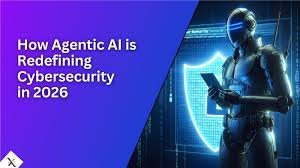
As cyber threats become more advanced and frequent, traditional cybersecurity systems are struggling to keep up with modern attack methods. Hackers now use automation, social engineering, ransomware, and even Artificial Intelligence (AI) to launch sophisticated cyberattacks against businesses, governments, and individuals.
To combat these evolving threats, organizations are increasingly turning to AI-powered cybersecurity solutions.
In 2026, Artificial Intelligence is transforming cybersecurity by helping organizations:
- Detect threats faster
- Automate incident response
- Prevent fraud
- Analyze massive amounts of security data
- Improve network protection
AI has become one of the most important technologies shaping the future of digital security.
This article explores how AI is used in cybersecurity, its benefits and risks, major applications, challenges, and future trends driving intelligent security systems.
🌍 What is AI in Cybersecurity?
AI in cybersecurity refers to the use of Artificial Intelligence technologies to identify, analyze, prevent, and respond to cyber threats automatically.
AI systems can:
- Learn from data
- Detect abnormal behavior
- Identify attack patterns
- Predict threats
- Automate security operations
Unlike traditional rule-based systems, AI continuously improves through machine learning and data analysis.
🚀 Why AI is Important in Cybersecurity
Modern organizations generate enormous amounts of digital data and network activity every day.
Human security teams alone often cannot:
- Analyze threats fast enough
- Detect advanced attacks quickly
- Monitor systems 24/7
AI helps cybersecurity teams improve speed, efficiency, and threat visibility.
🔥 Major Applications of AI in Cybersecurity
🛡️ 1. Threat Detection
AI systems analyze network activity in real time to identify suspicious behavior.
AI can detect:
- Malware infections
- Unauthorized access attempts
- Data breaches
- Insider threats
Machine learning models help recognize unusual patterns faster than traditional tools.
🔐 2. Fraud Prevention
Banks, fintech companies, and e-commerce platforms use AI to detect fraudulent activities.
AI analyzes:
- User behavior
- Transaction patterns
- Device information
- Login activity
This helps reduce financial fraud and identity theft.
📧 3. Phishing Detection
Phishing attacks remain one of the most common cybersecurity threats.
AI-powered systems can:
- Analyze suspicious emails
- Detect fake websites
- Identify malicious links
AI helps organizations block phishing attempts before users interact with them.
🤖 4. Automated Incident Response
AI can automatically respond to threats by:
- Isolating infected devices
- Blocking suspicious accounts
- Triggering security alerts
- Stopping malicious traffic
Automation reduces response times significantly.
☁️ 5. Cloud Security Monitoring
As businesses increasingly rely on cloud infrastructure, AI helps secure cloud environments by:
- Monitoring user activity
- Detecting anomalies
- Managing access controls
- Identifying misconfigurations
Cloud providers like:
- Amazon Web Services
- Microsoft Azure
- Google Cloud
integrate AI-driven security tools into their platforms.
🧠 How Machine Learning Improves Cybersecurity
Machine Learning (ML), a branch of AI, helps cybersecurity systems learn from past attacks and improve over time.
ML systems can:
- Detect unknown threats
- Analyze attack behaviors
- Predict future risks
- Improve malware detection accuracy
This makes cybersecurity defenses more adaptive and intelligent.
🔓 Common Cyber Threats AI Helps Combat
🦠 Malware & Ransomware
AI can identify malicious software behavior before damage spreads.
🎣 Phishing & Social Engineering
AI detects deceptive communication patterns and fake websites.
👤 Identity Theft
AI monitors suspicious login behavior and account activity.
🌐 DDoS Attacks
AI helps identify and mitigate large-scale traffic attacks.
🛡️ Insider Threats
Behavioral analytics detect abnormal employee activity.
⚠️ Risks of AI in Cybersecurity
While AI improves security, cybercriminals are also using AI to create more advanced attacks.
🤖 AI-Powered Cyberattacks
Hackers may use AI for:
- Automated phishing campaigns
- Deepfake scams
- Password cracking
- Malware generation
This creates an ongoing AI security arms race.
📉 False Positives
AI systems may sometimes incorrectly identify harmless activity as threats.
This can overwhelm security teams if not properly managed.
🔐 Privacy Concerns
AI cybersecurity systems often collect large amounts of user data for analysis.
Organizations must ensure responsible and compliant data handling.
🏢 Industries Using AI Cybersecurity
🏦 Financial Services
Banks use AI to prevent fraud and secure transactions.
🏥 Healthcare
Hospitals protect sensitive patient records using AI-powered security systems.
🛒 E-Commerce
Online businesses monitor payment fraud and account security.
🏭 Enterprise Businesses
Companies automate security operations and threat detection.
🤖 Popular AI Cybersecurity Tools
Many cybersecurity platforms now integrate AI technologies.
Examples include:
- CrowdStrike
- Palo Alto Networks
- Darktrace
These companies use AI for:
- Threat intelligence
- Endpoint security
- Network monitoring
- Incident response
🌍 AI & Cybersecurity in Emerging Markets
Countries like Nigeria are experiencing increased cybersecurity awareness as:
- Digital banking grows
- Fintech expands
- E-commerce adoption rises
- Remote work becomes more common
AI-powered cybersecurity tools are helping businesses protect digital infrastructure and customer data.
🔮 Future Trends in AI Cybersecurity
🔐 Zero Trust Security
AI will strengthen Zero Trust security models by continuously verifying users and devices.
🤖 Autonomous Security Systems
Future AI systems may respond to threats automatically with minimal human intervention.
📱 Mobile Threat Protection
AI will increasingly protect smartphones and mobile applications.
🌐 AI-Powered Threat Intelligence
AI systems will analyze global attack patterns in real time.
🧠 Behavioral Biometrics
AI may identify users based on typing patterns, voice, or device behavior.
🛠️ Best Practices for Using AI in Cybersecurity
✅ Combine AI with Human Expertise
AI should support—not replace—cybersecurity professionals.
✅ Regularly Update AI Systems
AI models must continuously learn from new threats.
✅ Protect Sensitive Data
Organizations should follow strong privacy and compliance standards.
✅ Monitor AI Performance
Regular evaluation helps reduce false positives and system errors.
✅ Train Employees
Human awareness remains essential for preventing cyberattacks.
🏁 Final Thoughts
Artificial Intelligence is revolutionizing cybersecurity by improving threat detection, automating responses, and helping organizations defend against increasingly sophisticated cyber threats.
As cybercriminals continue evolving their tactics, AI-powered security systems will become even more important for businesses, governments, and individuals worldwide.
However, AI cybersecurity is not without challenges. Ethical concerns, privacy risks, and AI-powered attacks highlight the need for responsible implementation and continuous innovation.
In 2026, AI is no longer just a tool for cybersecurity—it is becoming the foundation of modern digital defense.