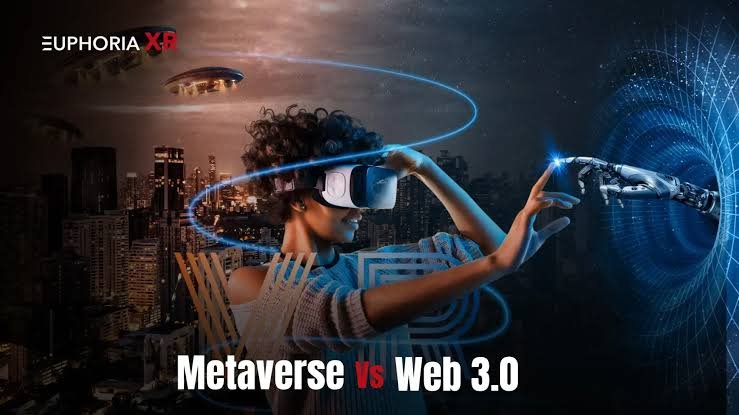
The internet has undergone remarkable transformations since its creation. The first generation, often called Web1, focused on reading information through static websites. Web2 introduced social media, cloud computing, online collaboration, streaming services, and user-generated content, fundamentally changing how people communicate, shop, and work.
Today, a new evolution is taking shape through Web3 and the Metaverse. While these terms are sometimes used interchangeably, they represent different yet closely connected technologies that aim to create a more immersive, decentralized, and user-controlled digital future.
Web3 focuses on decentralization, blockchain technology, digital ownership, and giving users greater control over their data and digital assets. The Metaverse expands this vision by creating interconnected virtual environments where people can work, learn, socialize, shop, attend events, and participate in digital economies.
Although still evolving, these technologies are already influencing industries such as gaming, finance, education, healthcare, entertainment, real estate, retail, and enterprise collaboration.
This comprehensive guide explores what the Metaverse and Web3 are, how they work, their technologies, practical applications, challenges, opportunities, and what the future may hold.
What Is Web3?
Web3 is often described as the next generation of the internet built on decentralized technologies.
Unlike traditional web platforms where companies control user data and digital services, Web3 seeks to give users ownership of their digital identities, assets, and online interactions.
Core principles include:
- Decentralization
- User ownership
- Transparency
- Blockchain verification
- Smart contracts
- Permissionless access
- Community governance
Instead of relying solely on centralized platforms, Web3 applications operate on distributed blockchain networks.
What Is the Metaverse?
The Metaverse refers to persistent digital environments where users interact with each other and digital content using avatars.
These virtual spaces may include:
- Social experiences
- Gaming
- Virtual offices
- Online education
- Digital shopping
- Entertainment events
- Business collaboration
The Metaverse combines technologies such as virtual reality (VR), augmented reality (AR), artificial intelligence (AI), blockchain, cloud computing, and high-speed internet.
How Web3 and the Metaverse Work Together
Although different concepts, Web3 and the Metaverse complement each other.
Web3 provides:
- Digital ownership
- Secure transactions
- Decentralized identity
- Cryptocurrency payments
- Smart contracts
The Metaverse provides:
- Immersive virtual environments
- Interactive digital experiences
- Social engagement
- Virtual commerce
- Collaborative workspaces
Together, they create digital ecosystems where users can own, trade, and use digital assets across multiple platforms.
The Evolution of the Internet
Web1
Characteristics:
- Static websites
- Read-only content
- Limited interaction
- Centralized publishing
Web2
Characteristics:
- Social media
- Mobile applications
- Cloud computing
- User-generated content
- Platform-based business models
Web3
Characteristics:
- Blockchain
- Decentralized applications
- Digital ownership
- Cryptocurrency
- Community governance
- Token economies
Each generation has expanded the internet’s capabilities while introducing new opportunities and challenges.
Blockchain: The Foundation of Web3
Blockchain technology enables decentralized record-keeping.
Its key features include:
- Transparency
- Security
- Immutability
- Distributed verification
- Reduced reliance on central authorities
Blockchains support cryptocurrencies, NFTs, decentralized applications, and smart contracts.
Smart Contracts
Smart contracts are self-executing digital agreements stored on blockchain networks.
They automatically perform predefined actions when specified conditions are met.
Common uses include:
- Digital payments
- NFT transactions
- Decentralized finance (DeFi)
- Gaming rewards
- Digital identity verification
- Supply chain automation
By reducing the need for intermediaries, smart contracts can improve efficiency and transparency.
Digital Ownership
One of Web3’s defining features is verifiable digital ownership.
Users can own:
- Cryptocurrencies
- NFTs
- Digital collectibles
- Virtual land
- Gaming assets
- Digital identities
Ownership is recorded on the blockchain rather than controlled solely by a centralized platform.
Decentralized Applications (dApps)
Web3 applications operate on blockchain infrastructure instead of traditional centralized servers.
Examples include:
- Decentralized exchanges
- Lending platforms
- Blockchain games
- NFT marketplaces
- Social platforms
- Governance systems
dApps aim to increase transparency while reducing dependence on single organizations.
Cryptocurrency in the Web3 Economy
Cryptocurrencies enable value exchange within decentralized ecosystems.
They support:
- Payments
- Governance
- Staking
- Rewards
- Asset transfers
- Cross-border transactions
Digital currencies play an important role in powering Web3 services and virtual economies.
NFTs and Digital Assets
Non-Fungible Tokens (NFTs) represent unique digital assets recorded on blockchains.
Applications include:
- Digital artwork
- Music
- Collectibles
- Event tickets
- Gaming items
- Membership access
- Intellectual property
NFT technology enables creators to establish verifiable ownership and, in some cases, automate royalty payments.
Virtual Real Estate
The Metaverse has introduced virtual land ownership.
Virtual land may be used for:
- Digital storefronts
- Advertising
- Entertainment venues
- Educational experiences
- Community spaces
- Virtual offices
As with physical real estate, the value of virtual land depends on demand, utility, and location within a platform’s ecosystem.
Gaming and the Metaverse
Gaming has become one of the strongest drivers of Metaverse adoption.
Modern blockchain games may include:
- Player-owned assets
- Digital economies
- NFT items
- Cross-platform identities
- Community governance
- Virtual marketplaces
Players increasingly seek experiences where they can own and trade in-game items.
The Creator Economy
Web3 provides creators with new ways to monetize their work.
Creators can:
- Sell digital collectibles
- Offer token-based memberships
- Receive automated royalties
- Build decentralized communities
- Launch digital products
This reduces dependence on traditional content distribution platforms.
Digital Identity
Traditional online identities are often fragmented across multiple services.
Web3 aims to provide portable digital identities that users control themselves.
Potential benefits include:
- Greater privacy
- Reduced password management
- Improved authentication
- User-controlled credentials
Decentralized identity systems continue to evolve.
Decentralized Autonomous Organizations (DAOs)
DAOs are blockchain-based communities that make decisions collectively.
Members may vote on:
- Governance proposals
- Treasury management
- Product development
- Community initiatives
Voting is typically based on governance tokens or predefined participation rules.
AI and the Metaverse
Artificial intelligence enhances virtual environments by powering:
- Intelligent virtual assistants
- Personalized experiences
- Non-player characters (NPCs)
- Language translation
- Automated moderation
- Content generation
The combination of AI and immersive technologies is expected to make virtual worlds more dynamic and interactive.
Enterprise Applications
Businesses are exploring Web3 and Metaverse technologies for:
- Virtual meetings
- Employee training
- Digital collaboration
- Product demonstrations
- Customer engagement
- Industrial simulations
These applications can improve communication and reduce costs in some scenarios.
Education in the Metaverse
Educational institutions are experimenting with immersive learning.
Examples include:
- Virtual classrooms
- Interactive science laboratories
- Historical simulations
- Medical training
- Engineering visualization
Immersive experiences may improve engagement and practical understanding.
Healthcare Applications
Healthcare organizations are exploring:
- Virtual therapy sessions
- Medical simulations
- Surgical training
- Patient education
- Digital collaboration
While adoption is still emerging, immersive technologies offer new possibilities for healthcare training and communication.
Retail and E-Commerce
Brands increasingly experiment with virtual shopping experiences.
Customers may:
- Explore digital stores
- Try products virtually
- Purchase digital goods
- Attend product launches
- Participate in interactive brand experiences
Retailers continue evaluating how immersive commerce fits into long-term customer engagement strategies.
Benefits of Web3 and the Metaverse
Greater User Ownership
Individuals gain more control over digital assets and online identities.
Improved Transparency
Blockchain records help verify ownership and transactions.
New Economic Opportunities
Creators, developers, and businesses can build new digital business models.
Global Accessibility
Many decentralized platforms are accessible worldwide with an internet connection.
Innovation
Open development encourages experimentation and rapid technological advancement.
Challenges Facing Web3 and the Metaverse
Scalability
Some blockchain networks continue improving transaction capacity and speed.
User Experience
Wallet management, blockchain transactions, and onboarding can still be confusing for newcomers.
Security
Users remain responsible for protecting private keys and avoiding scams.
Regulation
Governments continue developing legal frameworks for digital assets and decentralized technologies.
Privacy
Balancing transparency with user privacy remains an ongoing challenge.
Hardware Requirements
Some immersive experiences require specialized devices such as VR headsets, which may limit accessibility.
Emerging Trends
Several developments are expected to shape the future.
AI-Powered Virtual Worlds
Artificial intelligence will create more realistic environments, intelligent avatars, and personalized experiences.
Cross-Platform Interoperability
Users may increasingly move digital identities and assets between compatible virtual platforms.
Better Blockchain Scalability
Layer 2 networks and new blockchain architectures will improve performance and reduce transaction costs.
Expanded Enterprise Adoption
Businesses will continue exploring immersive collaboration, digital twins, and blockchain-powered workflows.
Mainstream Creator Tools
Simplified development platforms will allow more creators to build virtual experiences without advanced programming skills.
Best Practices for New Users
If you’re exploring Web3 or the Metaverse:
Learn the Basics
Understand blockchain, wallets, smart contracts, and digital ownership before participating.
Protect Your Wallet
Store recovery phrases securely offline and never share them with anyone.
Verify Projects
Research platforms carefully before connecting your wallet or purchasing digital assets.
Be Cautious of Scams
Avoid unrealistic investment promises, fake websites, and unsolicited messages.
Start Small
Experiment with small transactions and reputable platforms while gaining experience.
Common Misconceptions
“The Metaverse Is Just Gaming”
Gaming is a major component, but the Metaverse also includes education, business, healthcare, retail, entertainment, and collaboration.
“Web3 Replaces the Entire Internet”
Web3 is more likely to complement existing internet technologies rather than completely replace them.
“Blockchain Guarantees Complete Privacy”
Blockchain provides transparency and security, but privacy depends on implementation and user practices.
“Everyone Needs Cryptocurrency to Use the Internet”
Many future Web3 services may simplify blockchain interactions so users don’t need extensive technical knowledge.
The Future of the Metaverse and Web3
The next decade is expected to bring significant improvements in infrastructure, accessibility, and adoption.
Likely developments include:
- More immersive virtual experiences
- Faster blockchain networks
- Improved digital identity systems
- Greater enterprise adoption
- AI-powered virtual assistants
- Broader interoperability between platforms
- Enhanced security and user protections
While widespread adoption may take time, many of the underlying technologies are already influencing how digital services are designed.
Conclusion
The Metaverse and Web3 represent two of the most ambitious technological movements shaping the future of the internet. By combining blockchain technology, decentralized ownership, cryptocurrencies, smart contracts, immersive virtual environments, and artificial intelligence, these innovations aim to create digital ecosystems where users have greater control, transparency, and participation.
Although challenges such as scalability, regulation, security, and user experience remain, progress continues across industries including gaming, finance, education, healthcare, enterprise collaboration, and digital commerce. As technology matures and accessibility improves, Web3 and the Metaverse may become increasingly integrated into everyday digital life.
Whether you’re an investor, developer, entrepreneur, creator, or curious learner, understanding these technologies today can help you prepare for the next evolution of the internet and the opportunities it may create.
Frequently Asked Questions (FAQs)
1. What is the difference between Web3 and the Metaverse?
Web3 focuses on decentralized technologies such as blockchain, digital ownership, and smart contracts, while the Metaverse refers to immersive virtual environments where people interact, work, play, and socialize. The two technologies often complement each other.
2. Do I need cryptocurrency to use Web3?
Not always. Some Web3 applications require digital assets for transactions or governance, but many platforms are working to simplify access and reduce technical barriers for new users.
3. What are decentralized applications (dApps)?
dApps are applications that run on blockchain networks rather than centralized servers. They often provide greater transparency, user ownership, and resistance to single points of failure.
4. Is the Metaverse only for gaming?
No. While gaming is a major use case, the Metaverse also supports education, remote work, healthcare, retail, entertainment, training, virtual events, and business collaboration.
5. Is Web3 safe?
Web3 can provide strong security through blockchain technology, but users must protect their wallets, private keys, and recovery phrases while remaining alert to scams and fraudulent projects.