

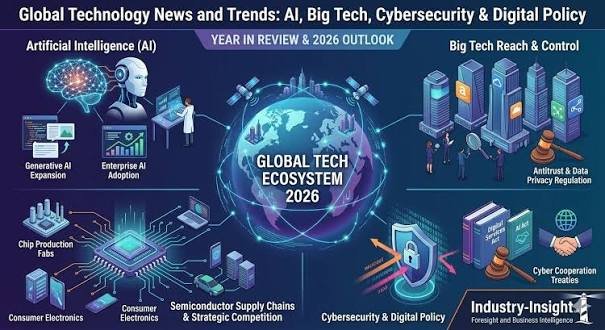
The technology industry continues to influence almost every part of the global economy. Artificial intelligence, cloud computing, cybersecurity, semiconductors, robotics, fintech, software, telecommunications, and consumer electronics are developing rapidly, creating new opportunities while also introducing new challenges for businesses and consumers.
Technology news is no longer limited to product launches and software updates. Major developments can affect employment, investment, international trade, business strategies, regulation, consumer behavior, and the competitiveness of entire industries.
Artificial intelligence has become one of the biggest forces shaping the technology sector. Companies are investing heavily in AI infrastructure, models, applications, chips, data centers, and enterprise solutions. At the same time, businesses are evaluating how AI can improve productivity, automate processes, reduce costs, and create new products.
This guide explores the major areas of technology industry news, how to understand important developments, and the trends that are likely to shape the technology sector throughout 2026 and beyond.
What Is Tech Industry News?
Tech industry news covers developments involving companies, products, technologies, markets, investments, regulations, and people within the technology sector.
Important areas include:
- Artificial intelligence
- Software
- Cloud computing
- Cybersecurity
- Semiconductors
- Consumer electronics
- Telecommunications
- Fintech
- Robotics
- Enterprise technology
- Technology startups
- Venture capital
- Mergers and acquisitions
- Technology regulation
Following these developments can help businesses, investors, professionals, and consumers understand where the industry is heading.
Why Tech Industry News Matters
Technology developments can have consequences far beyond the companies directly involved.
A new AI technology, for example, can influence:
- Business productivity
- Software development
- Employment
- Education
- Healthcare
- Marketing
- Customer service
- Investment
- Cybersecurity
For businesses, staying informed makes it easier to identify opportunities and respond to market changes.
Artificial Intelligence Remains a Major Industry Driver
AI continues to dominate technology discussions.
Companies are investing in:
- Generative AI
- Large language models
- AI infrastructure
- AI chips
- Enterprise AI
- AI agents
- Computer vision
- Speech recognition
- AI-powered applications
The industry is gradually moving beyond experimentation toward integrating AI into everyday business operations.
The Rise of AI Agents
One important development is the growing interest in AI agents.
Unlike traditional chatbots that primarily respond to prompts, AI agents can be designed to perform multi-step tasks.
Potential applications include:
- Research
- Customer support
- Software development
- Data analysis
- Workflow automation
- Sales operations
- Business administration
As agent technology develops, organizations will need to consider reliability, permissions, security, and human oversight.
Big Tech Continues to Shape the Market
Large technology companies have significant influence over the direction of the industry.
Their investments in:
- AI
- Cloud computing
- Data centers
- Chips
- Operating systems
- Search
- Digital advertising
- Consumer devices
can affect smaller companies and the broader technology ecosystem.
Big Tech developments should therefore be evaluated not only as company news but also in terms of their potential industry-wide impact.
Cloud Computing
Cloud services remain fundamental to modern businesses.
Organizations use cloud platforms for:
- Data storage
- Software hosting
- Artificial intelligence
- Application development
- Business analytics
- Backup and recovery
- Remote collaboration
The cloud market is also becoming increasingly connected to AI because AI applications require significant computing resources and scalable infrastructure.
The Semiconductor Industry
Semiconductors are among the most strategically important components of modern technology.
They power:
- Smartphones
- Computers
- Cars
- Data centers
- AI systems
- Industrial equipment
- Medical devices
- Consumer electronics
Demand for advanced computing has increased the importance of semiconductor manufacturing, chip design, packaging, and supply chains.
AI Chips and Computing Infrastructure
The rapid expansion of AI is creating demand for specialized computing hardware.
Important areas include:
- GPUs
- AI accelerators
- CPUs
- High-bandwidth memory
- Networking equipment
- Advanced cooling systems
- Data center infrastructure
The competition to build efficient AI infrastructure is likely to remain an important technology industry story.
Technology Startups
Startups continue to introduce new ideas across technology.
Emerging startup categories include:
- AI
- Fintech
- Cybersecurity
- Climate technology
- Health technology
- Robotics
- Developer tools
- Enterprise software
Startup success often depends on product-market fit, funding, technological differentiation, and the ability to scale efficiently.
Venture Capital and Technology Funding
Investment activity can provide insights into emerging technology trends.
Investors typically evaluate:
- Market size
- Product differentiation
- Revenue potential
- Team experience
- Competitive advantages
- Customer demand
- Scalability
Large funding rounds can attract attention, but funding alone does not guarantee long-term success.
Mergers and Acquisitions
Technology companies frequently use mergers and acquisitions to:
- Acquire talent
- Enter new markets
- Obtain intellectual property
- Expand product portfolios
- Strengthen competitive positions
M&A activity can also signal changing competitive dynamics within a technology sector.
Cybersecurity Industry News
Cybersecurity remains a major area of technology investment.
Organizations face threats including:
- Ransomware
- Phishing
- Data breaches
- Supply chain attacks
- Identity theft
- Cloud vulnerabilities
- AI-assisted attacks
The cybersecurity industry is responding with technologies such as:
- Zero Trust
- Endpoint Detection and Response
- Security Information and Event Management
- AI-powered threat detection
- Identity and Access Management
Enterprise Software
Businesses increasingly depend on software for daily operations.
Important enterprise software categories include:
- Customer relationship management
- Enterprise resource planning
- Project management
- Human resources
- Business intelligence
- Collaboration
- Accounting
- Marketing automation
AI is increasingly being incorporated into these platforms to automate tasks and provide insights.
Consumer Technology
Consumer technology remains one of the most visible areas of the industry.
Major product categories include:
- Smartphones
- Laptops
- Tablets
- Smartwatches
- Wireless earbuds
- Gaming devices
- Smart home products
- Virtual and augmented reality devices
Competition increasingly focuses on AI features, battery life, ecosystem integration, camera capabilities, and overall user experience.
Robotics and Automation
Robotics is expanding beyond traditional manufacturing.
Emerging applications include:
- Warehousing
- Logistics
- Healthcare
- Agriculture
- Retail
- Manufacturing
- Domestic automation
Advances in AI are making robots more capable of understanding environments and performing increasingly complex tasks.
Fintech and Digital Payments
Financial technology continues to transform traditional financial services.
Major developments include:
- Digital banking
- Mobile payments
- Fraud detection
- Embedded finance
- Digital wallets
- Financial automation
- Blockchain-based applications
Security and regulatory compliance remain important considerations as financial technology evolves.
Technology Regulation
Governments around the world are paying greater attention to technology regulation.
Regulatory discussions increasingly focus on:
- Artificial intelligence
- Data privacy
- Competition
- Digital markets
- Cybersecurity
- Consumer protection
- Online platforms
- Intellectual property
New regulations can significantly influence how technology companies develop and distribute products.
Technology and Employment
Technology continues to change the nature of work.
AI and automation may:
- Reduce repetitive tasks
- Increase employee productivity
- Create new roles
- Change existing job responsibilities
- Increase demand for digital skills
The long-term impact is likely to depend on how businesses implement technology and how effectively workers can adapt through training and education.
Green Technology
Technology is increasingly connected to sustainability.
Important areas include:
- Renewable energy
- Battery technology
- Energy-efficient computing
- Electric vehicles
- Smart grids
- Sustainable data centers
- Carbon monitoring
The growing demand for AI and cloud computing also increases interest in energy-efficient infrastructure.
How to Analyze Tech Industry News
Not every technology headline has the same significance.
When reading a technology story, consider:
1. Who Is Involved?
Identify the companies, organizations, investors, or governments involved.
2. What Actually Happened?
Separate confirmed developments from speculation or future plans.
3. Why Does It Matter?
Consider the potential impact on customers, competitors, investors, and the broader market.
4. What Could Happen Next?
Look for potential consequences rather than focusing only on the announcement.
5. What Evidence Supports the Story?
Reliable reporting should distinguish verified information from opinions and predictions.
Common Mistakes When Following Tech News
Readers should be cautious about:
- Sensational headlines
- Unverified rumors
- Misleading AI claims
- Short-term market hype
- Unsupported predictions
- Anonymous claims presented as facts
- Product announcements mistaken for commercially available products
Good technology journalism provides context rather than simply repeating announcements.
How Businesses Can Use Tech Industry News
Businesses can use industry news to identify:
- Emerging opportunities
- Competitive threats
- New technologies
- Changing customer expectations
- Regulatory developments
- Investment opportunities
However, businesses should evaluate whether a technology actually solves a specific problem before adopting it.
Future Trends to Watch
AI-Native Businesses
More companies are likely to build products and workflows around AI from the beginning rather than adding AI as an afterthought.
AI Infrastructure
Demand for computing, networking, storage, and data center capacity is expected to remain an important industry theme.
Autonomous Workflows
AI systems may increasingly handle multi-step business processes with limited human intervention.
Cybersecurity Innovation
Security companies will continue developing defenses against increasingly sophisticated AI-assisted attacks.
Robotics
Advances in AI could accelerate the adoption of robots in manufacturing, logistics, healthcare, and other industries.
Personalized Technology
Consumer and enterprise software may increasingly adapt to individual users and organizational needs.
Regulation and Governance
Governments will continue developing frameworks for AI, data protection, competition, and digital services.
Tech Industry News Checklist
When evaluating a major technology development, ask:
- ✅ What happened?
- ✅ Which companies or organizations are involved?
- ✅ Is the information confirmed?
- ✅ What technology is being introduced or changed?
- ✅ Who benefits?
- ✅ Who could be affected?
- ✅ What are the potential business implications?
- ✅ Are there regulatory concerns?
- ✅ Does the development represent a long-term trend?
- ✅ What should businesses and consumers watch next?
Conclusion
The technology industry is evolving at an extraordinary pace. Artificial intelligence, cloud computing, cybersecurity, semiconductors, robotics, fintech, enterprise software, and consumer electronics are creating new markets while changing existing ones.
For businesses and technology professionals, following industry news is about more than knowing the latest headlines. It requires understanding why a development matters, how it could influence competitors and customers, and what it might mean for the future.
AI is likely to remain one of the industry’s most important forces, but it will operate alongside other major trends including advanced computing, cybersecurity, automation, robotics, cloud infrastructure, digital regulation, and sustainable technology.
As the technology landscape becomes increasingly complex, reliable information and thoughtful analysis will become even more valuable. Businesses and individuals that stay informed, evaluate developments critically, and adapt strategically will be better prepared to take advantage of the opportunities created by the next generation of technology.
Frequently Asked Questions (FAQs)
1. What is tech industry news?
Tech industry news covers developments involving technology companies, products, markets, investments, regulations, startups, innovations, and emerging technologies.
2. Why is technology industry news important for businesses?
It helps businesses identify emerging opportunities, understand competitors, anticipate market changes, evaluate new technologies, and prepare for regulatory developments.
3. What are the biggest technology trends in 2026?
Major areas to watch include artificial intelligence, AI agents, cloud computing, semiconductor technology, cybersecurity, robotics, automation, fintech, and technology regulation.
4. How can I identify reliable technology news?
Look for reporting that clearly distinguishes confirmed information from speculation, provides evidence and context, and relies on credible sources.
5. How is AI changing the technology industry?
AI is influencing software development, cloud infrastructure, cybersecurity, enterprise applications, consumer products, data centers, and business operations while creating new markets and competitive opportunities.