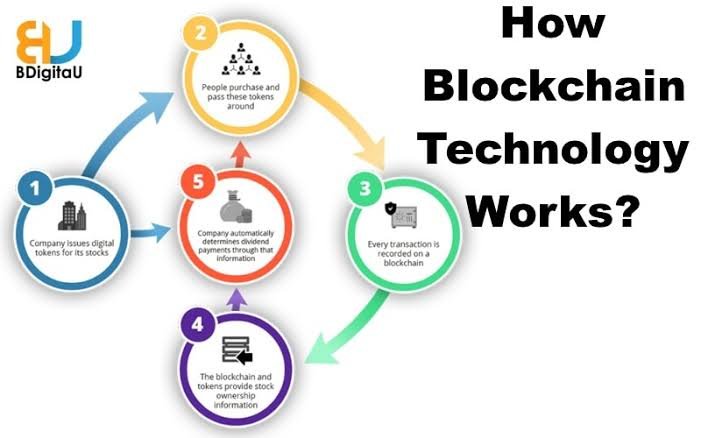
Blockchain technology has developed from a relatively niche concept into one of the most discussed technologies in finance, business, software development, and digital infrastructure.
Although blockchain is strongly associated with cryptocurrencies such as Bitcoin and Ethereum, its potential applications extend far beyond digital assets.
Businesses and organizations are exploring blockchain for areas including payments, supply chains, identity, digital ownership, decentralized applications, tokenization, and data verification.
But what exactly is a blockchain?
At its simplest, a blockchain is a distributed digital ledger that records transactions or other data in a way designed to make unauthorized alteration difficult.
The technology combines cryptography, distributed networks, consensus mechanisms, and software protocols to create a shared record without necessarily relying on a single central authority.
Understanding these concepts is essential for anyone interested in cryptocurrency, Web3, decentralized finance, or the future of digital infrastructure.
What Is Blockchain Technology?
A blockchain is a type of distributed ledger technology.
Instead of keeping a database on only one central server, a blockchain network can distribute copies of its ledger across many participating computers called nodes.
Transactions are grouped into blocks.
These blocks are then linked together using cryptographic techniques, creating a chronological chain.
A simplified structure looks like:
Transaction → Block → Verification → Blockchain → Network Record
Once information has been added and confirmed according to a blockchain’s rules, changing historical records can be extremely difficult, particularly on large decentralized networks.
Why Was Blockchain Created?
Blockchain technology became widely known through Bitcoin, introduced in 2009.
Bitcoin demonstrated that a digital currency could operate without requiring a traditional central institution to maintain a single transaction database.
The concept was significant because digital information can normally be copied.
Blockchain-based systems introduced a mechanism for maintaining a shared record of transactions and preventing the same digital asset from being spent twice within the network’s rules.
This concept later inspired many other blockchain applications.
How Does a Blockchain Work?
Although different blockchains operate differently, a simplified transaction process looks like this.
Step 1: A Transaction Is Created
A user initiates an action.
For example, they may send cryptocurrency to another address.
Step 2: The Transaction Is Broadcast
The transaction is sent to participating nodes on the network.
Step 3: The Network Checks the Transaction
Nodes verify whether the transaction follows the blockchain’s rules.
Depending on the blockchain, verification can involve checking:
- Digital signatures
- Account balances
- Transaction formats
- Network rules
- Available funds
Step 4: Transactions Are Grouped Into a Block
Valid transactions can be organized into a block.
Step 5: Consensus Is Reached
The network uses its consensus mechanism to determine which block should be accepted.
Step 6: The Block Is Added
Once accepted, the block becomes part of the blockchain.
Step 7: The Ledger Is Updated
Network participants update their records according to the new state of the blockchain.
What Is a Block?
A block is a collection of data recorded on a blockchain.
Depending on the network, a block can contain:
- Transactions
- Timestamps
- Block references
- Cryptographic information
- Consensus-related information
A block generally references the previous block using cryptographic data.
This creates the chain structure.
If someone attempts to modify an older block, the resulting cryptographic relationships can reveal that the data has been changed.
What Is a Hash?
A hash is the output of a cryptographic hashing function.
It can be thought of as a digital fingerprint for a particular piece of data.
Even a small change in the input can produce a significantly different hash.
Blockchains use hashes for several purposes, including:
- Linking blocks
- Verifying data integrity
- Identifying transactions
- Supporting consensus mechanisms
Hashing is one of the fundamental cryptographic concepts behind many blockchain systems.
What Is a Blockchain Node?
A node is a computer or system participating in a blockchain network.
Nodes can perform different functions depending on the blockchain.
They may:
- Store blockchain data
- Validate transactions
- Relay information
- Participate in consensus
- Maintain network state
Not every blockchain uses exactly the same types of nodes.
The network architecture determines what each participant does.
What Is Decentralization?
Decentralization is one of the defining ideas associated with blockchain.
In a centralized system, a single organization or small group may control the primary database or infrastructure.
In a decentralized blockchain network, control and recordkeeping can be distributed among many independent participants.
This can reduce dependence on a single point of control.
However, decentralization exists on a spectrum.
A blockchain is not automatically highly decentralized simply because it uses distributed ledger technology.
The number of validators, distribution of computing resources, governance structure, and concentration of ownership can all influence decentralization.
What Is Consensus?
Consensus refers to the mechanism used by a blockchain network to agree on the valid state of its ledger.
Different blockchain networks use different consensus mechanisms.
Two major examples are:
Proof of Work
Proof of Work requires participants to perform computational work to help secure the network.
Bitcoin uses Proof of Work.
The process requires substantial computing resources and energy.
Proof of Stake
Proof of Stake uses economic incentives and staked assets to determine which participants can help validate transactions and create blocks.
Ethereum currently uses Proof of Stake.
Other blockchain networks use variations or entirely different mechanisms.
Blockchain vs. Traditional Database
Blockchain technology is not automatically better than a conventional database.
The right choice depends on the problem.
Traditional Database
A traditional database is often preferable when:
- A trusted organization controls the system
- High performance is required
- Data needs frequent modification
- Privacy is a major requirement
- Centralized administration is acceptable
Blockchain
Blockchain may be useful when:
- Multiple parties need a shared record
- Participants may not fully trust one another
- Tamper resistance is important
- Transparent verification is valuable
- Decentralized control is desirable
The important question is not:
“Can blockchain be used?”
It is:
“Does blockchain solve a problem better than other technologies?”
Public vs. Private Blockchains
Public Blockchains
Public blockchains are generally open networks where participants can interact with the blockchain without receiving permission from a central organization.
Examples include major cryptocurrency networks.
Benefits can include:
- Transparency
- Open participation
- Decentralization
- Public verification
Private Blockchains
Private blockchains restrict participation.
They may be operated by:
- Companies
- Industry groups
- Organizations
- Consortia
Private systems can provide greater control and privacy but may offer fewer decentralization benefits.
What Are Smart Contracts?
Smart contracts are programs deployed on blockchain networks that execute according to predefined rules.
They can allow applications to perform actions automatically when specified conditions are met.
Smart contracts can support:
- Decentralized exchanges
- Lending applications
- NFT platforms
- Games
- Governance systems
- Token issuance
- Automated payments
They are an important foundation of many Web3 applications.
However, smart contracts can contain software vulnerabilities.
Once deployed, modifying a smart contract may be difficult or impossible depending on its design.
Blockchain and Cryptocurrencies
Cryptocurrencies are among the best-known applications of blockchain technology.
A blockchain can record:
- Transactions
- Balances
- Ownership changes
- Token transfers
Bitcoin uses blockchain technology to maintain its transaction history.
Other blockchain networks support much more complex functionality, including smart contracts and decentralized applications.
Blockchain and Decentralized Finance
Decentralized Finance (DeFi) refers to financial applications built using blockchain networks and smart contracts.
DeFi applications can provide services related to:
- Trading
- Lending
- Borrowing
- Liquidity
- Asset management
- Payments
Unlike traditional financial systems, many DeFi applications operate through publicly accessible smart contracts.
However, DeFi also carries significant risks, including smart-contract vulnerabilities, market volatility, liquidity risks, scams, and regulatory uncertainty.
Blockchain and NFTs
Non-fungible tokens, commonly called NFTs, use blockchain technology to represent unique digital assets or records of ownership.
NFT applications have included:
- Digital art
- Collectibles
- Gaming items
- Memberships
- Tickets
- Digital certificates
The blockchain can provide a public record associated with a token.
However, owning an NFT does not automatically mean owning the underlying intellectual property or copyright.
Those rights depend on the specific agreement and applicable law.
Blockchain in Supply Chain Management
Supply chains involve many participants.
Products may move through:
Manufacturer → Distributor → Retailer → Customer
Blockchain can potentially provide a shared record of certain events across multiple organizations.
Possible applications include tracking:
- Product movement
- Certifications
- Manufacturing information
- Shipping records
- Origin data
The technology can improve traceability when participants contribute accurate information.
However, blockchain cannot automatically guarantee that information entered into the system is truthful.
This is sometimes called the “garbage in, garbage out” problem.
Blockchain in Healthcare
Healthcare is another area where blockchain has been explored.
Potential applications include:
- Medical record coordination
- Credential verification
- Data sharing
- Supply-chain tracking
- Research data management
However, healthcare data is highly sensitive.
Blockchain solutions therefore need to consider:
- Privacy
- Data protection
- Access controls
- Regulatory requirements
- Interoperability
Storing sensitive information directly on a public blockchain can create serious privacy challenges.
Blockchain and Digital Identity
Digital identity systems are another potential application.
Blockchain-based identity approaches may allow users to have greater control over credentials and verification.
Possible applications include:
- Professional credentials
- Educational certificates
- Identity verification
- Memberships
- Digital licenses
The technology could potentially reduce repeated verification processes.
However, identity systems require careful consideration of privacy, security, governance, and recovery.
Blockchain and Tokenization
Tokenization involves representing an asset or right digitally using blockchain technology.
Potentially tokenized assets can include:
- Digital assets
- Financial instruments
- Real-world assets
- Membership rights
- Collectibles
- Access rights
Tokenization is attracting attention because blockchain infrastructure can potentially support programmable ownership and transfer.
However, legal ownership of a real-world asset and ownership of a blockchain token are not necessarily identical.
Legal and contractual structures remain important.
Benefits of Blockchain Technology
Transparency
Some blockchain networks allow transactions and network activity to be publicly inspected.
Tamper Resistance
Cryptographic structures and consensus mechanisms make unauthorized modification difficult.
Decentralization
Control can be distributed across network participants.
Programmability
Smart contracts allow applications to automate certain rules.
Global Accessibility
Public blockchain networks can potentially be accessed from anywhere with appropriate internet connectivity and compatible software.
Reduced Dependence on Intermediaries
Certain applications can operate without traditional intermediaries.
Limitations of Blockchain
Blockchain technology also has important limitations.
Scalability
Some blockchain networks can struggle to process large transaction volumes quickly and cheaply.
Transaction Costs
Network fees can increase during periods of heavy demand.
Energy Consumption
Certain consensus mechanisms, particularly Proof of Work, can consume significant energy.
Complexity
Blockchain systems can be difficult for new users to understand.
Irreversible Transactions
Some blockchain transactions cannot easily be reversed.
Security Risks
Smart contracts, wallets, bridges, and applications can contain vulnerabilities.
Regulatory Uncertainty
Legal frameworks for blockchain-based products continue to evolve across jurisdictions.
Blockchain Security
Blockchain networks can be highly resistant to certain types of tampering, but that does not mean every blockchain application is secure.
Security risks can exist at multiple levels:
Blockchain Protocol
Vulnerabilities in the underlying network.
Smart Contracts
Programming errors can create exploitable weaknesses.
Wallets
Users can lose assets if private keys or recovery credentials are compromised.
Exchanges
Centralized platforms can be targeted by attackers.
Bridges
Cross-chain bridges have historically presented complex security challenges.
Users
Phishing and social engineering remain major threats.
A secure blockchain ecosystem therefore requires more than secure cryptography.
Blockchain and Web3
Web3 is a broad term often used to describe a vision of internet applications that incorporate decentralized technologies such as blockchain.
Potential characteristics include:
- User-owned digital assets
- Decentralized applications
- Token-based ecosystems
- Digital identity
- Community governance
- Programmable ownership
Blockchain provides infrastructure for many Web3 applications.
However, Web3 is broader than blockchain alone.
Blockchain Governance
Blockchain networks need ways to make decisions about upgrades and changes.
Governance models vary significantly.
Some networks rely heavily on developers and core contributors.
Others use token-based voting or other decentralized governance mechanisms.
Governance can address issues such as:
- Protocol upgrades
- Fee structures
- Network changes
- Treasury management
- Community proposals
Decentralized governance is challenging because voting power can sometimes become concentrated among large stakeholders.
Layer 1 and Layer 2 Blockchains
A Layer 1 blockchain is a primary blockchain network.
Examples include networks designed to independently process transactions and maintain their own consensus.
A Layer 2 system is generally built on top of a base blockchain to improve scalability or provide additional functionality.
Layer 2 technologies can potentially:
- Increase transaction throughput
- Reduce costs
- Improve user experience
The relationship between Layer 1 and Layer 2 systems is an important part of the evolving blockchain ecosystem.
Interoperability and Cross-Chain Technology
Different blockchain networks often operate independently.
Interoperability technologies attempt to allow assets and information to move between networks.
This can involve:
- Bridges
- Cross-chain protocols
- Messaging systems
- Interoperability standards
Cross-chain technology can increase flexibility but introduces additional security complexity.
Users should carefully evaluate bridges and protocols before transferring assets.
Blockchain and Artificial Intelligence
AI and blockchain are increasingly being explored together.
Potential applications include:
- Decentralized AI infrastructure
- Data provenance
- AI-agent payments
- Model marketplaces
- Digital identity
- Content verification
Blockchain can potentially help establish records about where digital content or data originated.
AI can also help analyze blockchain activity and identify suspicious patterns.
The combination is still developing, and not every proposed AI-blockchain application provides a meaningful technical advantage.
Blockchain and the Future of Business
Businesses are increasingly exploring blockchain for specific use cases rather than treating it as a universal replacement for traditional systems.
Potential business applications include:
- Digital payments
- Supply-chain verification
- Asset tokenization
- Digital identity
- Automated agreements
- Loyalty programs
- Credential verification
- Cross-border transactions
The most successful implementations are likely to focus on clear business problems rather than blockchain adoption for its own sake.
Common Blockchain Misconceptions
“Blockchain and cryptocurrency are the same thing.”
They are not.
Cryptocurrencies can use blockchain technology, but blockchain has applications beyond cryptocurrencies.
“Blockchain data can never be changed.”
Blockchain systems are designed to make unauthorized historical changes difficult, but the exact properties depend on the network’s architecture and governance.
“Blockchain is completely anonymous.”
Many public blockchains are better described as pseudonymous rather than anonymous.
Transactions can often be publicly viewed and analyzed.
“Blockchain is always decentralized.”
Decentralization varies between networks.
“Blockchain is automatically secure.”
The underlying technology can provide strong security properties, but applications, wallets, smart contracts, bridges, and users can still introduce vulnerabilities.
“Everything should be put on a blockchain.”
No.
Traditional databases are often faster, cheaper, simpler, and more appropriate for many applications.
How to Get Started With Blockchain Technology
For beginners, learning blockchain does not require immediately purchasing cryptocurrency.
A safer educational approach is to first understand:
1. Blockchain Fundamentals
Learn about:
- Blocks
- Hashes
- Nodes
- Consensus
- Transactions
2. Cryptocurrency Basics
Understand:
- Wallets
- Addresses
- Private keys
- Transaction fees
3. Smart Contracts
Learn how blockchain programs operate.
4. Web3 Applications
Explore how decentralized applications interact with blockchain networks.
5. Blockchain Security
Understand phishing, wallet security, transaction verification, and smart-contract risks.
6. Hands-On Experimentation
When experimenting with blockchain applications, consider using test networks where available rather than risking valuable assets.
Blockchain Technology Trends to Watch
Several developments could influence blockchain’s future.
Real-World Asset Tokenization
Financial and physical assets may increasingly be represented digitally.
Stablecoins
Blockchain-based stable-value assets may continue developing as payment and settlement technologies.
Layer 2 Scaling
Scaling solutions may improve blockchain transaction capacity and user experience.
Institutional Adoption
Financial institutions and large businesses may continue exploring blockchain-based infrastructure.
Decentralized Identity
Blockchain-based credentials could become more sophisticated.
Interoperability
Different blockchain ecosystems may become more connected.
Blockchain-Based AI
AI and blockchain may increasingly intersect in areas such as payments, identity, provenance, and decentralized infrastructure.
Frequently Asked Questions
What is blockchain technology?
Blockchain technology is a type of distributed ledger technology that records information across a network using cryptography and consensus mechanisms.
Is blockchain the same as Bitcoin?
No. Bitcoin is a cryptocurrency that uses blockchain technology. Blockchain itself is a broader technology.
How does blockchain prevent fraud?
Blockchain networks use cryptography, transaction validation, and consensus mechanisms to make unauthorized manipulation more difficult. However, scams and fraud can still occur at the application and user levels.
Can blockchain data be deleted?
The answer depends on the specific blockchain and application. Public blockchains are generally designed for persistent records, which can make removing historical data difficult.
Is blockchain secure?
Blockchain technology can provide strong security properties, but security depends on the network, software, smart contracts, wallets, infrastructure, and users.
What is a smart contract?
A smart contract is software deployed on a blockchain that can automatically execute predefined rules and actions.
What is a blockchain node?
A node is a computer participating in a blockchain network by performing functions such as storing data, validating transactions, relaying information, or participating in consensus.
What is Proof of Work?
Proof of Work is a consensus mechanism that uses computational work to help secure and validate a blockchain network.
What is Proof of Stake?
Proof of Stake is a consensus approach that uses economic staking and validator mechanisms to participate in network security and block production.
Can blockchain replace traditional databases?
Sometimes it can be useful, but not universally. Traditional databases remain more appropriate for many centralized applications.
Final Thoughts
Blockchain technology is more than the infrastructure behind cryptocurrency.
It represents a different approach to storing, verifying, and transferring information across networks where multiple participants need to coordinate without necessarily relying on one central database.
Its strengths include transparency, cryptographic verification, programmability, and the potential for decentralized coordination.
Its weaknesses include scalability challenges, complexity, transaction costs, security risks, regulatory uncertainty, and the difficulty of designing truly useful decentralized systems.
The future of blockchain will likely depend on practical applications rather than hype.
Developers and businesses will increasingly need to ask a simple question:
Does blockchain provide a meaningful advantage for this particular problem?
Where the answer is yes, blockchain could become valuable infrastructure for finance, identity, tokenization, digital ownership, supply chains, and other emerging applications.
Where the answer is no, conventional technologies may remain the better solution.
For anyone entering the crypto and Web3 ecosystem, understanding this distinction is essential.
Blockchain is powerful technology—but its greatest value will come from solving real problems rather than simply putting existing systems on a blockchain.