

Technology startups are changing the way businesses operate, products are created, and consumers solve everyday problems. From artificial intelligence and financial technology to e-commerce, cybersecurity, healthcare technology, software, and automation, startups are creating new opportunities across almost every industry.
A tech startup is more than a company that uses technology. It is typically built around a technology-enabled product, service, platform, or business model designed to solve a specific problem and potentially grow rapidly.
Starting a technology business can be exciting, but turning an idea into a sustainable company requires much more than a good product. Founders need to understand customers, validate their ideas, build effective teams, manage finances, develop a strong go-to-market strategy, and continuously adapt to changing markets.
This guide explores the world of Tech Startups, including how startup ideas are developed, how founders validate products, funding options, business models, technology development, marketing, scaling, common challenges, and the future of technology entrepreneurship.
What Is a Tech Startup?
A tech startup is a young company that uses technology as a central part of its product, service, operations, or business model.
Tech startups can operate in many areas, including:
- Artificial intelligence
- Software as a service
- Fintech
- Cybersecurity
- E-commerce
- Healthtech
- Edtech
- Web3 and blockchain
- Cloud computing
- Developer tools
- Marketing technology
- Automation
- Robotics
- Climate technology
- Consumer technology
The defining characteristic is not simply being “new.” A startup usually aims to solve a meaningful problem and develop a business model capable of growing efficiently.
Startup vs Traditional Small Business
Not every new technology company is necessarily a startup in the traditional sense.
A traditional small business may focus on building a stable and profitable company serving a specific market.
A startup often focuses on:
- Rapid experimentation
- Product-market fit
- Scalable technology
- Large potential markets
- Rapid customer growth
- External investment
- Repeatable business models
This distinction is important because the strategies, funding requirements, and growth expectations can be very different.
Why Tech Startups Matter
Technology startups contribute to economic and technological development in several ways.
They can:
- Create new jobs
- Introduce innovative products
- Improve existing services
- Increase competition
- Solve complex problems
- Attract investment
- Develop new technologies
- Create entirely new markets
Many technologies that are now considered normal began as experimental ideas developed by small teams.
The Technology Startup Ecosystem
A successful startup ecosystem usually involves more than founders.
It can include:
- Entrepreneurs
- Developers
- Designers
- Investors
- Venture capital firms
- Angel investors
- Accelerators
- Incubators
- Universities
- Mentors
- Government organizations
- Customers
- Technology providers
Strong startup ecosystems give entrepreneurs access to capital, talent, knowledge, partnerships, and potential customers.
How to Find a Good Tech Startup Idea
A successful startup idea usually begins with a problem rather than a technology.
Instead of asking:
“What technology can I build?”
Ask:
“What problem do people have that technology could solve better?”
Potential sources of startup ideas include:
- Personal frustrations
- Inefficient business processes
- Expensive existing solutions
- Poor customer experiences
- New technologies
- Changing consumer behavior
- Industry regulations
- Emerging markets
- Unserved customer groups
The strongest opportunities often exist where an important problem intersects with a market willing to pay for a solution.
How to Validate a Startup Idea
One of the biggest mistakes founders make is building a product before determining whether customers actually want it.
Idea validation can include:
Customer Interviews
Talk to potential users about their existing problems.
Do not focus only on whether they “like” your idea. Ask how they currently solve the problem and what it costs them.
Competitor Research
Identify existing products and understand:
- Their customers
- Pricing
- Features
- Strengths
- Weaknesses
- Distribution channels
Competition is not always a bad sign. Existing competitors can demonstrate that a market already exists.
Landing Pages
A simple landing page can communicate the proposed solution and measure interest before the full product is developed.
Preorders or Early Customers
Getting people to commit money can provide stronger validation than receiving positive feedback.
Understanding Product-Market Fit
Product-market fit occurs when a product effectively satisfies a meaningful customer need and the market demonstrates strong demand for it.
Signs may include:
- Increasing customer adoption
- Strong retention
- Organic referrals
- Repeat purchases
- Positive customer feedback
- Growing revenue
- Customers actively requesting additional features
Product-market fit should not be treated as a permanent achievement. Customer needs and markets can change.
Building a Minimum Viable Product
A Minimum Viable Product, commonly called an MVP, is an early version of a product designed to test important assumptions with real users.
An MVP should contain enough functionality to solve the core problem.
It does not need every feature.
For example, a startup building an appointment platform may initially need only:
- User registration
- Service selection
- Calendar availability
- Booking
- Confirmation
Advanced analytics, complex automation, and dozens of integrations can potentially come later.
The purpose of an MVP is to learn quickly without unnecessarily spending resources.
Choosing the Right Technology
Technology choices can significantly influence a startup’s development speed, cost, scalability, and maintenance requirements.
Depending on the product, founders may need:
- Frontend development
- Backend development
- Databases
- Cloud infrastructure
- APIs
- Mobile applications
- Cybersecurity
- Analytics
- AI models
- Payment systems
- Authentication
Founders should avoid choosing technology simply because it is popular.
The better question is:
Which technology is appropriate for the product’s current and future requirements?
Build vs Buy
Startups often need to decide whether to build a technology internally or use an existing service.
For example, instead of building an entire payment infrastructure, a startup may integrate an established payment provider.
Buying or integrating existing services can reduce development time and allow the team to focus on its core product.
Artificial Intelligence and Tech Startups
Artificial intelligence has created significant opportunities for technology startups.
AI startups can build products around:
- Generative AI
- AI assistants
- AI agents
- Automation
- Data analysis
- Computer vision
- Natural language processing
- AI-powered search
- Recommendation systems
- Developer tools
- Customer service
AI can also become a capability inside startups that are not primarily AI companies.
For example, an e-commerce startup might use AI for product recommendations, customer support, demand forecasting, and marketing.
Building an AI Startup
AI founders should consider:
- Model selection
- Data quality
- Infrastructure costs
- API dependencies
- Accuracy
- Reliability
- Privacy
- Security
- Intellectual property
- Human oversight
Simply adding an AI model to an application does not automatically create a defensible business.
The real value may come from workflow integration, proprietary data, distribution, customer relationships, or specialized domain expertise.
Choosing a Startup Business Model
A technology startup needs a sustainable way to generate revenue.
Common models include:
Subscription
Customers pay regularly for continued access.
Common in SaaS products.
Freemium
Basic functionality is available for free while advanced features require payment.
Usage-Based Pricing
Customers pay according to consumption.
Transaction Fees
The startup takes a percentage or fee from transactions.
Marketplace Model
The company connects buyers and sellers and may charge fees for transactions.
Licensing
Customers pay to use technology or intellectual property.
Advertising
Revenue comes from advertisers rather than directly from users.
The right model depends on the product, market, customer behavior, and value proposition.
Creating a Strong Value Proposition
A value proposition explains why customers should choose your product.
A useful value proposition should communicate:
- Who the product is for
- What problem it solves
- How it solves the problem
- Why it is better or different
Avoid vague statements such as:
“An innovative platform transforming the future.”
Instead, explain the actual customer benefit.
For example:
“Automate customer follow-ups so small businesses can respond to leads without manually sending every message.”
Clear messaging makes marketing and sales easier.
Building a Tech Startup Team
Founders rarely build successful technology companies alone.
Early-stage teams may include:
- Founder or CEO
- CTO or technical lead
- Product manager
- Software developers
- UX/UI designer
- Marketing specialist
- Sales professional
- Customer support
At the beginning, one person may perform multiple roles.
As the company grows, responsibilities can become more specialized.
Hiring Startup Employees
Startup hiring should focus on more than technical ability.
Important qualities include:
- Adaptability
- Problem-solving
- Communication
- Ownership
- Learning ability
- Collaboration
Early employees often have significant influence over company culture and product development.
Startup Funding Options
Funding is one of the most discussed parts of the startup ecosystem.
Common funding sources include:
- Founder savings
- Friends and family
- Angel investors
- Venture capital
- Startup accelerators
- Grants
- Crowdfunding
- Bank financing
- Revenue-based growth
Not every startup needs venture capital.
A company with strong revenue and manageable growth requirements may be able to grow using customer revenue.
Bootstrapping a Tech Startup
Bootstrapping means building a company primarily using founder resources and business revenue.
Advantages can include:
- Greater ownership
- More control
- Less investor pressure
- Greater freedom in decision-making
Challenges can include:
- Limited resources
- Slower growth
- Founder financial risk
- Difficulty funding expensive development
The appropriate funding strategy depends on the company’s goals.
Understanding Venture Capital
Venture capital can provide startups with significant financial resources and strategic support.
Investors may provide funding in exchange for equity.
Funding can help startups:
- Hire employees
- Develop products
- Expand marketing
- Enter new markets
- Build infrastructure
- Acquire customers
However, venture funding also creates expectations around growth, valuation, ownership, and future returns.
Founders should understand the implications before accepting investment.
Startup Marketing
A great product still needs customers.
Startup marketing can include:
- Search engine optimization
- Content marketing
- Social media
- Email marketing
- Paid advertising
- Partnerships
- Referral programs
- Influencer marketing
- Community building
- Product-led growth
The best marketing strategy depends on where the target customers spend their time and how they make purchasing decisions.
Product-Led Growth
Product-led growth uses the product itself as an important driver of customer acquisition, conversion, and retention.
Examples include:
- Free trials
- Freemium plans
- Easy onboarding
- Self-service purchasing
- Referral features
- Sharing functionality
The goal is to make it easy for users to experience the product’s value.
Building a Startup Brand
Branding is more than a logo.
A startup brand includes:
- Company identity
- Positioning
- Messaging
- Visual design
- Customer experience
- Reputation
- Communication style
A strong brand can help a startup differentiate itself in a crowded market.
Measuring Startup Performance
Founders need meaningful metrics to understand whether the business is progressing.
Important startup metrics can include:
- Monthly recurring revenue
- Annual recurring revenue
- Customer acquisition cost
- Customer lifetime value
- Conversion rate
- Retention rate
- Churn
- Gross margin
- Burn rate
- Runway
The right metrics depend on the business model.
Avoid measuring everything simply because analytics software makes it possible.
Customer Acquisition Cost and Lifetime Value
Two important metrics for many startups are Customer Acquisition Cost (CAC) and Customer Lifetime Value (LTV).
CAC estimates how much it costs to acquire a customer.
LTV estimates the value a customer may generate throughout their relationship with the company.
A startup needs to understand whether its acquisition economics can support sustainable growth.
If acquiring customers costs more than the value those customers generate, the business model may need to change.
Startup Cash Flow and Runway
Revenue is important, but startups must also understand cash flow.
Burn rate describes how quickly a startup is spending its available capital.
Runway estimates how long the company can continue operating before needing additional funding or reaching sustainable cash flow.
Founders should regularly monitor:
- Cash reserves
- Monthly expenses
- Revenue
- Payroll
- Infrastructure costs
- Marketing spending
- Future funding requirements
Poor financial management can cause a promising startup to fail even when its product has potential.
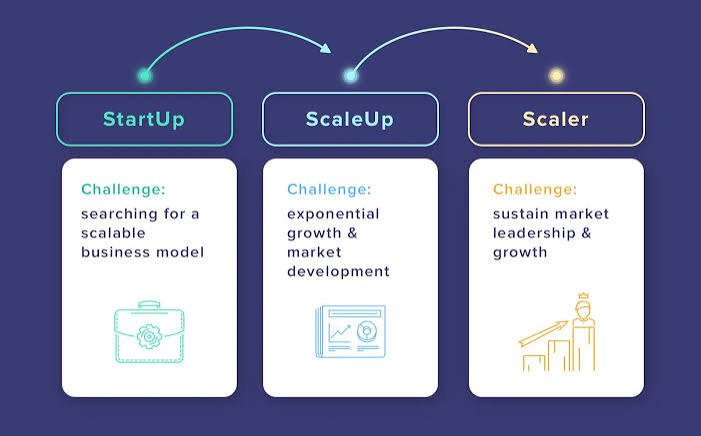
Scaling a Technology Startup
Scaling means increasing business capacity without allowing costs and complexity to grow uncontrollably.
Scaling can involve:
- Cloud infrastructure
- Automated operations
- Customer support systems
- Hiring
- Sales processes
- Marketing systems
- Internal documentation
- Financial systems
Technology can make scaling easier, but organizational complexity often increases as companies grow.
When Should a Startup Scale?
Scaling too early can waste resources.
Scaling too late can create operational problems.
A startup should ideally have evidence of:
- Customer demand
- Repeatable acquisition
- Reliable product performance
- Sustainable economics
- Strong retention
Before aggressively increasing spending, founders should understand what is already working.
Cybersecurity for Tech Startups
Cybersecurity should not be treated as an issue only for large companies.
Startups often manage:
- Customer information
- Payment information
- Employee data
- Business documents
- Source code
- API credentials
- Cloud infrastructure
Basic security practices include:
- Multi-factor authentication
- Strong access controls
- Secure passwords
- Encryption
- Regular updates
- Backups
- Employee security training
- Monitoring
- Incident response planning
A serious security incident can damage both finances and customer trust.
Data Privacy and Compliance
Technology companies may process significant amounts of personal information.
Depending on their market and operations, startups may need to consider applicable privacy and data protection requirements.
Founders should understand:
- What data they collect
- Why they collect it
- Where it is stored
- Who can access it
- How long it is retained
- How customers can exercise applicable rights
Privacy should be considered during product development rather than added as an afterthought.
Common Tech Startup Challenges
Finding Product-Market Fit
A startup can spend months developing a product that customers do not actually need.
Limited Funding
Technology development, salaries, infrastructure, and marketing can become expensive quickly.
Hiring Talent
Competition for skilled technical professionals can be intense.
Customer Acquisition
Getting initial users is often easier than building a repeatable acquisition system.
Competition
Successful markets attract competitors.
Technical Debt
Rapid development can create technology problems that become expensive to fix later.
Founder Burnout
Startup founders often face significant uncertainty, workload, and responsibility.
Building sustainable operating practices is important for long-term success.
Common Startup Mistakes
Building Before Validating
Do not assume customers will buy simply because you believe the idea is good.
Trying to Serve Everyone
A clearly defined target market often makes product development and marketing easier.
Adding Too Many Features
More features can make products harder to use and maintain.
Ignoring Customers
Customer feedback should influence product decisions.
Spending Too Quickly
Rapid spending without evidence of product-market fit can shorten runway.
Hiring Too Early
Build the team around actual business requirements rather than assumptions.
Ignoring Security
Security problems can become extremely expensive after a startup grows.
How Tech Startups Can Build Competitive Advantages
A startup needs something that makes it difficult for competitors to replace it.
Potential advantages include:
- Proprietary technology
- Strong brand
- Network effects
- Unique data
- Distribution
- Customer relationships
- Switching costs
- Specialized expertise
- Community
- Operational efficiency
Technology alone is not always a sufficient competitive advantage because competitors may be able to reproduce similar technical capabilities.
The Role of Community in Startup Growth
Communities can become powerful growth engines.
A startup can build a community through:
- Online groups
- Events
- Educational content
- Developer communities
- Customer forums
- Social media
- Industry partnerships
Strong communities can generate feedback, referrals, advocacy, and long-term customer loyalty.
The Future of Tech Startups
The startup ecosystem will continue evolving as new technologies become commercially viable.
Several areas are likely to remain important.
AI-Native Companies
New businesses will increasingly be designed around AI from the beginning rather than adding AI later.
AI Agents and Automation
Startups may build products capable of handling complex workflows with increasing levels of autonomy.
Vertical AI
Instead of creating general-purpose AI tools, startups may focus on specialized industries such as law, finance, healthcare, construction, logistics, or education.
Cybersecurity
As digital systems expand, demand for security products and services will continue to grow.
Climate Technology
Technology addressing energy, emissions, resource efficiency, and environmental challenges may create new business opportunities.
Robotics
Advances in AI, sensors, and hardware may create new opportunities in manufacturing, logistics, healthcare, and consumer markets.
Digital Infrastructure
Cloud platforms, developer tools, data systems, and AI infrastructure will remain important foundations for technology businesses.
How Entrepreneurs Can Start a Tech Startup
If you are considering launching a technology company, begin with the problem.
Step 1: Identify a Problem
Find a specific problem experienced by a clearly defined group of people.
Step 2: Research the Market
Study competitors, customers, market size, pricing, and existing solutions.
Step 3: Validate the Idea
Talk to potential customers and test whether they actually want a solution.
Step 4: Define the Value Proposition
Clearly explain why your product matters.
Step 5: Build an MVP
Create the smallest practical product that can test your most important assumptions.
Step 6: Get Real Users
Collect feedback from actual customers.
Step 7: Measure Results
Track acquisition, retention, revenue, usage, and other meaningful metrics.
Step 8: Improve the Product
Use customer feedback and data to improve the product.
Step 9: Build the Business Model
Determine how the company will generate sustainable revenue.
Step 10: Scale Carefully
Increase hiring, marketing, infrastructure, and expansion when the underlying business demonstrates sufficient demand.
Frequently Asked Questions
What is a tech startup?
A tech startup is a young company that uses technology as a central part of its product, service, or business model and typically aims to develop a scalable business.
How do I start a tech startup?
Start by identifying a meaningful problem, researching the market, validating the idea, building an MVP, finding early customers, developing a sustainable business model, and improving the product based on feedback.
Do tech startups need venture capital?
No. Some startups use venture capital, while others bootstrap using founder resources and customer revenue.
What is an MVP?
An MVP, or Minimum Viable Product, is an early version of a product containing enough functionality to test important assumptions with real users.
What is product-market fit?
Product-market fit describes a situation where a product effectively addresses a meaningful customer need and demonstrates strong market demand.
How do tech startups make money?
They can generate revenue through subscriptions, transactions, usage-based pricing, licensing, advertising, marketplaces, services, or other business models.
Is AI a good opportunity for startups?
AI can create significant opportunities, particularly when it solves a specific customer problem. However, a successful AI startup needs more than access to an AI model; it needs a valuable product, customers, distribution, and a sustainable business model.
What is the biggest challenge for a tech startup?
Challenges vary, but common problems include finding product-market fit, acquiring customers, managing cash flow, hiring talent, dealing with competition, and scaling effectively.
How important is cybersecurity for startups?
It is extremely important because startups may hold customer data, financial information, source code, credentials, and other valuable assets that attackers may target.
When should a startup scale?
Startups should generally scale after they have evidence of meaningful demand, a repeatable growth process, reliable operations, and economics that support additional investment.
Conclusion
Tech startups are an important part of the modern business and technology ecosystem. They have the potential to introduce new products, create jobs, solve important problems, and transform established industries.
However, successful startups are rarely built on technology alone.
Founders need to understand their customers, validate their ideas, develop useful products, establish sustainable business models, manage finances carefully, build strong teams, protect customer data, and create repeatable paths to growth.
Artificial intelligence, automation, cybersecurity, robotics, cloud computing, and other emerging technologies will continue creating opportunities for entrepreneurs. But the fundamental principle of entrepreneurship remains the same:
Solve a real problem for real customers and create enough value that they are willing to pay for the solution.
The future belongs not simply to companies using the newest technology, but to companies that use technology intelligently to create lasting value.


