

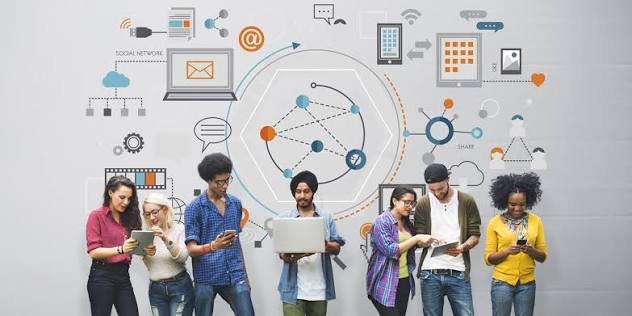
Technology has become deeply connected to everyday life. From smartphones and social media to artificial intelligence, cloud computing, digital payments, and connected devices, technology influences how people communicate, work, learn, shop, access services, and participate in society.
The social impact of technology refers to the ways technological developments affect individuals, communities, organizations, and society as a whole. These effects can create new opportunities, but they can also introduce challenges involving privacy, inequality, employment, misinformation, digital safety, and access to technology.
Understanding these effects is increasingly important because technological change is happening faster than many social systems can adapt.
This guide explores the major social impacts of technology, the benefits and challenges of digital transformation, and the trends likely to shape society in the years ahead.
What Is the Social Impact of Technology?
The social impact of technology describes how technological innovations influence people’s lives and the structure of society.
Technology can affect areas such as:
- Communication
- Education
- Employment
- Healthcare
- Business
- Government services
- Entertainment
- Transportation
- Financial services
- Social relationships
- Privacy and security
- Accessibility
- Economic opportunity
The impact is not automatically positive or negative. The same technology can benefit one group while creating challenges for another.
For example, remote-work technology can allow someone to work from almost anywhere, while people without reliable internet access may be excluded from the same opportunities.
How Technology Has Changed Society
Technology has transformed society in several major ways.
1. Communication Has Become Instant
Digital communication has dramatically reduced the barriers created by distance.
People can communicate through:
- Messaging applications
- Video conferencing
- Social networks
- Online communities
- Voice and video calls
Businesses can also communicate with customers across different countries without maintaining physical locations everywhere.
However, constant connectivity can also create information overload, distractions, and changes in how people develop relationships.
2. Technology Has Transformed Education
Technology has expanded access to educational resources.
Students can now access:
- Online courses
- Digital textbooks
- Educational videos
- Virtual classrooms
- AI learning assistants
- Online libraries
- Interactive learning platforms
- Collaboration tools
Teachers can use technology to create interactive learning experiences and provide digital resources beyond the traditional classroom.
At the same time, unequal access to devices and reliable internet can create a digital divide between students.
3. Technology Is Changing Healthcare
Digital technology is changing how healthcare services are delivered.
Examples include:
- Telemedicine
- Electronic health records
- Remote monitoring devices
- Health applications
- AI-assisted analysis
- Wearable devices
- Digital appointment systems
These technologies can make healthcare more accessible and help professionals manage information more efficiently.
However, healthcare technology also creates important questions about data privacy, cybersecurity, accuracy, and equitable access.
Technology and the Digital Divide
One of the most important social issues associated with technology is the digital divide.
The digital divide refers to differences between people or communities in their ability to access and effectively use digital technologies.
These differences can result from:
- Income
- Geography
- Education
- Infrastructure
- Disability
- Age
- Digital skills
- Availability of devices
Simply providing internet access does not completely solve the problem. People also need affordable devices, digital skills, reliable services, and accessible platforms.
Why the Digital Divide Matters
As more essential services move online, people without adequate digital access can face difficulties accessing:
- Education
- Employment
- Banking
- Healthcare
- Government services
- Business opportunities
- Information
Reducing the digital divide is therefore an important part of ensuring that technological progress benefits broader sections of society.
Artificial Intelligence and Its Social Impact
Artificial intelligence is becoming one of the most significant technologies influencing society.
AI can automate tasks, analyze information, generate content, support decision-making, and interact with users through conversational systems.
Its social impact can be seen in areas such as:
Employment
AI and automation may change the tasks performed by workers and create demand for new skills.
Some repetitive tasks can increasingly be automated, while new roles can emerge around AI development, deployment, governance, security, and oversight.
Education
AI tools can help students research topics, practice skills, generate explanations, and receive personalized assistance.
However, schools and educators must also address issues such as academic integrity, inaccurate AI-generated information, and responsible use.
Accessibility
AI can support accessibility through:
- Speech recognition
- Automated captions
- Translation
- Image descriptions
- Assistive interfaces
- Text-to-speech technologies
This can make digital experiences more accessible to people with different needs.
Social Risks
AI also introduces challenges involving:
- Bias
- Privacy
- Misinformation
- Deepfakes
- Automated decision-making
- Job displacement
- Accountability
The social impact of AI will depend heavily on how these systems are designed, deployed, governed, and used.
Technology and Employment
Technology has always influenced the workplace, but modern digital technologies are accelerating the transformation.
Cloud software, automation, AI, collaboration platforms, robotics, and digital marketplaces are changing how organizations operate.
The Rise of Remote and Hybrid Work
Digital collaboration tools allow many workers to perform their jobs without being physically present in a traditional office.
Remote and hybrid work can provide:
- Greater geographic flexibility
- Access to broader talent pools
- Reduced commuting
- New opportunities for distributed teams
- Flexible working arrangements
But remote work can also create challenges involving communication, isolation, cybersecurity, work-life boundaries, and unequal access to suitable working environments.
Technology and Social Relationships
Technology has changed how people maintain relationships.
Social networks and messaging platforms allow people to remain connected across long distances.
Online communities can also help people find others who share similar interests, experiences, or professional goals.
However, digital communication can sometimes replace face-to-face interaction and contribute to problems such as:
- Social media dependency
- Online harassment
- Cyberbullying
- Social comparison
- Reduced privacy
- Information overload
The social impact depends not only on the technology itself but also on how people use it.
Social Media and Society
Social media has become a major part of modern digital culture.
It allows individuals, organizations, creators, and businesses to publish information directly to audiences.
Social media can support:
- Community building
- Public discussion
- Marketing
- Education
- News distribution
- Social movements
- Creator businesses
- Customer communication
However, it also creates challenges involving misinformation, algorithmic recommendations, online harassment, privacy, and the rapid spread of misleading content.
This makes digital literacy increasingly important.
Technology and Misinformation
The internet has made information easier to access, but it has also made it easier for inaccurate or misleading information to spread.
Generative AI has added another dimension because synthetic text, images, audio, and video can be produced at increasingly high quality.
People may therefore need stronger skills for evaluating online information.
Useful habits include:
- Checking the original source.
- Comparing information across reliable sources.
- Looking for evidence rather than headlines alone.
- Checking publication dates.
- Identifying manipulated images or videos.
- Being cautious with sensational claims.
- Separating opinion from verifiable information.
Digital literacy is becoming an important social skill.
Technology, Privacy, and Personal Data
Modern digital services depend heavily on data.
Websites, applications, connected devices, financial services, and social platforms may collect information about users and their activities.
This creates important questions:
- What data is being collected?
- Why is it being collected?
- Who can access it?
- How long is it stored?
- Is it shared with third parties?
- How is it protected?
Privacy therefore plays an increasingly important role in the social impact of technology.
Organizations need responsible data practices, while users benefit from understanding privacy settings, permissions, security controls, and the information they share online.
Technology and Accessibility
Technology can improve accessibility for people with disabilities.
Examples include:
- Screen readers
- Voice controls
- Captions
- Keyboard navigation
- Text-to-speech
- Speech-to-text
- Alternative input devices
- AI-powered accessibility features
Accessible technology can improve participation in education, employment, communication, and public services.
However, accessibility must be considered during product design rather than added only after a product has already been developed.
Technology and Economic Opportunity
Digital technology has created new ways for people to earn income and build businesses.
Examples include:
- Freelancing
- E-commerce
- Online education
- Content creation
- Software businesses
- Digital marketing
- Remote employment
- Online consulting
- Creator platforms
- Digital services
Small businesses can also use cloud software, digital advertising, online payments, and e-commerce platforms to reach customers beyond their local markets.
However, digital opportunities are not equally available to everyone, making infrastructure, education, affordability, and digital skills important factors.
Technology and Smart Cities
Technology is also changing how cities operate.
Smart-city technologies can include:
- Connected transportation systems
- Smart traffic management
- Environmental sensors
- Digital public services
- Smart energy systems
- Connected infrastructure
- Public safety technologies
These systems can help cities manage resources and services more efficiently.
At the same time, large-scale data collection raises questions about surveillance, privacy, cybersecurity, and governance.
Technology and Environmental Impact
Technology can contribute to environmental challenges while also providing tools for addressing them.
Digital technologies require energy and physical infrastructure. Data centers, electronic devices, networks, and manufacturing processes can all have environmental effects.
At the same time, technology can support:
- Renewable energy management
- Smart electricity grids
- Environmental monitoring
- Efficient transportation
- Precision agriculture
- Energy optimization
- Waste management
- Climate research
The future social impact of technology will therefore include not only digital transformation but also questions about sustainability.
Technology and Government Services
Governments are increasingly using technology to deliver public services.
Digital government systems can make it easier for citizens to:
- Access information
- Submit applications
- Pay fees
- Request documents
- Access public records
- Communicate with government agencies
However, digital government must remain accessible to people who cannot easily use online services.
Strong cybersecurity and privacy protections are also essential when governments manage sensitive citizen information.
The Role of Digital Literacy
Digital literacy is becoming increasingly important across society.
Being digitally literate involves more than knowing how to use a smartphone or computer.
It can include understanding:
- Online privacy
- Cybersecurity
- Digital communication
- Information verification
- AI-generated content
- Online scams
- Digital payments
- Data sharing
- Responsible social media use
As technology becomes more integrated into everyday life, digital literacy can help people make more informed decisions.
Technology and Generational Differences
Different generations may experience technology differently.
Younger people may grow up using digital platforms from an early age, while older adults may have adopted many technologies later in life.
This can create differences in:
- Digital skills
- Online communication
- Privacy expectations
- Technology adoption
- Cybersecurity awareness
Technology design should therefore consider users with different levels of digital experience.
Simple interfaces, accessibility features, education, and support can help make technology more inclusive.
Cybersecurity as a Social Issue
Cybersecurity is no longer only a technical concern for IT departments.
Cyberattacks can affect individuals, businesses, schools, hospitals, governments, and communities.
Common threats include:
- Phishing
- Identity theft
- Ransomware
- Account takeover
- Online fraud
- Malware
- Data breaches
- Social engineering
As society becomes more digitally dependent, cybersecurity becomes part of everyday digital safety.
Positive Social Impacts of Technology
Technology can provide many social benefits.
Improved communication
People can connect across geographical boundaries.
Greater access to information
Knowledge can be accessed from almost anywhere with an internet connection.
Better accessibility
Assistive technologies can improve digital participation.
New economic opportunities
Digital platforms can help people create businesses and find work.
Improved education
Online learning can expand access to educational resources.
Healthcare innovation
Digital systems can improve access to certain healthcare services and information.
Community building
Online communities can connect people around shared interests and goals.
Negative Social Impacts of Technology
Technology can also introduce significant challenges.
These include:
- Digital inequality
- Privacy concerns
- Cybersecurity threats
- Misinformation
- Online harassment
- Social media dependency
- Job disruption
- Digital exclusion
- Technology addiction
- Data exploitation
- Environmental costs
- Loss of certain traditional skills
The goal should not necessarily be to avoid technology, but to understand and manage its social consequences.
How Businesses Can Respond to Technology’s Social Impact
Businesses have an important role in responsible technology adoption.
Organizations can:
- Protect customer data.
- Design accessible digital experiences.
- Provide cybersecurity training.
- Evaluate AI systems for reliability and bias.
- Communicate clearly about data collection.
- Support employees through technological changes.
- Consider the environmental impact of technology.
- Make digital services easier to use.
- Develop responsible AI policies.
- Monitor how technology affects customers and employees.
Technology adoption should consider both business performance and human impact.
How Individuals Can Adapt
Individuals can also take practical steps to navigate technological change.
Develop digital skills
Learn how to use modern productivity, communication, security, and AI tools.
Protect personal information
Use strong passwords, multi-factor authentication, privacy controls, and secure devices.
Verify information
Do not automatically trust everything encountered online.
Learn about AI
Understand both the capabilities and limitations of AI systems.
Maintain healthy digital habits
Set boundaries around notifications, social media, and screen time.
Keep learning
Technology changes continuously, making lifelong learning increasingly valuable.
Future Social Impact of Technology
Several trends are likely to shape the social impact of technology in the coming years.
AI-Powered Everyday Services
AI will likely become increasingly embedded in search, productivity tools, education, customer service, smartphones, and other digital services.
AI Agents
Instead of simply answering questions, AI systems are increasingly being designed to complete multi-step tasks.
This could change how people interact with software and online services.
More Personalized Technology
Digital services may become increasingly personalized based on user preferences, behavior, and context.
This creates opportunities for better experiences while increasing the importance of privacy and user control.
Greater Focus on Digital Identity
Passkeys, digital credentials, authentication technologies, and digital identity systems may become more important as more activities move online.
More Connected Environments
Homes, vehicles, workplaces, cities, and public infrastructure are likely to become increasingly connected.
Growing Demand for Digital Skills
As technology changes work and education, digital skills will become increasingly important across many professions.
Responsible Technology
Society is likely to place greater emphasis on privacy, security, accessibility, transparency, sustainability, and responsible AI.
How Society Can Prepare for Technological Change
Technological progress is easier to manage when society prepares for its effects.
Governments can invest in digital infrastructure and education.
Schools can strengthen digital literacy and critical-thinking skills.
Businesses can adopt responsible technology policies.
Technology companies can prioritize security, accessibility, privacy, and transparent design.
Individuals can continuously develop their digital skills and learn how to protect themselves online.
A successful digital future requires cooperation between technology developers, businesses, governments, educators, and users.
Frequently Asked Questions
What is the social impact of technology?
The social impact of technology refers to how technological developments affect individuals, communities, organizations, and society.
Is technology’s impact always positive?
No. Technology can provide significant benefits while also creating challenges involving privacy, inequality, cybersecurity, employment, misinformation, and social behavior.
How does technology affect education?
Technology provides access to online courses, digital resources, virtual classrooms, collaboration tools, and personalized learning experiences. However, unequal access to technology can contribute to educational inequality.
How does AI affect society?
AI can improve productivity, accessibility, education, healthcare, customer service, and many other areas. It can also introduce challenges involving bias, privacy, misinformation, employment, and accountability.
What is the digital divide?
The digital divide describes differences in people’s access to digital technologies, internet connectivity, devices, and digital skills.
How does technology affect employment?
Technology can automate certain tasks, create new types of work, change existing jobs, and increase demand for digital skills.
Why is digital literacy important?
Digital literacy helps people safely and effectively use technology, evaluate online information, protect personal data, and understand emerging technologies.
How can technology improve accessibility?
Assistive technologies such as screen readers, captions, voice controls, speech-to-text, and other accessibility features can help people participate more fully in digital environments.
What is the future social impact of AI?
AI is likely to become increasingly integrated into work, education, communication, healthcare, entertainment, and everyday services. Its social effects will depend on how systems are developed, governed, and used.
Conclusion
Technology is reshaping society at an extraordinary pace. It has changed communication, education, healthcare, employment, business, entertainment, government services, and access to information.
The social impact of technology is therefore much broader than the devices and applications people use every day.
Technology can create opportunity, improve accessibility, connect communities, and make services more efficient. At the same time, it can contribute to inequality, privacy concerns, misinformation, cybersecurity threats, employment disruption, and other social challenges.
The future will depend not simply on how advanced technology becomes, but on how responsibly society chooses to develop and use it.
As AI, automation, connected devices, digital identity, and other emerging technologies continue to evolve, digital literacy, responsible innovation, accessibility, privacy, security, and human-centered design will become increasingly important.
Understanding these changes today can help individuals, businesses, and communities prepare for a more connected technological future.


