

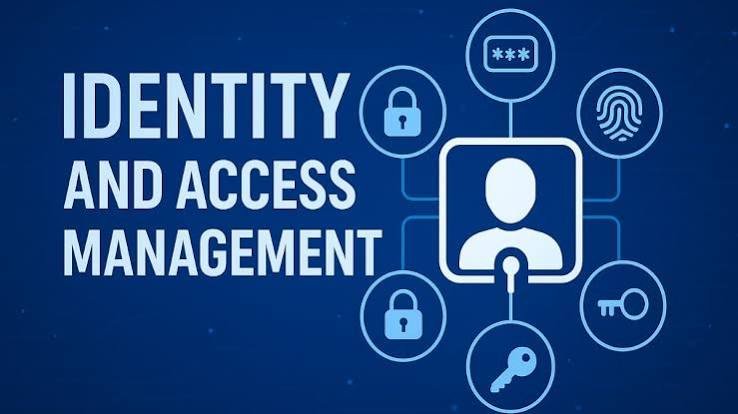
Identity & Access Management (IAM) is one of the most important components of modern cybersecurity. As businesses rely on cloud applications, remote work, SaaS platforms, mobile devices, APIs, and digital services, controlling who can access systems and what they are allowed to do has become increasingly important.
IAM provides organizations with a structured way to manage digital identities, authenticate users, authorize access, enforce security policies, and monitor activity across applications, devices, networks, and data.
A strong IAM strategy can help reduce unauthorized access, limit the impact of compromised accounts, improve compliance, and create a better experience for legitimate users.
This guide explains what Identity & Access Management is, how IAM works, its major components, common technologies, benefits, challenges, best practices, and how businesses can build an effective IAM strategy.
What Is Identity & Access Management?
Identity & Access Management is the combination of policies, processes, technologies, and controls used to manage digital identities and determine who can access specific resources.
In simple terms, IAM answers two fundamental questions:
- Who are you?
- What are you allowed to access?
For example, an employee may use a company identity to access email, project management software, customer databases, and internal applications. IAM determines how that identity is verified and which resources the employee can use.
IAM can apply to:
- Employees
- Contractors
- Customers
- Administrators
- Partners
- Service accounts
- Applications
- Devices
- APIs
- Automated systems
Modern IAM therefore extends beyond traditional usernames and passwords.
Why Is IAM Important for Cybersecurity?
Compromised credentials are frequently involved in security incidents. If attackers obtain a legitimate account, they may attempt to access sensitive systems without triggering controls designed only to detect unauthorized software or devices.
IAM helps organizations reduce this risk by controlling identity-based access.
Important IAM security objectives include:
- Preventing unauthorized access
- Protecting sensitive information
- Enforcing least privilege
- Securing administrator accounts
- Supporting multi-factor authentication
- Managing employee access
- Removing unnecessary permissions
- Detecting unusual account activity
- Supporting regulatory requirements
- Improving visibility across digital environments
IAM is particularly important for organizations operating cloud-based and distributed environments where users may access systems from different locations and devices.
How Does IAM Work?
A typical IAM system involves several stages:
Identity → Authentication → Authorization → Access → Monitoring
1. Identity
An organization creates a digital identity for a user, application, device, or service.
This identity may contain information such as:
- Username
- Employee ID
- Department
- Job role
- Email address
- Group membership
- Assigned permissions
2. Authentication
Authentication verifies that a person or system is actually associated with the identity being used.
Traditional authentication relies on passwords, but modern organizations can use:
- Passwords
- Authentication applications
- Security keys
- Biometrics
- Passkeys
- One-time codes
- Certificates
- Device-based authentication
3. Authorization
After authentication, the IAM system determines what the identity is permitted to access.
For example, a sales employee may access customer records but may not have permission to modify payroll information.
4. Access
The user receives access to approved applications, systems, files, databases, or services.
5. Monitoring
IAM systems can record authentication attempts, access requests, permission changes, and other identity-related events.
These records can help security teams identify suspicious activity and investigate incidents.
Authentication vs Authorization
Authentication and authorization are related but different concepts.
Authentication answers:
Who are you?
Authorization answers:
What are you allowed to do?
For example, logging into a company’s CRM proves your identity. Your assigned role then determines whether you can view customer records, edit them, export them, or administer the system.
Understanding this difference is fundamental to IAM.
Major Components of IAM
A complete IAM environment typically includes several technologies and processes.
Identity Management
Identity management involves creating, updating, and removing digital identities.
Organizations may need to manage identities when employees:
- Join the company
- Change departments
- Receive new responsibilities
- Take extended leave
- Leave the organization
Automating these changes can reduce security risks caused by outdated accounts.
Authentication
Authentication verifies identities before access is granted.
Modern authentication increasingly uses multiple factors rather than passwords alone.
Authorization
Authorization determines which resources and actions an identity can access.
Single Sign-On
Single Sign-On (SSO) allows users to authenticate once and access multiple approved applications without repeatedly entering credentials.
SSO can improve convenience while giving organizations greater control over application access.
Multi-Factor Authentication
Multi-Factor Authentication (MFA) requires more than one authentication factor.
Common factor categories include:
- Something you know
- Something you have
- Something you are
For example, a password combined with a hardware security key provides stronger protection than a password alone.
Directory Services
Directories store identity and organizational information.
They may contain:
- Users
- Groups
- Devices
- Roles
- Organizational structures
- Access information
Directories can serve as an important foundation for centralized identity management.
Privileged Access Management
Privileged Access Management (PAM) focuses on highly powerful accounts such as:
- System administrators
- Database administrators
- Cloud administrators
- Security administrators
- Infrastructure engineers
Because privileged accounts can make significant changes, they require additional controls.
Identity Governance
Identity governance helps organizations determine whether users have appropriate access and whether permissions remain necessary over time.
It can support:
- Access reviews
- Approval workflows
- Segregation of duties
- Compliance reporting
- Role management
- Access certification
Role-Based Access Control (RBAC)
Role-Based Access Control assigns permissions according to a user’s organizational role.
For example:
Sales Representative
- CRM access
- Customer records
- Sales reports
Finance Employee
- Accounting systems
- Financial reports
- Billing applications
IT Administrator
- Infrastructure systems
- Administrative consoles
- Security tools
RBAC can simplify permission management because organizations can assign roles rather than manually assigning every permission to every user.
Attribute-Based Access Control (ABAC)
Attribute-Based Access Control uses attributes to make access decisions.
Attributes can include:
- User role
- Department
- Location
- Device status
- Application
- Time
- Resource sensitivity
- Security risk
For example, an organization could allow access to a sensitive application only when the user is an authorized employee using a managed device.
ABAC can provide more granular access decisions than basic role-based controls.
The Principle of Least Privilege
Least privilege means users and systems should receive only the access necessary to perform their legitimate responsibilities.
For example, an employee who only needs to read customer information should not automatically receive permission to delete customer records.
Least privilege can reduce the potential damage caused by:
- Compromised accounts
- Insider threats
- Malware
- Human mistakes
- Excessive permissions
It is one of the foundational concepts of modern IAM and Zero Trust security.
Zero Trust and IAM
IAM plays a central role in Zero Trust security.
Zero Trust is based on the principle that access should not automatically be trusted simply because a user or device is inside a corporate network.
Instead, organizations can evaluate factors such as:
- Identity
- Device
- Location
- Application
- Requested resource
- User behavior
- Risk signals
Access decisions can then be based on current context rather than permanent trust.
IAM provides many of the identity controls required to implement this approach.
Identity Lifecycle Management
Identity lifecycle management covers the entire life of a digital identity.
A common lifecycle includes:
Join → Change → Access Review → Leave
Joiner
When a new employee joins, the organization creates an identity and provides the access required for the employee’s role.
Mover
When an employee changes departments or responsibilities, their access should be updated.
Leaver
When an employee leaves, unnecessary access should be removed promptly.
This process is often called Joiner-Mover-Leaver (JML) management.
Automating JML processes can improve consistency and reduce the risk of forgotten accounts.
IAM for Remote and Hybrid Work
Remote work has increased the importance of identity security.
Employees may access company resources from:
- Home networks
- Mobile devices
- Personal computers
- Public networks
- Multiple cloud applications
Organizations can strengthen remote access by implementing:
- MFA
- SSO
- Conditional access
- Device management
- Least privilege
- Secure VPN or Zero Trust access controls
- Continuous monitoring
Identity becomes particularly important when traditional network boundaries are less meaningful.
IAM in Cloud Computing
Cloud environments can contain hundreds or thousands of identities, applications, services, and permissions.
Cloud IAM can help control access to:
- Virtual machines
- Databases
- Storage
- APIs
- Cloud applications
- Serverless services
- Management consoles
Organizations should regularly review cloud permissions because excessive privileges can create significant security exposure.
Service Accounts and Machine Identities
Not every identity belongs to a human.
Applications, APIs, servers, containers, and automated processes may also require identities.
These are often referred to as machine identities or non-human identities.
Organizations should manage them carefully by:
- Limiting permissions
- Rotating credentials
- Avoiding shared secrets
- Monitoring usage
- Removing unused identities
- Using short-lived credentials where appropriate
Machine identity management is becoming increasingly important as automation and AI-powered systems become more widespread.
Passwordless Authentication
Passwordless authentication allows users to authenticate without relying on traditional passwords.
Examples include:
- Passkeys
- Security keys
- Biometrics
- Device-based authentication
Passwordless approaches can reduce risks associated with password reuse, phishing, and stolen credentials, although implementation still requires careful security design.
Common IAM Security Threats
IAM systems themselves can become targets for attackers.
Common threats include:
Credential Theft
Attackers may steal passwords or authentication tokens through phishing, malware, or other techniques.
Credential Stuffing
Attackers may attempt to reuse usernames and passwords obtained from previous data breaches.
Privilege Escalation
An attacker who gains access to one account may attempt to obtain additional privileges.
Account Takeover
Attackers may gain control of legitimate accounts and use them to access protected resources.
Session Hijacking
Attackers may attempt to obtain valid authentication sessions or tokens.
MFA Attacks
Attackers may attempt to bypass or manipulate authentication processes through methods such as phishing or social engineering.
Orphaned Accounts
Accounts belonging to former employees or unused services may remain active if identity lifecycle processes are poorly managed.
Excessive Permissions
Users may accumulate permissions over time that they no longer need.
IAM and Privileged Access Management
Privileged accounts deserve special attention because they can make high-impact changes.
Organizations can protect privileged identities through:
- Separate administrator accounts
- MFA
- Just-in-time access
- Privileged session monitoring
- Approval workflows
- Credential vaulting
- Regular access reviews
- Strong logging
Administrators should avoid using powerful accounts for ordinary activities whenever possible.
IAM and Cybersecurity Compliance
IAM controls can support compliance requirements by helping organizations demonstrate that access to sensitive information is controlled.
Depending on the organization and jurisdiction, IAM may support requirements related to:
- Access control
- Authentication
- Audit logging
- Data protection
- Least privilege
- Separation of duties
- User access reviews
However, IAM alone does not make an organization compliant. Compliance depends on the full set of applicable technical, administrative, and organizational controls.
IAM for Small and Medium-Sized Businesses
IAM is not only an enterprise requirement.
Small businesses can begin with practical controls such as:
- Use unique accounts for every employee.
- Enable MFA.
- Use a password manager.
- Remove access when employees leave.
- Review administrator accounts.
- Use SSO where practical.
- Limit access based on job responsibilities.
- Keep authentication systems updated.
- Monitor suspicious login activity.
- Document basic access policies.
A smaller organization may not need a complex IAM platform immediately, but it should still establish basic identity security controls.
How to Build an Effective IAM Strategy
A practical IAM strategy can follow these steps.
Step 1: Inventory Identities
Identify:
- Human users
- Administrators
- Service accounts
- Applications
- Devices
- Cloud identities
- API credentials
Step 2: Map Access
Determine which identities can access which systems and why.
Step 3: Remove Unnecessary Access
Apply least privilege and eliminate outdated permissions.
Step 4: Strengthen Authentication
Implement MFA and consider passwordless authentication where appropriate.
Step 5: Centralize Identity
Use directories and SSO where they provide meaningful control and visibility.
Step 6: Automate Lifecycle Management
Automate onboarding, role changes, and offboarding where possible.
Step 7: Protect Privileged Accounts
Implement stronger controls for administrative identities.
Step 8: Monitor Identity Activity
Track authentication and access events and investigate suspicious activity.
Step 9: Conduct Regular Access Reviews
Permissions should not remain permanent simply because they were once approved.
Step 10: Measure and Improve
Review IAM performance and update controls as the organization’s technology environment changes.
Common IAM Mistakes
Organizations can weaken IAM security by:
- Relying entirely on passwords
- Sharing accounts
- Giving users excessive permissions
- Ignoring service accounts
- Failing to remove former employees
- Creating too many administrator accounts
- Skipping access reviews
- Using inconsistent identity policies
- Neglecting cloud permissions
- Ignoring machine identities
- Treating MFA as a complete security solution
- Failing to monitor authentication events
Avoiding these mistakes can significantly improve identity security.
IAM and Artificial Intelligence
Artificial intelligence is increasingly being incorporated into identity security.
AI and machine learning can help identify unusual behaviors such as:
- Unexpected login locations
- Unusual access patterns
- Abnormal authentication activity
- Sudden privilege changes
- Suspicious account behavior
AI can also assist security teams with alert prioritization and identity-related investigations.
However, AI-based security systems should not automatically be trusted without appropriate testing, monitoring, privacy controls, and human oversight.
The Future of Identity & Access Management
IAM is evolving as organizations adopt cloud services, automation, AI, remote work, and decentralized digital environments.
Several trends are likely to remain important:
Passwordless Identity
Passkeys and other passwordless technologies can reduce dependence on traditional passwords.
Continuous Authentication
Security systems can increasingly evaluate identity and risk throughout a session rather than relying only on the initial login.
Zero Trust
Identity will continue to serve as a central component of Zero Trust architectures.
Machine Identity Management
As applications, APIs, AI agents, and automated systems become more common, managing non-human identities will become increasingly important.
Identity Threat Detection
Security teams will increasingly analyze identity behavior to detect account compromise and privilege abuse.
AI-Powered IAM
AI may assist with access recommendations, anomaly detection, identity governance, and security investigations.
IAM Best Practices Checklist
Organizations can use the following checklist when reviewing their IAM environment:
- Every user has a unique identity
- MFA is enabled for important accounts
- Privileged accounts receive additional protection
- Users receive only necessary permissions
- Former employees are removed promptly
- Access is reviewed regularly
- Service accounts are documented
- Machine identities are monitored
- SSO is used where appropriate
- Sensitive systems use stronger authentication
- Authentication events are logged
- Suspicious access is investigated
- Password policies are properly implemented
- Identity systems are regularly tested
- IAM policies are updated as the business changes
Frequently Asked Questions About IAM
What does IAM stand for?
IAM stands for Identity & Access Management. It refers to technologies, policies, and processes used to manage digital identities and control access to systems and information.
What is the difference between IAM and cybersecurity?
IAM is a major part of cybersecurity focused specifically on identities and access. Cybersecurity is broader and includes areas such as network security, endpoint protection, data security, application security, incident response, and IAM.
Is IAM only for large companies?
No. Businesses of all sizes can benefit from IAM practices such as unique accounts, MFA, least privilege, access reviews, and proper employee offboarding.
What is the difference between IAM and PAM?
IAM manages identities and access across an organization, while Privileged Access Management focuses specifically on controlling and protecting accounts with elevated privileges.
Is MFA part of IAM?
Yes. Multi-Factor Authentication is one of the major authentication controls commonly used within IAM programs.
What is RBAC?
RBAC stands for Role-Based Access Control. It assigns permissions according to predefined organizational roles.
Why is least privilege important?
Least privilege limits users and systems to the access they actually need. This can reduce the potential impact of compromised accounts and unauthorized activity.
Can IAM prevent cyberattacks?
IAM cannot prevent every cyberattack, but strong identity controls can reduce risks associated with stolen credentials, excessive privileges, unauthorized access, and account compromise.
What is Zero Trust IAM?
Zero Trust IAM applies identity-based access controls within a broader Zero Trust approach, where access is continuously evaluated rather than automatically trusted based on network location.
What should a small business do first?
A small business can start with unique user accounts, MFA, strong password management, least privilege, administrator account protection, and reliable employee onboarding and offboarding procedures.
Conclusion
Identity & Access Management is a foundational component of modern cybersecurity. As organizations increasingly depend on cloud services, SaaS applications, remote work, APIs, automation, and AI-powered systems, controlling digital access has become more complex and more important.
A strong IAM program combines authentication, authorization, least privilege, identity lifecycle management, access reviews, privileged access protection, monitoring, and appropriate automation.
Organizations do not need to implement every IAM technology at once. A practical approach is to begin by understanding existing identities and permissions, strengthening authentication, removing unnecessary access, protecting privileged accounts, and establishing reliable lifecycle processes.
As digital environments continue to evolve, identity will remain one of the most important layers of cybersecurity.


