The way people work is changing rapidly.
Advances in artificial intelligence, automation, cloud computing, collaboration software, cybersecurity, and digital communication are reshaping how businesses operate and how employees perform their jobs.
At the same time, remote and hybrid work have changed expectations around where and when work happens. Employees increasingly use digital tools to communicate, collaborate, manage projects, analyze information, and complete tasks that previously required manual effort.
The future of work is therefore not simply about replacing traditional offices with remote workplaces. It involves a broader transformation in how organizations design jobs, manage teams, use technology, develop skills, measure productivity, and create value.
Businesses that understand these changes can make better decisions about technology investments, workforce development, cybersecurity, and organizational strategy.
This guide explores the major trends shaping the future of work and explains how businesses and professionals can prepare for a technology-driven workplace.
What Is the Future of Work?
The future of work refers to the evolving ways people, businesses, and technology will interact to perform jobs and create economic value.
It includes changes in:
- Workplace technology
- Artificial intelligence
- Automation
- Remote work
- Hybrid work
- Digital collaboration
- Employee skills
- Leadership
- Business processes
- Workforce management
- Workplace culture
- Cybersecurity
- Employment models
- Productivity measurement
The future of work is not one specific workplace model.
Different industries will adopt different approaches depending on their customers, technology requirements, regulations, workforce, and business models.
A software company may operate primarily through distributed teams, while a manufacturing business may require employees to work on-site with robotics and connected equipment.
Why the Future of Work Matters
Technology has always influenced how people work, but the speed of change has increased significantly.
Cloud software allows teams to access business systems from different locations. Automation can reduce repetitive administrative tasks. AI can help employees analyze information, generate content, summarize documents, and support decision-making.
These changes create opportunities but also introduce new challenges.
Businesses need to determine:
- Which tasks should be automated?
- Which technologies should employees use?
- What skills will workers need?
- How should productivity be measured?
- How should remote teams collaborate?
- How should company data be protected?
- How should organizations manage AI?
- How can businesses maintain a strong company culture?
These questions are becoming important parts of modern business strategy.
Artificial Intelligence and the Future of Work
Artificial intelligence is one of the most significant technologies influencing the workplace.
AI systems can already assist with tasks such as:
- Writing
- Research
- Data analysis
- Customer support
- Translation
- Coding
- Document processing
- Marketing
- Scheduling
- Meeting summaries
- Knowledge management
The impact of AI will depend on how organizations integrate it into existing workflows.
Rather than thinking only about AI replacing jobs, businesses can also examine how AI changes individual tasks within jobs.
A role that previously required several hours of manual research may use AI to complete an initial analysis while the employee focuses on verification, judgment, communication, and decision-making.
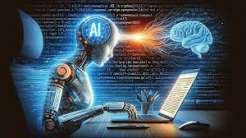
This creates a model of human-AI collaboration.
AI Assistants in the Workplace
AI assistants are increasingly becoming part of digital work environments.
Employees may use AI assistants to:
- Draft emails
- Summarize meetings
- Organize information
- Create reports
- Analyze spreadsheets
- Generate ideas
- Research topics
- Prepare presentations
- Write or review code
- Create marketing content
The most useful workplace AI systems are often those integrated directly into existing workflows.
Instead of requiring employees to move information between many applications, AI can increasingly operate within productivity, communication, customer relationship management, and business software.
AI Agents and Automated Workflows
AI agents represent another development in workplace technology.
Traditional automation generally follows predefined instructions.
AI-powered systems can potentially interpret information, determine the next step, use connected tools, and complete multi-step workflows.
For example, a business workflow could involve:
- Receiving a customer inquiry.
- Classifying the request.
- Searching a knowledge base.
- Drafting a response.
- Updating a CRM record.
- Creating a follow-up task.
Human oversight may still be necessary, particularly for decisions involving financial, legal, security, or sensitive business information.
The future workplace may therefore combine employees, traditional automation, AI assistants, and AI agents.
Automation and the Changing Nature of Jobs
Automation is not a new concept.
Businesses have used automation for decades in manufacturing, finance, logistics, administration, and other industries.
What is changing is the increasing ability to automate knowledge-based tasks.
Examples include:
- Data entry
- Invoice processing
- Appointment scheduling
- Report generation
- Lead qualification
- Email routing
- Document classification
- Customer support workflows
- Inventory updates
As repetitive tasks become more automated, employees may spend more time on activities requiring judgment, creativity, relationship building, problem-solving, and strategic thinking.
Remote Work and the Future Workplace
Remote work has become an important part of modern employment.
Employees can increasingly work from locations outside traditional offices using:
- Video conferencing
- Cloud applications
- Project management platforms
- Team messaging
- Shared documents
- Digital whiteboards
- Virtual desktops
- Cloud storage
Remote work can provide greater flexibility, but it also requires strong processes.
Organizations need clear communication standards, documentation, security policies, and expectations around availability.
Hybrid Work
Hybrid work combines remote and office-based work.
This model can provide flexibility while maintaining opportunities for in-person collaboration.
However, hybrid work can create challenges when some employees are physically present while others participate remotely.
Businesses need to consider:
- Meeting design
- Communication channels
- Office scheduling
- Collaboration technology
- Employee inclusion
- Performance expectations
- Information sharing
A successful hybrid workplace requires intentional design rather than simply allowing employees to work from different locations.
Asynchronous Work
Asynchronous work allows employees to complete tasks and communicate without requiring everyone to be available at the same time.
Examples include:
- Recorded video updates
- Written project updates
- Shared documents
- Task management systems
- Knowledge bases
- Project dashboards
Asynchronous communication can reduce unnecessary meetings and make distributed work easier.
However, not every situation should be asynchronous.
Urgent issues, complex discussions, relationship-building, and certain creative activities may still benefit from real-time communication.
The Changing Role of Meetings
Meetings remain an important part of business, but organizations are increasingly examining whether every meeting is necessary.
Technology can help reduce meeting overload through:
- AI-generated summaries
- Recorded meetings
- Shared project dashboards
- Automated status updates
- Collaborative documents
- Task management systems
Before scheduling a meeting, teams can ask whether the objective could be achieved through a message, document, or short recorded update.
Better meeting practices can improve productivity without eliminating valuable collaboration.
The Importance of Digital Skills
As technology becomes more deeply integrated into work, digital skills become increasingly important.
Employees may need to understand:
- AI tools
- Data analysis
- Cloud applications
- Cybersecurity
- Digital communication
- Automation
- Collaboration platforms
- Digital project management
Not every employee needs to become a programmer.
However, workers increasingly benefit from understanding how digital systems affect their jobs.
AI Literacy as a Workplace Skill
AI literacy is becoming an important component of digital literacy.
Employees should understand:
- What AI can and cannot do
- How to write useful prompts
- How to verify AI-generated information
- What information should not be entered into AI systems
- How AI can introduce errors
- How to use AI responsibly
- When human judgment is required
Businesses can support employees through practical AI training rather than expecting workers to learn everything independently.
Human Skills Still Matter
Technology does not eliminate the importance of human capabilities.
Skills such as:
- Communication
- Leadership
- Creativity
- Critical thinking
- Negotiation
- Empathy
- Problem-solving
- Relationship management
- Decision-making
remain valuable.
As automated systems handle more routine work, uniquely human capabilities can become even more important in areas where context, judgment, trust, and interpersonal relationships matter.
Reskilling and Upskilling the Workforce
Technology changes can create skills gaps.
Organizations can respond through:
Reskilling
Teaching employees new capabilities that allow them to move into different roles.
Upskilling
Improving the skills employees already use in their current positions.
Examples include training employees in:
- AI tools
- Data analysis
- Cybersecurity
- Digital marketing
- Automation
- Cloud software
- Business analytics
Continuous learning is becoming an increasingly important part of workforce strategy.
The Changing Role of Managers
Managers are also adapting to technology-driven workplaces.
In traditional environments, managers may have relied heavily on physical presence to understand what employees were doing.
Remote and hybrid work require different approaches.
Modern managers may need to focus more on:
- Clear objectives
- Outcomes
- Communication
- Employee development
- Collaboration
- Trust
- Feedback
- Team wellbeing
Technology can provide productivity information, but managers should be careful about turning workplace analytics into excessive employee surveillance.
Productivity in the Future Workplace
Productivity is becoming more difficult to measure simply by counting hours worked.
Digital work can involve activities that are difficult to measure directly, such as:
- Problem-solving
- Research
- Creative thinking
- Customer relationships
- Strategic planning
Organizations should therefore focus on meaningful outcomes rather than relying exclusively on activity metrics.
Useful measurements can include:
- Project completion
- Customer satisfaction
- Revenue contribution
- Quality
- Response times
- Error rates
- Retention
- Business outcomes
The right metrics depend on the type of work being performed.
Employee Experience and Workplace Technology
Technology should not only improve business efficiency.
It should also make work easier for employees.
Poorly designed technology can create:
- Notification overload
- Too many applications
- Duplicate data entry
- Confusing workflows
- Excessive meetings
- Constant interruptions
Businesses should evaluate whether their technology stack actually simplifies work.
A smaller number of well-integrated tools can sometimes be more effective than a large collection of disconnected applications.
The Rise of the Digital Workplace
A digital workplace brings together the technologies employees use to perform their jobs.
It can include:
- Communication platforms
- Cloud storage
- Project management
- CRM systems
- HR software
- Accounting platforms
- Analytics tools
- AI assistants
- Automation systems
- Security tools
The goal is to create an environment where employees can access the information and systems they need without unnecessary friction.
Cybersecurity in the Future Workplace
As work becomes increasingly digital, cybersecurity becomes a fundamental part of business operations.
Remote employees can access company systems from different networks and devices, increasing the importance of:
- Multi-factor authentication
- Identity management
- Zero Trust security
- Endpoint protection
- Secure cloud configurations
- Data encryption
- Access controls
- Employee security training
Organizations should assume that digital workplace technology will remain a target for cybercriminals.
Security should therefore be integrated into workplace design rather than added afterward.
Zero Trust and Modern Work
Traditional security models often assumed that users inside the company network could be trusted.
Modern workplaces are more distributed.
Employees, contractors, applications, devices, and cloud services may all connect from different locations.
Zero Trust security is based on continuously verifying access rather than automatically trusting users because of their network location.
This approach can become increasingly relevant as businesses adopt remote work, cloud applications, AI services, and distributed infrastructure.
Flexible Working Models
The future of work may include a wider range of working arrangements.
These can include:
- Full-time office work
- Remote work
- Hybrid work
- Flexible schedules
- Distributed teams
- Freelance work
- Contract work
- Project-based employment
Different organizations will use different models.
The appropriate approach depends on factors such as industry requirements, customer expectations, team structure, company culture, and employee needs.
The Growth of the Creator and Independent Economy
Technology has made it easier for individuals to build independent businesses.
Creators, freelancers, consultants, developers, designers, educators, and online entrepreneurs can use digital platforms to reach customers around the world.
Tools for:
- Payments
- Websites
- Marketing
- Social media
- AI
- E-commerce
- Project management
- Video production
- Online education
can reduce the infrastructure required to start a small digital business.
This may contribute to continued growth in independent and project-based work.
Technology and Employee Wellbeing
Technology can improve flexibility, but excessive connectivity can also create stress.
Employees may feel pressure to respond to messages outside working hours or remain constantly available.
Businesses can address this through:
- Clear communication expectations
- Defined working hours
- Meeting limits
- Notification policies
- Reasonable workloads
- Time-off policies
- Manager training
Technology should support sustainable productivity rather than encourage permanent availability.
AI Governance in the Workplace
Businesses adopting AI need clear rules around how employees use these systems.
An AI policy can address:
- Approved AI tools
- Confidential information
- Customer data
- Intellectual property
- Human review
- Accuracy verification
- Bias
- Security
- Documentation
- Accountability
Employees should know what information can be entered into an AI system and which business decisions require human approval.
The Future of Hiring
Technology is also changing recruitment.
Businesses increasingly use digital platforms for:
- Job advertising
- Applicant tracking
- Candidate communication
- Scheduling
- Skills assessment
- Workforce analytics
AI can assist with parts of recruitment, but organizations need to consider fairness, transparency, privacy, and the possibility of automated systems producing inaccurate or biased results.
Human review remains important when technology influences employment decisions.
The Future of Leadership
Future-focused leaders will increasingly need to understand technology without necessarily becoming technical specialists.
They should be able to ask:
- What business problem does this technology solve?
- What data does it require?
- What risks does it introduce?
- How will employees use it?
- How will success be measured?
- What training is required?
- How will customers be affected?
Technology leadership is therefore becoming part of broader business leadership.
How Small Businesses Can Prepare
Small businesses do not need to adopt every new technology.
A practical approach is to start with high-impact areas.
Step 1: Identify repetitive work
Find tasks that consume time without creating significant strategic value.
Step 2: Evaluate automation
Determine whether software or AI can safely reduce manual work.
Step 3: Improve collaboration
Use appropriate cloud and communication tools.
Step 4: Strengthen cybersecurity
Implement MFA, backups, access controls, updates, and employee security training.
Step 5: Train employees
Help employees understand new technologies rather than simply introducing them.
Step 6: Measure results
Track whether technology improves efficiency, quality, customer experience, or revenue.
How Employees Can Prepare for the Future of Work
Professionals can prepare by developing a combination of technical and human skills.
Useful steps include:
- Learn how AI tools work.
- Improve digital literacy.
- Learn to analyze information critically.
- Understand basic cybersecurity.
- Become comfortable with collaboration software.
- Learn automation concepts.
- Develop communication skills.
- Build problem-solving abilities.
- Continue learning throughout your career.
- Understand how technology affects your industry.
The goal is not to predict every future technology.
The goal is to become adaptable.
Common Mistakes Businesses Make
Adopting Technology Without a Clear Goal
Buying software without identifying the business problem can create unnecessary costs.
Automating Broken Processes
Automation can make an inefficient process happen faster without actually improving it.
Businesses should improve the process before automating it where possible.
Ignoring Employees
Employees are the people who ultimately use workplace technology.
Their feedback can reveal usability problems that management may not notice.
Measuring Activity Instead of Outcomes
Counting messages, hours online, or application activity does not necessarily measure meaningful productivity.
Neglecting Cybersecurity
Every new application can introduce security considerations.
Businesses should evaluate access, data handling, integrations, and permissions before deployment.
What Will the Workplace Look Like in the Future?
There will probably not be one universal workplace model.
Instead, businesses may operate across a mixture of:
- Physical offices
- Remote teams
- Hybrid workplaces
- AI assistants
- Automated workflows
- Digital collaboration spaces
- Specialized contractors
- Global talent networks
The workplace may become increasingly flexible and technology-enabled while still relying on human relationships and organizational culture.
The Future of Work and AI-Human Collaboration
One of the most important developments will be the relationship between people and intelligent software.
Rather than treating AI only as a replacement for human labor, businesses can explore how employees and AI systems can complement one another.
AI can handle tasks such as:
- Searching
- Summarizing
- Classifying
- Drafting
- Calculating
- Monitoring
Humans can focus more heavily on:
- Judgment
- Strategy
- Creativity
- Relationships
- Accountability
- Complex decisions
The balance will vary by industry and task.
Future Trends to Watch
Several developments are likely to remain important as the workplace evolves:
AI Agents
AI systems capable of completing multi-step tasks.
Intelligent Automation
Automation that combines traditional workflows with AI.
Skills-Based Hiring
Greater emphasis on demonstrated capabilities rather than only traditional qualifications.
Distributed Teams
Organizations working across geographic boundaries.
Continuous Learning
Ongoing workforce training as technology changes.
Digital Identity
More sophisticated systems for managing employee identities and access.
Workplace Analytics
Greater use of data to understand organizational performance.
Immersive Collaboration
Virtual and augmented reality may create new forms of digital collaboration in specific industries.
AI-Powered Knowledge Management
AI systems may help employees search internal information and organizational knowledge more efficiently.
Future of Work: A Practical Business Checklist
Businesses preparing for the future can ask:
- Do we have a clear digital strategy?
- Which repetitive tasks can be automated?
- Are employees trained to use AI responsibly?
- Do we have strong cybersecurity?
- Are remote workers properly supported?
- Are our software systems integrated?
- Are we measuring meaningful outcomes?
- Do employees have opportunities to develop new skills?
- Do we have clear AI governance?
- Are we protecting employee and customer data?
- Are our workplace tools actually improving productivity?
- Do managers know how to lead distributed teams?
These questions can help organizations identify gaps before they become larger problems.
Final Thoughts
The future of work is not simply about replacing offices with remote work or employees with artificial intelligence.
It is about redesigning how people, technology, processes, and organizations work together.
AI, automation, cloud computing, digital collaboration, cybersecurity, and flexible work models are already changing many aspects of modern business. At the same time, human skills such as creativity, communication, critical thinking, leadership, and judgment remain important.
Businesses that prepare effectively will need more than new software. They will need clear strategies, adaptable employees, strong cybersecurity, responsible AI practices, and a willingness to continuously improve how work is organized.
For professionals, adaptability may become one of the most valuable career skills of all.
The future of work will continue to evolve, but organizations and individuals that develop the ability to learn, adapt, and work effectively with technology will be better positioned to navigate that change.
Frequently Asked Questions
What does the future of work mean?
The future of work describes how technology, AI, automation, changing employment models, workplace culture, and new business practices are transforming how people work.
How is AI changing the workplace?
AI can assist with tasks such as research, writing, data analysis, customer service, coding, document processing, and workflow automation. Its impact varies depending on the industry and specific job.
Will AI replace human workers?
AI may automate some tasks and change the responsibilities associated with certain jobs. However, many roles involve human judgment, communication, creativity, relationships, and accountability that cannot simply be reduced to automation.
What is hybrid work?
Hybrid work combines remote and in-person work. Employees may work from home on some days and from an office on others, depending on the organization’s structure.
What skills will be important in the future workplace?
Digital literacy, AI literacy, communication, critical thinking, creativity, problem-solving, cybersecurity awareness, adaptability, and continuous learning are likely to remain valuable.
Is remote work the future of work?
Remote work is one component of the future of work, but it is not the only model. Businesses may use remote, hybrid, office-based, distributed, and flexible working arrangements depending on their needs.
How can small businesses prepare for the future of work?
Small businesses can begin by identifying repetitive tasks, adopting useful digital tools, improving cybersecurity, training employees, implementing appropriate automation, and measuring whether technology produces meaningful business results.
What is AI-human collaboration?
AI-human collaboration occurs when employees and AI systems work together, with AI handling appropriate tasks while humans provide judgment, creativity, oversight, context, and accountability.
Why is cybersecurity important for the future of work?
As employees increasingly use cloud applications, remote access, AI systems, and connected devices, businesses must protect identities, devices, data, applications, and networks from cyber threats.
How can employees prepare for the future of work?
Employees can develop digital and AI literacy, learn new tools, strengthen human skills, understand cybersecurity, and continuously update their professional knowledge.