In the bustling world of modern manufacturing, the quest for efficiency and quality is paramount. Companies are on a relentless search for quick access to vital information and the expertise of seasoned employees to uphold productivity and minimize costly machine downtimes. Yet, with the wave of retirements sweeping through the industry, many manufacturers face a daunting challenge: safeguarding institutional knowledge and facilitating seamless knowledge transfer to incoming personnel. This predicament is particularly pressing given that a Deloitte study anticipates that 2.69 million manufacturing positions will become available due to retirement, and an additional 1.96 million roles will emerge from natural growth. The disconcerting reality is that 53% of job openings could remain vacant, highlighting an urgent need for effective strategies to preserve and transfer knowledge in this critical sector.
Recognizing these challenges, the leadership team at Georgia-Pacific—a prominent manufacturer in tissue, pulp, paper, packaging, and building products—understood that their workforce was grappling with inefficiencies. Operators were spending inordinate amounts of time searching for troubleshooting information during critical junctures. Hence, they embarked on a mission to revolutionize their knowledge management systems to ensure that essential information could be accessed in seconds rather than hours. By leveraging Amazon Web Services’ advanced generative AI capabilities, they devised a centralized knowledge hub that empowered operators with immediate insights to address problems efficiently. This innovative solution helped the company resolve production issues expeditiously, reduce material defects, and minimize waste.
The objective of this article is to explore how manufacturers can harness generative AI technology through Amazon Bedrock. This comprehensive platform is designed for building generative AI applications that can significantly expedite operator onboarding and capture the expertise of veteran employees, all while minimizing machine downtime across extensive manufacturing operations.
The Gaps We Bridge
In many manufacturing environments, workers are often left to navigate a maze of disconnected knowledge systems when seeking information. This challenge is exacerbated in complex industrial settings, where the departure of a single experienced technician can lead to immediate operational disruptiveness. As the pace of technological advancement accelerates and workforce demographics evolve, companies must prioritize comprehensive knowledge transfer programs that span these gaps, optimizing their operational impact and sustaining productivity.
Manufacturers face several critical challenges, including:
- Lack of Centralized, Accessible Knowledge: Without a unified, readily available knowledge base, workers are forced to sift through numerous systems or reach out to experts, significantly delaying the resolution of issues. Such inefficiencies can result in decreased productivity, prolonged machine downtime, and increased troubleshooting costs across operations.
- Risk of Losing Institutional Knowledge: With the retirement of seasoned professionals comes the potential loss of invaluable institutional insights, which are crucial to maintaining operational integrity and excellence.
- Inadequacy of Traditional Knowledge Management Approaches: Relying on outdated methods like phone calls, emails, or consulting physical documents often leads to increased response times and a heightened risk of operational downtimes.
Given these challenges, manufacturers require a scalable, effective solution that consolidates diverse information, makes it readily available to operators, and preserves the wisdom of their most experienced personnel, all while enhancing operational efficiency.
Solution Overview
Georgia-Pacific addressed these pressing concerns by creating an AI-powered assistant named ChatGP, leveraging Amazon Bedrock’s capabilities. Collaborating with AWS, they developed a solution that integrates a chatbot—built on the Claude foundation model—together with real-time machine data to assist operators in troubleshooting and improving production processes.
To capture essential knowledge, the Georgia-Pacific team engaged with experienced operators and subject matter experts, recording dialogues about older equipment that lacked adequate documentation. Utilizing Amazon Bedrock, these conversations were converted into structured technical documentation, effectively preserving decades of knowledge that previously resided only in the minds of veteran employees.
This real-time system offers operators step-by-step guidance on machine adjustments and troubleshooting, interacting seamlessly with machine sensors to complement historical knowledge with current operating conditions. Workers can access this information via a user-friendly web interface from any connected computer or tablet.
The success of ChatGP at Georgia-Pacific showcases the transformative potential of AI-driven knowledge management within manufacturing settings. The strategy delineated here can assist other manufacturers in creating a similar knowledge management system equipped with a chatbot designed to capture expert knowledge, deliver instant troubleshooting assistance, and accelerate onboarding processes for new hires—turning knowledge transfer from a laborious task into a fluid, efficient digital experience.
Solution Architecture
The architecture of this solution highlights the implementation of a knowledge management chatbot assistant through Amazon Bedrock, comprising four key steps:
- Knowledge Capture: Senior machinists document crucial machine-related information through a web interface, which is subsequently uploaded to Amazon Simple Storage Service (Amazon S3), which acts as the primary repository for all informational assets.
- Automated Transcription: Amazon Transcribe processes the uploaded recordings, converting them from speech to text, thereby making the skill and expertise of senior machinists searchable and accessible.
- Knowledge Base Creation: The transcribed text becomes the basis for the knowledge base within Amazon Bedrock, forming a robust data resource for the generative AI-powered knowledge hub.
- Intelligent Response Generation: Junior machinists interact with a Q/A chatbot interface, inputting queries in natural language about machine operations and maintenance. When a query is submitted, it employs Amazon Bedrock’s language models along with the knowledge base to facilitate Retrieval-Augmented Generation (RAG), delivering pertinent and context-rich responses.
To illustrate the functionality, we present two key workflows. The first demonstrates how a machinist can create and upload a recording, which is subsequently converted into a searchable knowledge base. The second showcases the ease with which machinists can troubleshoot issues, seeking assistance through simple, conversational prompts.
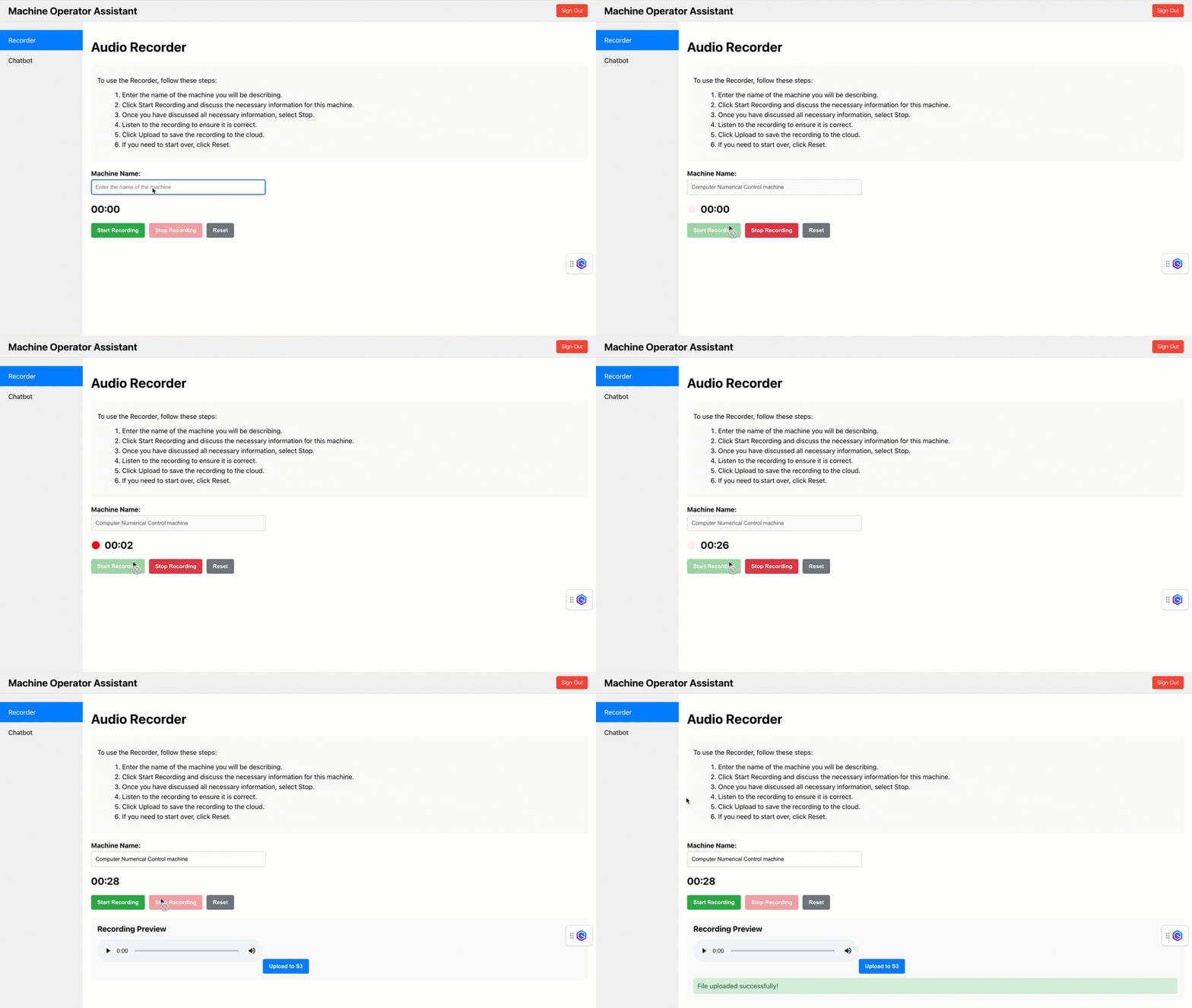
Figure 2: Machine Operator Assistant workflow 1
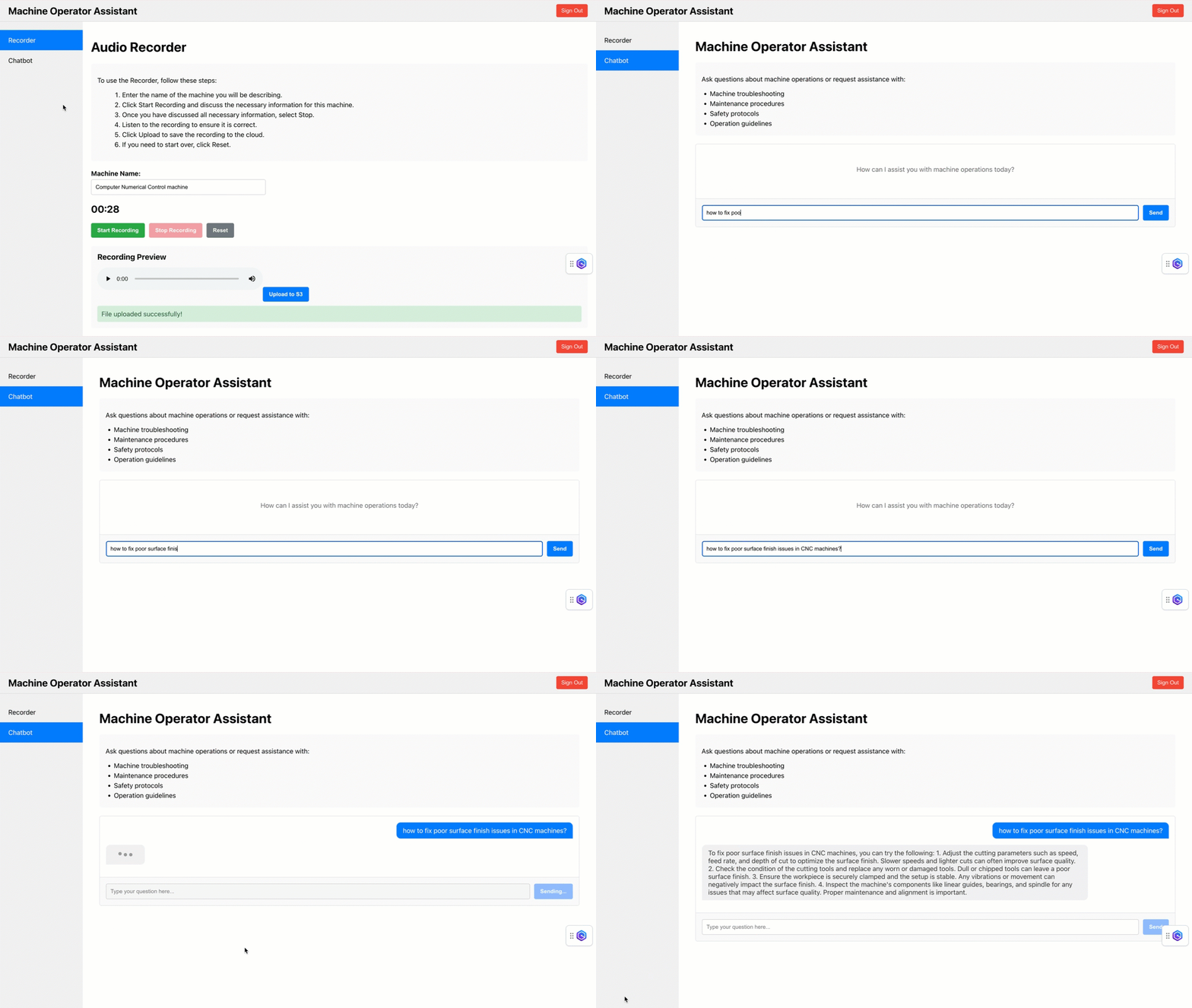
Figure 3: Machine Operator Assistant workflow 2
The implementation of this AI-powered knowledge hub stands as a testament to how technology can reshape manufacturing processes, streamline operations, and preserve critical knowledge structures. As the landscape of the manufacturing workforce continues to evolve, embracing these innovative strategies will be key to future resilience and excellence.