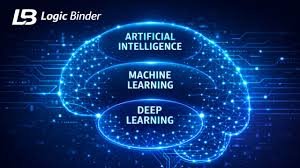
Artificial Intelligence is reshaping industries—but at its core are two powerful technologies: Machine Learning (ML) and Deep Learning (DL). These technologies enable computers to learn from data, recognize patterns, and make intelligent decisions without explicit programming.
From Netflix recommendations to voice assistants and self-driving cars, ML and DL are driving innovation across the digital world.
In this guide, we break down how they work, their differences, applications, tools, and future potential.
What Is Machine Learning?
Machine Learning is a subset of AI that allows systems to learn from data and improve performance over time.
Instead of being manually programmed, ML models analyze patterns and make predictions.
Types of Machine Learning
Supervised Learning
Uses labeled data to train models.
Examples:
- Email spam detection
- Image classification
Unsupervised Learning
Finds patterns in unlabeled data.
Examples:
- Customer segmentation
- Anomaly detection
Reinforcement Learning
Learns through trial and error using rewards.
Examples:
- Game AI
- Robotics
What Is Deep Learning?
Deep Learning is a more advanced form of machine learning that uses artificial neural networks with multiple layers.
These models can process complex data like images, audio, and text with high accuracy.
How Deep Learning Works
Neural Networks
Mimic the human brain with interconnected layers.
Data Training
Models learn from massive datasets.
Automatic Feature Extraction
No need for manual feature engineering.
Backpropagation
Adjusts model weights to improve performance.
Machine Learning vs Deep Learning
| Aspect | Machine Learning | Deep Learning |
|---|---|---|
| Data Needs | Moderate | Very High |
| Complexity | Lower | High |
| Accuracy | Good | Excellent |
| Feature Engineering | Manual | Automatic |
Real-World Applications
Machine Learning Use Cases
- Fraud detection
- Recommendation systems
- Predictive analytics
- Customer insights
Deep Learning Use Cases
- Facial recognition
- Speech recognition
- Natural language processing
- Autonomous driving
Tools and Frameworks
TensorFlow
Used for building scalable ML and DL models.
PyTorch
Popular for research and flexibility.
Scikit-learn
Ideal for traditional ML algorithms.
Keras
User-friendly deep learning framework.
Benefits of ML & DL
Automation
Reduces manual effort.
Accuracy
Improves predictions and decisions.
Scalability
Handles large datasets efficiently.
Innovation
Drives new technologies and solutions.
Challenges
Data Dependency
Requires large amounts of quality data.
High Costs
Needs powerful hardware and resources.
Complexity
Models can be difficult to interpret.
Bias and Ethics
Risk of biased or unfair outcomes.
Future Trends
AutoML
Automating machine learning processes.
Explainable AI
Making models more transparent.
Edge AI
Running models on devices instead of the cloud.
AI Everywhere
Integration across all industries.
How to Get Started
Learn Python
The most popular language for AI.
Study Math Basics
Focus on statistics and linear algebra.
Use Online Platforms
Take structured courses.
Build Projects
Apply knowledge practically.
Best Practices
Start Small
Begin with simple models.
Clean Data
Ensure high-quality datasets.
Test and Evaluate
Measure performance with metrics.
Keep Learning
Stay updated with new advancements.
Final Thoughts
Machine learning and deep learning are the driving forces behind modern artificial intelligence. They power the systems that make our digital world smarter, faster, and more efficient.
While they come with challenges, their potential is enormous. As technology continues to evolve, ML and DL will play a crucial role in shaping the future.
For developers, businesses, and learners, mastering these technologies is no longer optional—it’s essential.
SEO FAQs
Q: What is machine learning?
A method that allows computers to learn from data.
Q: What is deep learning?
A subset of ML that uses neural networks for complex tasks.
Q: Which is better, ML or DL?
It depends on the use case.
Q: Is coding required?
Yes, basic programming knowledge is important.