Artificial Intelligence (AI) is no longer a distant concept—it is actively shaping industries, economies, and everyday life. From automation and smart assistants to advanced data analysis and generative content, AI is evolving at an unprecedented pace.
The future of AI promises even more transformative changes, impacting how we work, communicate, innovate, and solve global challenges.
In this article, we explore the major trends, predictions, opportunities, and risks that will define the next phase of AI.
What Is Driving the Growth of AI?
Several key factors are accelerating AI development.
Big Data
The availability of massive datasets allows AI systems to learn and improve.
Computing Power
Advanced hardware and cloud computing enable faster AI processing.
Machine Learning Advancements
Improved algorithms are making AI more accurate and efficient.
Investment and Innovation
Companies like OpenAI, Google, and Microsoft are heavily investing in AI research and development.
Key Trends Shaping the Future of AI
Generative AI Expansion
Generative AI is one of the fastest-growing areas.
AI can now create:
Text
Images
Videos
Code
This technology is transforming content creation, marketing, and software development.
AI in Everyday Life
AI is becoming deeply integrated into daily activities.
Examples include:
Smart assistants
Personalized recommendations
Automated customer support
Smart home devices
AI will become more invisible yet more powerful in everyday experiences.
AI in Business and Automation
Businesses are using AI to:
Automate workflows
Improve decision-making
Enhance customer experiences
Reduce operational costs
AI-driven automation will continue to reshape industries.
Human-AI Collaboration
AI is not replacing humans—it is enhancing human capabilities.
Future systems will work alongside humans as AI co-pilots, improving productivity and creativity.
AI in Healthcare
AI is transforming healthcare through:
Early disease detection
Personalized treatment plans
Medical imaging analysis
This will improve patient outcomes and efficiency.
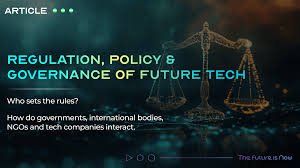
Ethical AI and Regulation
As AI becomes more powerful, ethical concerns are increasing.
Key focus areas include:
Bias and fairness
Transparency
Accountability
Privacy
Governments and organizations are working on frameworks for responsible AI use.
Predictions for the Future of AI
Hyperautomation
AI will automate entire business processes, not just individual tasks.
Personalized AI Assistants
AI systems will adapt to individual users and preferences.
Autonomous Systems
Self-driving cars, drones, and robots will become more common.
AI-Driven Innovation
AI will accelerate scientific discoveries and technological advancements.
Multi-Modal AI
AI systems combining text, image, audio, and video understanding.
Opportunities Created by AI
Increased Productivity
AI enables faster and more efficient work.
New Business Models
AI-driven services and platforms are emerging.
Global Accessibility
AI tools make advanced capabilities available to more people.
Innovation Across Industries
From finance to healthcare, AI is driving innovation.
Challenges and Risks
Job Displacement
Automation may replace certain jobs.
Data Privacy Concerns
AI systems require large amounts of data.
Bias and Fairness Issues
AI models can inherit biases from data.
Security Risks
AI can be used for both defense and cyberattacks.
The Role of Businesses and Individuals
For Businesses
Invest in AI technologies
Train employees
Focus on ethical AI
For Individuals
Learn AI skills
Adapt to new tools
Stay informed about trends
The Future of Work with AI
AI will redefine how work is done.
Automation of Routine Tasks
Repetitive work will be handled by AI.
New Job Roles
Emerging roles in AI development, data science, and automation.
Remote and Digital Work
AI tools enabling global collaboration.
Final Thoughts
The future of AI is full of opportunities and challenges. As AI continues to evolve, it will transform industries, improve productivity, and create new possibilities for innovation.
However, responsible development and ethical considerations will be essential to ensure that AI benefits society as a whole.
Businesses and individuals who embrace AI early will be better positioned to thrive in this rapidly changing landscape.
SEO FAQs
Q: What is the future of AI?
The future of AI involves increased automation, personalization, and integration into everyday life.
Q: Will AI replace jobs?
AI may replace some jobs but will also create new opportunities.
Q: What industries will AI impact the most?
Healthcare, finance, marketing, and manufacturing.
Q: Is AI safe?
AI is safe when developed and used responsibly.