
Reclaiming Your Time: The Minimalism Movement in Technology
If your New Year’s resolution is to cut down on screen time, you’re not alone. In an era dominated by social media notifications, constant multitasking, and an ‘always-on’ culture, many of us are starting to question the long-held belief that more technology equates to an easier life. For years, ‘more’ was synonymous with ‘better’—more apps, more features, more connectivity. Now, however, we’re grappling with the overwhelming reality that this constant barrage of information can often leave us fatigued and distracted.
In response, a counter-movement is gathering momentum: the push for minimalist, low-fi technology aimed at optimizing and reducing our screen time. Reports from technology innovation studio Tomorrow Lab reveal a surge in sales for flip phones, single-purpose music players, and other first-generation devices. In early 2023, some models even doubled in year-on-year sales, showing a clear consumer preference for intentionally limited tools that facilitate a kind of ‘digital detox.’
Reshaping Engagement with Technology
Rather than relying solely on willpower, these minimalist devices aim to reshape our environment. They add friction, strip back interfaces, limit functionality, and make overuse dull and unrewarding. While no single gadget can revolutionize your life overnight, together they can subtly shift your relationship with technology, allowing you to reclaim a more analog existence.
Devices that Demand Less
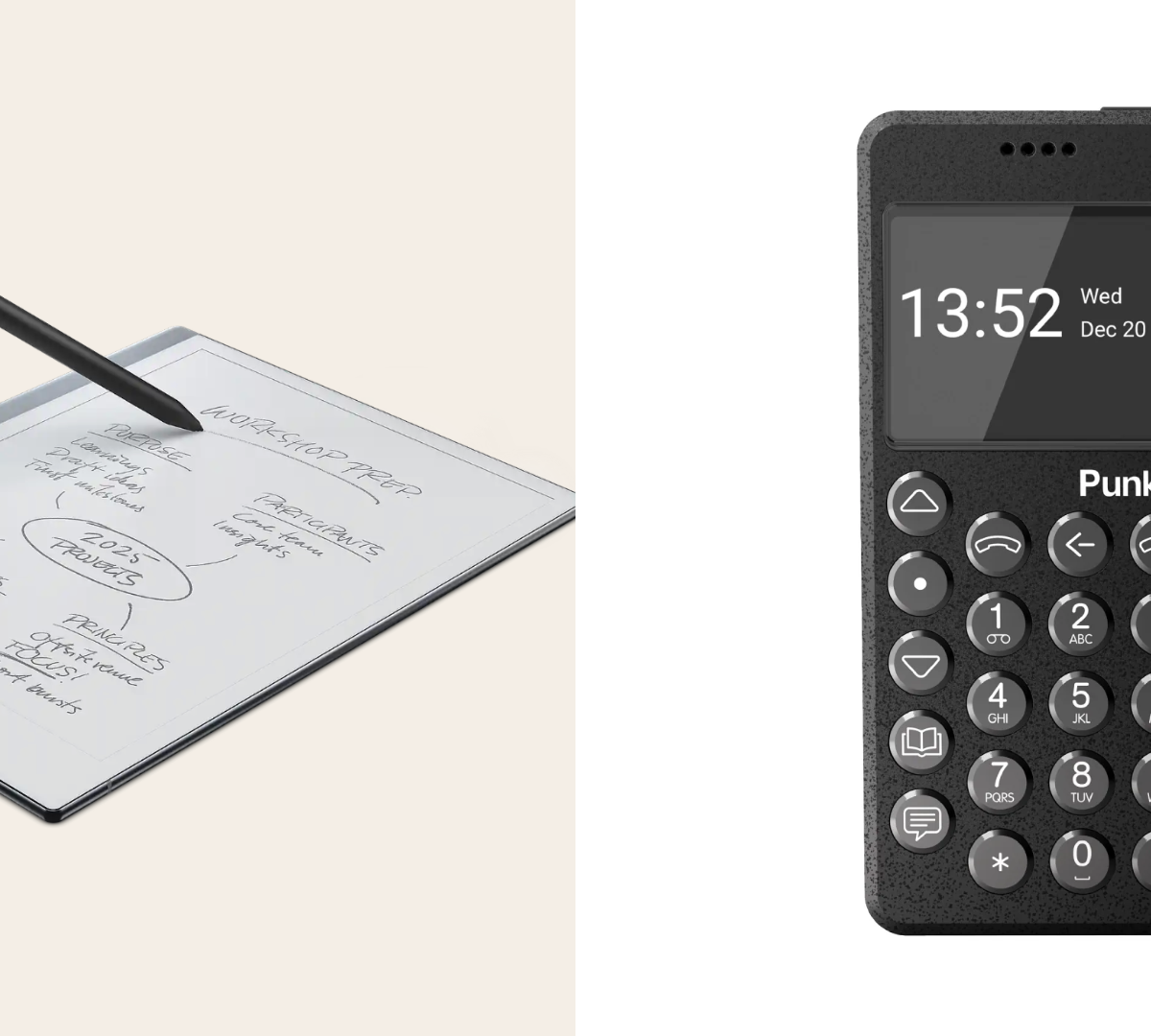
Minimalist phones like the Light Phone II and III, Minimal Phone, and Punkt MP02 focus exclusively on essential functions like calls, texts, alarms, and navigation. Browsers, social media, and email are stripped away, leading to a more straightforward and less distracting experience. Punkt, in particular, offers an austere interface that resists habitual, mindless use.
‘Dumb phones’ such as the Nokia 105 or the iconic 3310 take minimalism to the next level. They provide the bare essentials, eliminating the dopamine loops that feed compulsive checking habits.
Making Technology Less Appealing
Other devices make technological interactions less enticing. The Mudita Pure employs an e-ink display and eliminates scrolling, introducing friction at every interaction. The Unihertz Jelly, while technically a smartphone, frustrates extended scrolling due to its compact size, prompting users to be more intentional in their browsing.
Minimalist Android launchers like Olauncher, Niagara, Before Launcher, or Ratio strip away colorful app grids, replacing them with text-based lists. App blockers such as Freedom, Cold Turkey, LeechBlock, or ScreenZen implement delays between impulse and action, disrupting the habitual scrolling cycle. Even toggling your smartphone to grayscale can dull visual stimulation, slowing down mindless behavior.
The Return of Single-Purpose Devices
One core issue with modern technology is convergence; instead of separate devices for calls, emails, and music, our smart devices do everything, leading to multitasking. Investing in single-purpose devices can encourage more focused, intentional use.
E-readers like the Kindle or Kobo are dedicated to reading, offering a distraction-free environment. The Boox Palma is designed to support apps but introduces discomfort through slow scrolling, discouraging casual use. Distraction-free writing tools like the Freewrite and AlphaSmart Neo emphasize handwriting and reading, free from browsers or social feeds. Tablets like the reMarkable offer a similar experience, focusing on writing without the usual app clutter.
Physical devices like iPods or MP3 players give you music without endless recommendations, while simple fitness trackers keep tabs on health metrics without notifications or distractions. Obstacles to over-consumption can also include returning to analog solutions like notebooks, wall calendars, or physical photo albums instead of digital alternatives.
Tools for Firm Limits
For those seeking more stringent boundaries, specific tools are designed to restrict access by intent. Devices like Brick or Unpluq utilize NFC tokens or key fobs to unlock apps. Without the physical object, access is denied, effectively breaking habitual cycles. Yondr pouches can physically lock phones away as well, an extreme yet effective means of disruption. Ultimately, even something as simple as a traditional alarm clock can create distance from constant tech dependence, allowing for cleaner separation from digital distractions.
Embracing Low-Fi Technology
Engaging with low-fi technology doesn’t reject progress; it emphasizes making choices that serve us rather than allowing these tools to dictate our lives. In a world overwhelmed by digital noise, embracing minimalist devices offers a pathway back to focused engagement and balance.