The Rise of Vibe-Coding in Legal Technology: An Overview
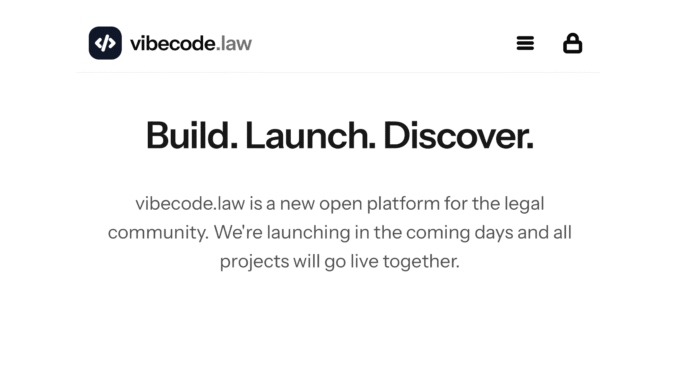
In the ever-evolving landscape of legal technology, one phrase has dominated discussions this month: vibe-code. Following a groundbreaking interview with Jamie Tso, a lawyer from Clifford Chance who has gained significant attention for his innovative homebrew AI tools, we see the emergence of Vibecode.law—an initiative set to empower legal professionals to embrace their creative potential in tech.
What Is Vibecode.law?
Vibecode.law is an open platform designed specifically for the legal community, co-founded by notable figures such as Chris Bridges, Matt Pollins, and Alex Baker. They describe their creation as "a space where those in the industry can showcase their projects," aiming to blend personal portfolios, collaborative opportunities, and a community-driven approach to legal tech.
This platform is seen as a response to the growing interest in vibe-coding, particularly on social media like LinkedIn, where lawyers share their tech experiments. However, the platform aims to centralize these initiatives, giving them the visibility they often lack in larger social media feeds.
The Motivation Behind Vibecode
When asked about the motivation behind Vigebode.law, Bridges shared that it began as a spontaneous weekend project after acquiring the domain. The founders were surprised by the immediate positive response from the community, which reinforced their vision of creating a platform "run by the community, for the community."
In essence, Vibecode aims to lower the barriers for legal professionals to explore and demonstrate their innovative ideas through simple prototypes. It’s more than just collecting cool projects; it’s about fostering a dialogue about what legal technology can achieve.
The Impact of Vibe-Coding
The founders acknowledge that while vibe-coding offers immense potential, it is essential to remain realistic about what non-developers can accomplish using AI-assisted coding techniques. As Bridges pointed out, while these projects may not be production-ready as standalone applications, they serve as essential catalysts for change within the industry.
Vibe-coding allows legal professionals to visualize their ideas, validate concepts before full-scale development, and effectively communicate their needs using tangible prototypes. The cost of experimentation has dramatically decreased, turning previously unfeasible ideas into testable concepts.
Addressing the Concerns of Established Vendors
A significant concern regarding the rise of DIY tools is their potential to disrupt established legal tech vendors. However, the creators of Vibecode do not foresee a complete replacement of big platforms. Instead, they envision a future where law firms use vibe-coded applications as low-risk experimentation tools, enabling firms to innovate without substantial investment risks.
This cooperative spirit can also extend to vendors seeking to collaborate with clients to develop tailored products. The more expansive possibilities presented by vibecoding can create additional avenues for partnership and innovation, rather than direct competition.
What’s Next for Vibe-Coding?
As it stands, the implications of vibe-coding on legal tech remain largely speculative. The initial burst of interest signals a change, but it’s still too early to determine how these DIY tools will integrate into broader workflows. Current projects, including a novel platform for legal task management and a SaaS Inflation Calculator, highlight the creativity pouring into this space.
Whether vibe-coded tools will be adopted at scale remains an open question. Industry insiders recognize that while these tools may fill niche gaps in the market, recognized vendors will likely continue developing new and comprehensive capabilities.
Conclusion
As Vibecode.law prepares to launch, it is clear that vibe-coding resonates with a community eager to embrace innovation. The platform promises to be a testing ground for fresh ideas in legal tech, where collaboration and experimentation can thrive without the constraints of traditional development pathways.
For those interested in this emerging trend, you can find more at Vibecode.law and explore the exciting developments ahead in this vibrant community.