Revolutionizing Customer Support: Why AI is No Longer Optional for Fintechs
Introduction: The Wake-Up Call
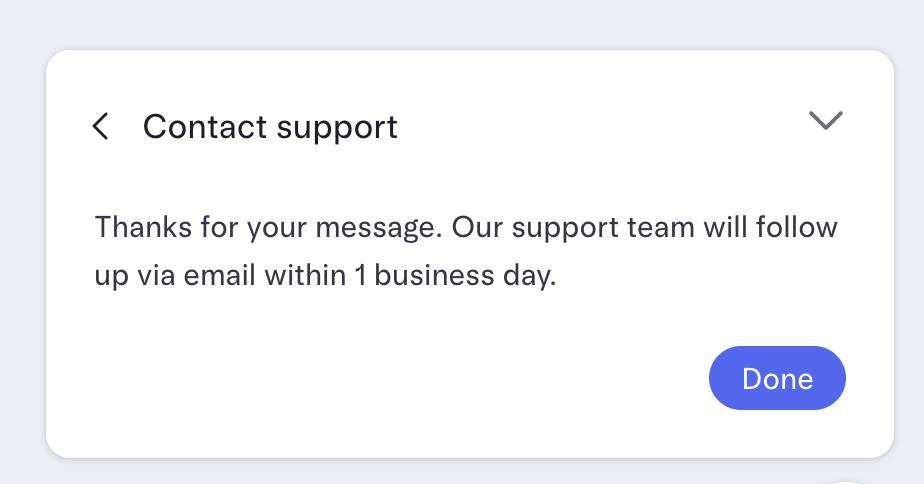
Recently, I reached out to customer support at two notable fintech companies, both boasting annual revenues exceeding $500 million. Their response? A disheartening, "We’ll get back to you in a day." In our rapidly evolving digital landscape, such delays are simply unacceptable. Traditionally, managing a high volume of support inquiries was certainly challenging. But in the Age of AI, waiting isn’t just rude—it’s a business risk.
The New Reality of Customer Support
AI Capabilities in 2026: Immediate Responses Are Possible
Here’s the hard truth: A well-trained AI can handle a vast array of customer inquiries in real time—often in seconds, not hours or days. And the good news? Implementing intelligent AI support solutions isn’t an expensive ordeal; you could set one up as soon as this week.
The Cost of Delay: A Numbers Game
Let’s break down what a delayed response genuinely translates to:
For a B2B product priced at $50/month:
- A customer submits a question on a Friday evening.
- They receive an automated response stating they’ll hear back within one business day.
- By the time they receive a reply on Tuesday, that’s a 3.5-day gap filled with frustration.
- Research suggests that churn risk can escalate by over 40% when customers encounter delays.
For a business handling 1,000 support tickets monthly, even a minor uptick of 2% in churn due to delayed responses leads to a staggering loss: $12,000 in Monthly Recurring Revenue (MRR) over a year.
Competitive Landscape: Speed vs. Suffering
For enterprise deals:
- Imagine a prospect seeking clarity on a technical inquiry during their evaluation.
- Your response gets stuck in the "we’ll get back to you" loop.
- Meanwhile, your competitor’s AI responds instantly—showing them the speed and efficiency they’re longing for.
In today’s environment, who do you believe will keep moving forward in their decision-making process?
What Constitutes “Good Enough” AI Support?
You don’t need to wait for infinity or invest in cutting-edge technology to create a functional AI support system. Here’s what you can adopt immediately:
-
Train AI on Your Most Common Inquiries:
- Companies often encounter a consistent set of questions—addressing about 70% of all inquiries!
- Typical questions include:
- “How do I reset my password?”
- “What does billing entail?”
- “Can I integrate with service X?”
- “What plans are available?”
-
Leverage Your Existing Documentation:
- Most modern AI agents can navigate and pull information from various sources, including customer support histories, Slack channels, and online help centers.
- One company linked their AI to Notion, Intercom, and documentation within four hours!
-
Clear Escalation Protocols:
- Allow the AI to handle the majority of inquiries.
- If uncertain, the AI should route queries to human agents with all relevant context.
- Anger management? Immediate transfer to a human.
- For complex issues, direct tasks to the most suitable specialist.
- Ongoing Monitoring and Enhancement:
- Regularly assess escalated inquiries to identify gaps in knowledge.
- Modify the AI’s training based on this feedback.
- Within roughly 90 days, achieving over 85% automated resolution is entirely feasible.
The Implementation Journey
I’ve observed more than 20 companies deploy AI support systems in 2025. The process generally unfolds as follows:
- Week 1: Audit support tickets and analyze common inquiries.
- Week 2: Select a suitable platform among a plethora of options and commence training.
- Week 3: Conduct internal tests to refine responses and establish escalation procedures.
- Week 4: Soft launch AI support to a fraction of users and monitor closely.
- Weeks 5-8: Continue to iterate and broaden the AI’s capabilities by accommodating edge cases.
- Beyond Week 8: Scale to 100%, reallocating human resources to address more complex tasks and handle proactive outreach.
In terms of investment, the initial setup usually ranges from $5,000 to $25,000, followed by a monthly maintenance fee of $500 to $2,000 based on demand. This pales in comparison to a traditional customer support employee’s full burden, which can easily exceed $80,000 annually.
The Myth of the "Human Touch"
Here’s a notion that needs reconsideration: Customers often don’t desire human interaction for mundane issues like password resets or billing inquiries.
What they crave are speedy, accurate solutions that allow them to move on with their lives. In contrast, human intervention becomes essential for:
- Complex troubleshooting requiring discernment.
- Emotional scenarios where customers feel frustrated.
- Strategic dialogues regarding upsells, renewals, or feedback based on nuanced discussions.
For routine queries, an instant, AI-generated answer is far more appealing than waiting a day for a human response that delivers the same information.
The Competitive Edge with AI
Implementing AI in customer support isn’t merely about improving efficiency or cutting costs. It’s about enhancing the customer experience, creating a significant competitive advantage.
During a potential client’s evaluation process, if you provide an automated, timely answer to their question while your competitor falls short, who do you think will emerge victorious?
The Call to Action
If your response time still relies on a “1 business day” service level agreement in 2025, you aren’t merely safeguarding your team’s workload. You’re signaling to customers that you’ve failed to keep pace with a critical aspect of modern business.
Every SaaS company should prioritize deploying AI-driven support solutions within the next 90 days—not in 2026 or whenever it’s convenient, but now.
As the digital landscape evolves, a sluggish response time may as well be the same as being without a mobile app. No one will voice it too directly, but they’ll undoubtedly be thinking, “Really? In 2026?”
Don’t find yourself in that situation. Embrace the change today.