

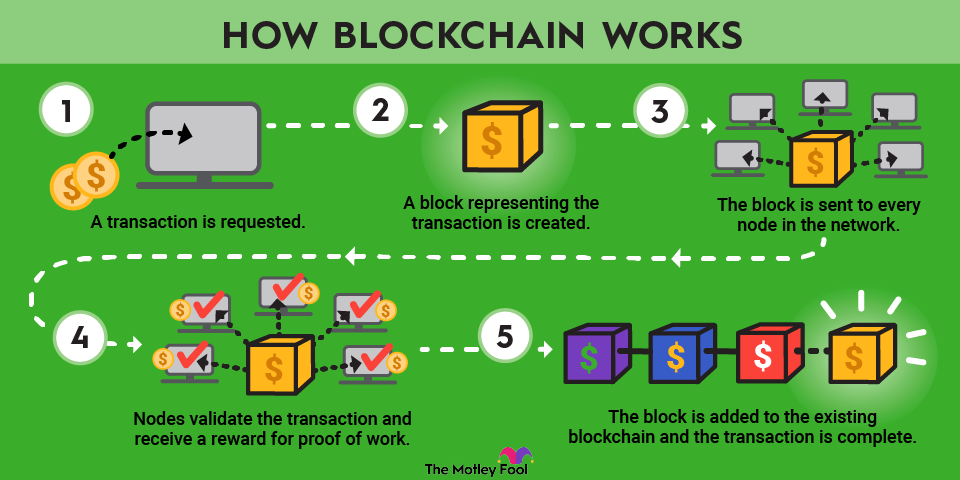
Blockchain technology is the foundation behind cryptocurrencies and many emerging digital innovations. Since the launch of Bitcoin in 2009, blockchain has evolved far beyond digital currency and is now being adopted across industries such as finance, healthcare, supply chain, and digital identity.
But what exactly is blockchain technology, how does it work, and why is it considered revolutionary?
In this guide, we break down blockchain fundamentals, its key features, real-world applications, and the future of decentralized technology.
What Is Blockchain Technology?
A blockchain is a distributed digital ledger that records transactions across multiple computers in a secure and transparent way.
Instead of storing data in a central database controlled by a single organization, blockchain stores information across a network of participants.
Each record is stored inside a “block,” and these blocks are linked together to form a chain of data.
Once a block is added, it becomes extremely difficult to alter or delete the information.
How Blockchain Works
Blockchain networks operate through several key components.
1️⃣ Transactions
A transaction represents an action recorded on the blockchain.
Examples include:
- Sending cryptocurrency
- Executing a smart contract
- Recording ownership of digital assets
2️⃣ Blocks
Transactions are grouped together into blocks.
Each block contains:
- Transaction data
- Timestamp
- A unique cryptographic hash
- The hash of the previous block
This linking process creates the blockchain structure.
3️⃣ Decentralized Network
Blockchain operates on a distributed network of computers called nodes.
Each node maintains a copy of the blockchain ledger.
Because many nodes verify transactions, the system becomes highly secure and resistant to tampering.
4️⃣ Consensus Mechanisms
Consensus mechanisms ensure that all participants agree on the validity of transactions.
Common mechanisms include:
- Proof of Work
- Proof of Stake
- Delegated Proof of Stake
These systems help maintain trust without relying on a central authority.
Key Features of Blockchain Technology
Blockchain has several characteristics that make it unique.
Decentralization
No single authority controls the network.
This reduces the risk of censorship or manipulation.
Transparency
All transactions recorded on a blockchain are visible to participants.
This improves accountability.
Security
Cryptography protects blockchain data from unauthorized changes.
Immutability
Once information is recorded on the blockchain, it cannot easily be modified.
This ensures data integrity.
Types of Blockchain Networks
Not all blockchains are the same.
Public Blockchains
Public blockchains are open networks where anyone can participate.
Examples include:
- Bitcoin
- Ethereum
These networks prioritize transparency and decentralization.
Private Blockchains
Private blockchains are controlled by organizations and limit access to selected participants.
Businesses often use private blockchains for internal operations.
Consortium Blockchains
These blockchains are governed by a group of organizations rather than a single entity.
They are common in industries where multiple companies collaborate.
Real-World Applications of Blockchain
Although blockchain started with cryptocurrency, its applications now extend far beyond digital money.
Cryptocurrency
Blockchain powers decentralized currencies like Bitcoin and Ethereum.
These currencies enable peer-to-peer transactions without banks.
Smart Contracts
Smart contracts are self-executing programs that automatically enforce agreements.
They eliminate the need for intermediaries.
Supply Chain Management
Blockchain can track products from manufacturing to delivery, improving transparency and reducing fraud.
Digital Identity
Blockchain technology can store secure digital identity records, helping protect personal information.
Healthcare Data
Healthcare systems can use blockchain to securely store patient records while allowing authorized access.
Advantages of Blockchain Technology
Blockchain offers many benefits.
Improved Security
Decentralized networks reduce the risk of hacking and data manipulation.
Reduced Costs
Blockchain can eliminate intermediaries such as banks or brokers.
Faster Transactions
Cross-border payments can be processed much faster compared to traditional systems.
Greater Transparency
All participants can verify transactions independently.
Challenges of Blockchain Adoption
Despite its advantages, blockchain faces several challenges.
Scalability
Some blockchain networks struggle to handle large transaction volumes.
Energy Consumption
Proof-of-Work networks require significant computing power.
Regulatory Uncertainty
Governments are still developing regulations for blockchain technologies.
Technical Complexity
Implementing blockchain solutions requires specialized knowledge.
Blockchain vs Traditional Databases
| Feature | Blockchain | Traditional Database |
|---|---|---|
| Control | Decentralized | Centralized |
| Transparency | High | Limited |
| Security | Cryptographic | Controlled access |
| Data Modification | Immutable | Editable |
Blockchain prioritizes trust and transparency over centralized control.
The Future of Blockchain Technology
Blockchain is expected to play a major role in the future digital economy.
Emerging trends include:
Web3 Development
A decentralized internet where users control their data.
Tokenized Assets
Real-world assets like real estate and stocks represented on blockchain.
Decentralized Finance (DeFi)
Financial services such as lending and trading without traditional banks.
Integration with Artificial Intelligence
AI systems may analyze blockchain data to improve decision-making.
How Businesses Can Use Blockchain
Organizations exploring blockchain should:
- Identify processes requiring transparency
- Evaluate decentralized vs private blockchain solutions
- Build secure smart contracts
- Partner with blockchain development experts
Strategic implementation can create competitive advantages.
Final Thoughts
Blockchain technology is transforming how data, assets, and trust are managed in the digital world. By enabling secure, decentralized systems, blockchain has the potential to reshape industries ranging from finance to healthcare and supply chains.
Although challenges remain, continued innovation and adoption suggest that blockchain will play an increasingly important role in the future of technology and global commerce.
Understanding blockchain today provides valuable insight into the next generation of digital infrastructure.
SEO FAQs
Q: What is blockchain technology?
Blockchain is a decentralized digital ledger that records transactions across a distributed network of computers.
Q: Is blockchain only used for cryptocurrency?
No. Blockchain is also used in supply chains, healthcare, digital identity, and smart contracts.
Q: Why is blockchain secure?
It uses cryptography and decentralized verification to protect data from manipulation.
Q: What is the difference between blockchain and traditional databases?
Blockchain is decentralized and immutable, while traditional databases are centrally controlled and editable.


