

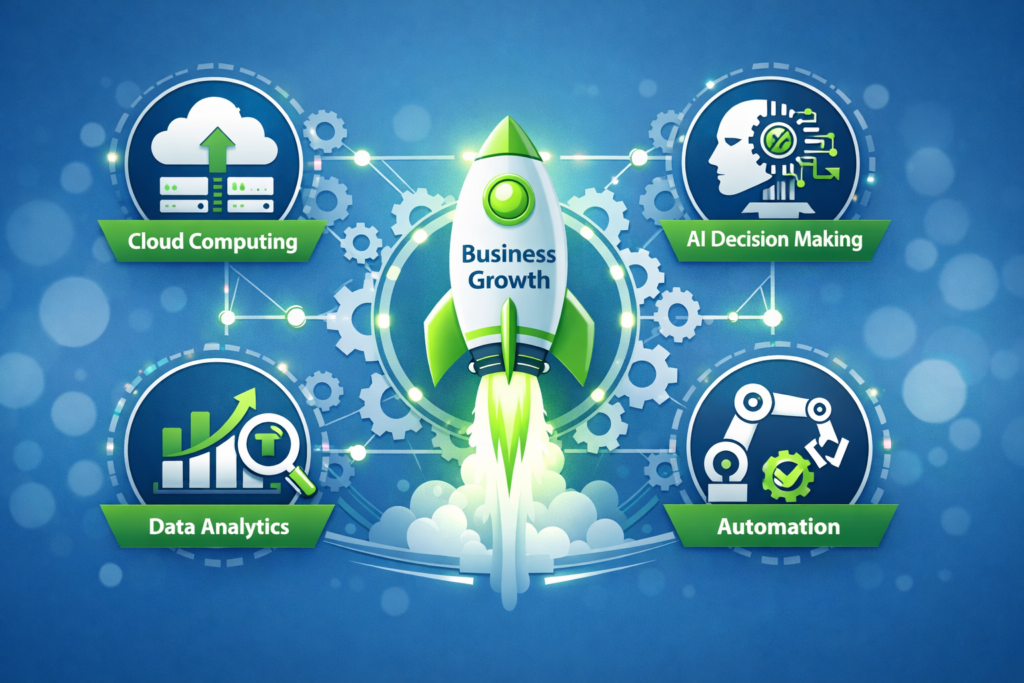
Building an innovative technology product is only the first step toward success. Whether you’re launching a software application, SaaS platform, AI solution, cybersecurity service, eCommerce tool, or mobile app, long-term growth depends on your ability to reach the right audience, communicate value effectively, and retain satisfied customers.
The technology industry is more competitive than ever. New startups emerge daily, customer expectations continue to rise, and digital marketing channels evolve rapidly. Businesses that rely solely on paid advertising or word-of-mouth often struggle to scale sustainably.
Modern tech marketing combines data-driven decision-making, customer-centric messaging, search engine optimization (SEO), content marketing, product-led growth, automation, artificial intelligence (AI), and customer success strategies to create consistent, measurable growth.
This guide explores the essential marketing strategies, growth frameworks, customer acquisition techniques, retention methods, and emerging trends that technology businesses can use to build lasting success in 2026 and beyond.
What Is Tech Marketing?
Tech marketing is the process of promoting technology products and services to attract, convert, and retain customers.
Unlike traditional marketing, tech marketing often involves explaining complex products in a way that is clear, practical, and focused on solving real customer problems.
Examples include promoting:
- SaaS platforms
- Mobile apps
- AI tools
- Cybersecurity solutions
- Cloud services
- Developer platforms
- Business software
- IT consulting services
The goal is not just to generate attention but to demonstrate measurable value.
Understanding Your Target Audience
Every successful marketing strategy begins with understanding your audience.
Ask questions such as:
- Who is the ideal customer?
- What challenges do they face?
- What goals are they trying to achieve?
- Which digital channels do they use most?
- What influences their purchasing decisions?
Creating detailed customer personas helps tailor messaging, product positioning, and marketing campaigns more effectively.
Build a Strong Value Proposition
Your value proposition should clearly answer one question:
Why should someone choose your product instead of an alternative?
An effective value proposition should communicate:
- The problem you solve
- Your unique benefits
- Expected outcomes
- Why your solution is different
- How quickly customers can experience value
Avoid technical jargon when simple language will communicate the same idea more effectively.
Content Marketing: Educate Before You Sell
Content marketing remains one of the most effective growth strategies for technology companies.
Useful content builds trust and attracts potential customers throughout their buying journey.
Content Ideas
- How-to tutorials
- Industry news
- Product comparisons
- Customer success stories
- Buying guides
- Case studies
- Technical documentation
- Frequently asked questions
- Webinars
- Podcasts
High-quality educational content often generates long-term organic traffic through search engines.
Search Engine Optimization (SEO)
SEO helps technology businesses reach potential customers who are actively searching for solutions.
Focus on:
- Keyword research
- Helpful content
- Technical SEO
- Internal linking
- Fast page speed
- Mobile optimization
- Structured data
- Quality backlinks
Rather than targeting only high-volume keywords, include long-tail keywords that reflect specific customer needs.
Product-Led Growth (PLG)
Product-led growth allows the product itself to drive customer acquisition.
Common PLG strategies include:
- Free trials
- Freemium plans
- Interactive product tours
- Self-service onboarding
- Referral programs
When users experience value quickly, they are more likely to become paying customers.
Email Marketing
Email continues to deliver strong results for technology companies.
Effective campaigns include:
- Product updates
- Educational newsletters
- Customer onboarding
- Feature announcements
- Event invitations
- Renewal reminders
- Personalized recommendations
Segmenting your audience helps ensure each subscriber receives relevant information.
Social Media Marketing
Technology brands use social media to:
- Share educational content
- Engage communities
- Announce product updates
- Highlight customer stories
- Build brand awareness
Focus on platforms where your audience is most active rather than trying to maintain a presence everywhere.
Video Marketing
Video simplifies complex technology concepts.
Popular formats include:
- Product demonstrations
- Tutorials
- Customer testimonials
- Live Q&A sessions
- Feature walkthroughs
- Industry insights
Short-form videos can generate awareness, while longer demonstrations help prospects evaluate your solution.
AI in Marketing
Artificial intelligence is reshaping digital marketing.
AI can assist with:
- Content planning
- Audience segmentation
- Marketing automation
- Performance analysis
- Personalization
- Email optimization
- Predictive analytics
Human creativity remains essential for brand strategy, storytelling, and relationship building.
Growth Hacking
Growth hacking focuses on rapid experimentation to identify scalable marketing opportunities.
Examples include:
- Referral incentives
- Viral sharing features
- Landing page testing
- Conversion optimization
- Community engagement
- Interactive tools
- Lead magnets
Not every experiment will succeed, but consistent testing helps uncover effective strategies.
Customer Acquisition Channels
Successful technology businesses often diversify acquisition sources.
Common channels include:
- Organic search
- Paid advertising
- Social media
- Partnerships
- Affiliate programs
- Webinars
- Online communities
- Email campaigns
- Content marketing
- Industry events
Avoid depending entirely on a single traffic source.
Conversion Rate Optimization (CRO)
Generating traffic is only part of the equation.
Improve conversions by:
- Simplifying navigation
- Reducing unnecessary form fields
- Strengthening calls to action
- Improving page speed
- Displaying customer testimonials
- Providing clear pricing
- Reducing friction during signup
Small improvements often produce significant increases in conversions.
Customer Retention
Acquiring customers is generally more expensive than retaining existing ones.
Retention strategies include:
- Excellent customer support
- Regular product improvements
- Personalized communication
- Loyalty programs
- Educational resources
- Community engagement
Satisfied customers often become advocates who recommend your product to others.
Building a Community
Communities strengthen customer relationships.
Technology companies often build communities through:
- Discussion forums
- User groups
- Online events
- Developer communities
- Educational webinars
- Social platforms
Communities encourage collaboration, feedback, and long-term loyalty.
Partnerships and Integrations
Strategic partnerships expand market reach.
Examples include:
- Software integrations
- Affiliate partnerships
- Co-marketing campaigns
- Technology alliances
- Reseller programs
Partnerships create value for both businesses and customers.
Analytics and Measurement
Marketing decisions should be guided by data.
Monitor key metrics such as:
- Website traffic
- Conversion rates
- Customer acquisition cost (CAC)
- Customer lifetime value (LTV)
- Retention rate
- Churn rate
- Email engagement
- Organic search performance
Review metrics regularly and use insights to refine your strategy.
Common Marketing Mistakes
Avoid these frequent errors:
- Targeting everyone instead of a specific audience.
- Focusing on features instead of customer outcomes.
- Ignoring SEO.
- Publishing inconsistent content.
- Neglecting customer feedback.
- Overlooking onboarding experiences.
- Measuring vanity metrics instead of business outcomes.
A disciplined approach leads to more sustainable growth.
Marketing for SaaS Businesses
Software-as-a-Service companies often benefit from:
- Free trials
- Product tutorials
- Knowledge bases
- Automated onboarding
- In-app guidance
- Usage analytics
- Customer success teams
Helping users achieve value quickly improves activation and retention.
Marketing for AI Products
AI companies should prioritize:
- Transparency about capabilities.
- Clear explanations of use cases.
- Responsible AI practices.
- Educational content.
- Demonstrations of measurable results.
Avoid exaggerated claims or unrealistic promises about AI performance.
Emerging Growth Trends
Hyper-Personalization
Businesses increasingly tailor experiences based on user behavior, preferences, and lifecycle stage.
First-Party Data
As privacy expectations evolve, companies rely more on data collected directly from customer interactions rather than third-party tracking.
Interactive Content
Calculators, assessments, product configurators, and quizzes encourage engagement while providing useful insights.
AI-Assisted Customer Success
AI helps identify customers who may need additional support, enabling proactive engagement before issues lead to churn.
Product Ecosystems
Technology companies increasingly expand their offerings through integrations and complementary services, encouraging long-term customer relationships.
Best Practices Checklist
When planning your marketing strategy:
- ✅ Clearly define your target audience.
- ✅ Develop a compelling value proposition.
- ✅ Publish helpful, people-first content.
- ✅ Optimize your website for search engines.
- ✅ Measure performance using meaningful metrics.
- ✅ Test new ideas through controlled experiments.
- ✅ Improve onboarding and customer support.
- ✅ Build long-term relationships rather than focusing only on short-term sales.
Conclusion
Tech marketing is about more than generating clicks or increasing website traffic. Sustainable growth comes from understanding customer needs, communicating value clearly, delivering exceptional experiences, and continually improving based on data and feedback.
By combining SEO, content marketing, product-led growth, email campaigns, AI-assisted automation, customer success, and ongoing optimization, technology businesses can build strong brands and loyal customer communities.
As digital marketing continues to evolve, the companies that focus on trust, education, transparency, and measurable customer outcomes will be best positioned for long-term success.
Frequently Asked Questions (FAQs)
1. What is tech marketing?
Tech marketing is the process of promoting technology products and services through strategies such as content marketing, SEO, email campaigns, social media, product-led growth, and customer success to attract and retain customers.
2. What is product-led growth?
Product-led growth (PLG) is a business strategy where the product itself drives customer acquisition and expansion through experiences such as free trials, freemium plans, and self-service onboarding.
3. Why is SEO important for technology companies?
SEO helps technology businesses attract potential customers who are actively searching for solutions, providing long-term organic traffic and reducing dependence on paid advertising.
4. How does AI improve marketing?
AI supports marketing by assisting with personalization, automation, content planning, audience segmentation, campaign optimization, and performance analysis, while human teams remain responsible for strategy and oversight.
5. Which metrics should tech businesses monitor?
Important metrics include website traffic, conversion rate, customer acquisition cost (CAC), customer lifetime value (LTV), churn rate, retention rate, email engagement, and organic search performance.


