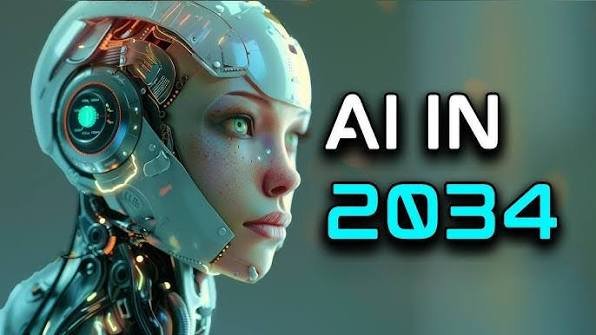
Artificial Intelligence (AI) has rapidly evolved from a specialized field of computer science into one of the most transformative technologies of the modern era. Today, AI powers search engines, recommendation systems, customer support chatbots, medical diagnostics, financial services, cybersecurity platforms, productivity software, autonomous vehicles, and creative tools used by millions of people every day.
Businesses are integrating AI into their operations to automate repetitive tasks, improve customer experiences, analyze large datasets, and support better decision-making. At the same time, researchers continue to push the boundaries of machine learning, robotics, natural language processing, and computer vision.
The coming decade is expected to bring even greater changes. AI systems are likely to become more capable, collaborative, and deeply integrated into everyday life. They may transform industries, reshape the workforce, accelerate scientific discovery, and create new opportunities for innovation. However, these advancements also raise important questions about ethics, privacy, security, governance, and the role of humans in an AI-powered world.
This guide explores the future of AI, highlights emerging trends, examines realistic predictions for the years ahead, and discusses how individuals and organizations can prepare for the next phase of artificial intelligence.
Understanding the Current State of AI
Before looking ahead, it is helpful to understand where AI stands today.
Modern AI systems can:
- Generate text, images, audio, and video
- Translate languages
- Summarize documents
- Write software code
- Analyze medical images
- Detect cybersecurity threats
- Recommend products and content
- Automate customer support
- Assist with research and education
These capabilities continue to improve as AI models become more efficient and are trained on increasingly diverse datasets.
Major Trends Shaping the Future of AI
Several key trends are expected to influence the direction of artificial intelligence over the next decade.
1. Smarter AI Assistants
AI assistants are evolving from simple chatbots into intelligent collaborators.
Future AI assistants may help users:
- Plan complex projects
- Manage schedules
- Coordinate teams
- Conduct research
- Analyze business data
- Automate workflows
- Support creative work
Rather than responding to isolated prompts, they will increasingly assist with multi-step tasks while keeping users in control.
2. Multimodal AI Will Become Standard
Future AI systems are expected to understand and generate multiple forms of information simultaneously.
They will work with:
- Text
- Images
- Audio
- Video
- Documents
- Structured data
This will enable more natural interactions and richer problem-solving experiences.
3. AI Agents and Intelligent Automation
AI agents are designed to complete sequences of tasks with limited user input.
Potential applications include:
- Managing calendars
- Organizing travel
- Monitoring business operations
- Handling customer service workflows
- Processing invoices
- Scheduling meetings
- Coordinating software development tasks
Human oversight will remain important, especially for high-impact decisions.
4. AI in Healthcare
Healthcare is expected to remain one of AI’s most significant application areas.
Future developments may include:
- Earlier disease detection
- Personalized treatment recommendations
- Faster drug discovery
- Medical imaging support
- Hospital workflow optimization
- Remote patient monitoring
AI is expected to assist healthcare professionals rather than replace clinical expertise.
5. AI in Education
Artificial intelligence is transforming education through personalized learning experiences.
Future capabilities may include:
- Adaptive lesson plans
- Intelligent tutoring
- Automated assessments
- Language translation
- Accessibility improvements
- Personalized study recommendations
Teachers will continue to play an essential role in mentoring, collaboration, and critical thinking.
6. AI in Business
Businesses increasingly rely on AI to improve efficiency and competitiveness.
Common applications include:
- Customer service
- Marketing optimization
- Sales forecasting
- Financial analysis
- Supply chain management
- Human resources
- Product development
Organizations that adopt AI responsibly may achieve significant productivity gains.
7. AI and Software Development
AI-assisted programming tools continue to improve.
Future capabilities may include:
- Code generation
- Bug detection
- Automated testing
- Documentation
- Architecture suggestions
- Security analysis
Developers will remain responsible for reviewing, validating, and maintaining software quality.
8. AI and Robotics
Advances in robotics are expanding AI’s role in the physical world.
Potential applications include:
- Manufacturing
- Warehousing
- Agriculture
- Healthcare assistance
- Logistics
- Disaster response
- Home assistance
Improvements in perception, planning, and mobility will enable robots to operate in increasingly complex environments.
9. AI in Scientific Research
Researchers use AI to accelerate discoveries across multiple disciplines.
Examples include:
- Climate modeling
- Biology
- Chemistry
- Materials science
- Astronomy
- Genomics
AI helps analyze large datasets and identify patterns that might otherwise take much longer to discover.
10. AI and Cybersecurity
Artificial intelligence strengthens cybersecurity by:
- Detecting anomalies
- Prioritizing alerts
- Identifying malware
- Supporting incident response
- Analyzing threat intelligence
However, attackers may also use AI to improve phishing, automate reconnaissance, and develop more convincing social engineering attacks, making robust defenses increasingly important.
Ethical Considerations
The future of AI depends not only on technological progress but also on responsible development.
Key ethical priorities include:
- Transparency
- Fairness
- Accountability
- Privacy
- Human oversight
- Bias mitigation
- Security
- Responsible deployment
Organizations should establish governance frameworks to ensure AI is used safely and ethically.
The Future of Work
AI is expected to reshape many occupations by automating repetitive tasks.
Roles may increasingly emphasize:
- Creativity
- Leadership
- Communication
- Strategic thinking
- Problem-solving
- Emotional intelligence
Rather than replacing entire professions, AI is likely to change how many jobs are performed.
Continuous learning and digital skills development will become increasingly valuable.
AI and the Global Economy
Artificial intelligence is expected to contribute to economic growth by:
- Increasing productivity
- Accelerating innovation
- Supporting entrepreneurship
- Improving operational efficiency
- Enabling new business models
Organizations that successfully integrate AI while investing in workforce development may be better positioned for long-term success.
AI Governance and Regulation
Governments around the world are developing policies to encourage innovation while reducing potential risks.
Future regulatory priorities may include:
- High-risk AI systems
- Data privacy
- Transparency requirements
- Consumer protection
- Accountability
- Security standards
Businesses should monitor regulatory developments relevant to their industries.
Challenges That Remain
Despite rapid progress, AI still faces important limitations.
Common challenges include:
- Hallucinations and factual inaccuracies
- Bias in training data
- Privacy concerns
- Security risks
- High computational costs
- Intellectual property questions
- Workforce adaptation
- Environmental impact of large-scale computing
Addressing these challenges will require collaboration among researchers, governments, businesses, and society.
Predictions for 2026–2035
Based on current trends, several developments appear likely.
AI Will Become a Standard Business Tool
AI capabilities are expected to become integrated into most productivity software, customer service platforms, analytics tools, and enterprise applications.
Human-AI Collaboration Will Increase
Professionals across industries will increasingly use AI to enhance productivity while retaining responsibility for important decisions.
AI Will Improve Accessibility
More advanced speech recognition, translation, captioning, and assistive technologies are likely to improve digital accessibility for millions of users.
AI Will Support Sustainable Development
Artificial intelligence may contribute to:
- Energy optimization
- Smart agriculture
- Climate monitoring
- Resource management
- Sustainable manufacturing
Personalized AI Experiences
AI systems are expected to become more context-aware and adaptable, offering more personalized assistance while respecting user preferences and privacy controls.
Preparing for the Future of AI
Whether you’re an individual or an organization, these strategies can help you adapt:
- Learn the fundamentals of AI and machine learning.
- Develop digital literacy and critical thinking skills.
- Experiment responsibly with AI tools.
- Protect sensitive information when using AI services.
- Establish clear AI governance policies.
- Train employees on responsible AI use.
- Monitor regulatory developments.
- Continuously evaluate new AI opportunities and risks.
Best Practices for Responsible AI Adoption
Organizations should:
- Keep humans involved in significant decisions.
- Test AI systems thoroughly before deployment.
- Monitor model performance over time.
- Protect personal and sensitive data.
- Promote transparency and explainability.
- Encourage ethical AI development.
- Invest in employee education.
- Maintain strong cybersecurity practices.
Future of AI Checklist
To prepare for the AI-driven future:
- ✅ Understand AI fundamentals.
- ✅ Identify business opportunities for AI.
- ✅ Invest in digital skills.
- ✅ Develop governance policies.
- ✅ Protect data and privacy.
- ✅ Monitor AI regulations.
- ✅ Evaluate AI tools carefully.
- ✅ Combine AI with human expertise.
- ✅ Review AI outputs before acting on them.
- ✅ Continue learning as technology evolves.
Conclusion
Artificial intelligence is poised to become one of the defining technologies of the coming decade. From healthcare and education to business, cybersecurity, scientific research, and creative industries, AI is expected to improve productivity, accelerate innovation, and create entirely new opportunities.
At the same time, responsible development remains essential. Privacy, transparency, fairness, accountability, and human oversight will play critical roles in ensuring AI benefits society while minimizing potential risks.
The future of AI is unlikely to be one where machines replace people. Instead, it is more likely to be a future of collaboration, where intelligent systems enhance human capabilities, automate routine work, and enable individuals and organizations to solve increasingly complex challenges.
Frequently Asked Questions (FAQs)
1. What is the future of AI?
The future of AI involves more capable, collaborative, and personalized systems that support industries such as healthcare, education, business, cybersecurity, and scientific research while emphasizing responsible governance.
2. Will AI replace human workers?
AI is expected to automate many repetitive tasks, but human skills such as creativity, leadership, communication, and ethical judgment will continue to be highly valuable. Many jobs are likely to evolve rather than disappear.
3. Which industries will benefit the most from AI?
Healthcare, finance, education, manufacturing, logistics, cybersecurity, software development, retail, and scientific research are among the sectors expected to benefit significantly.
4. What are AI agents?
AI agents are systems that can perform multi-step tasks with limited user input, such as managing workflows, organizing information, or assisting with planning, while still benefiting from human supervision.
5. How can businesses prepare for the future of AI?
Businesses should build AI literacy, identify valuable use cases, establish governance policies, protect sensitive data, invest in workforce training, and continuously evaluate how AI can support strategic objectives.