

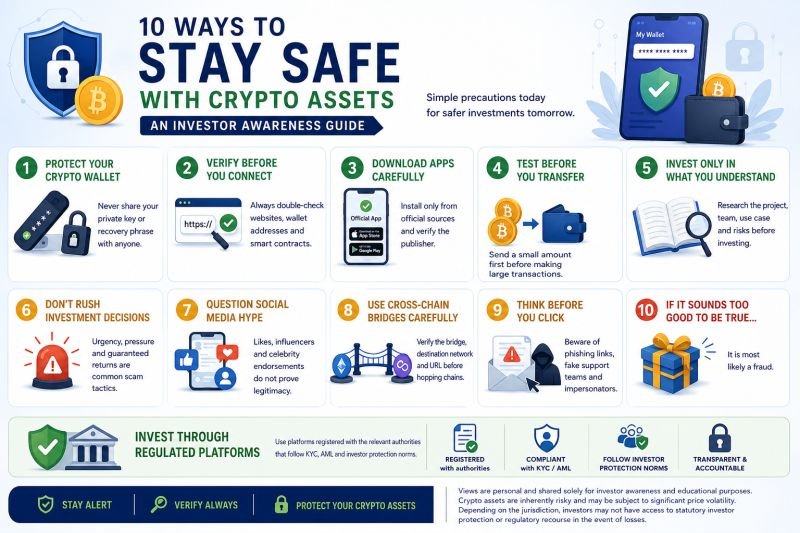
Cryptocurrency has transformed the financial world by enabling decentralized transactions, digital ownership, and global peer-to-peer payments. Millions of people now invest in Bitcoin, Ethereum, stablecoins, NFTs, and other digital assets, while businesses increasingly accept cryptocurrency as a payment method.
However, the rapid growth of crypto has also attracted cybercriminals. Every year, individuals and organizations lose millions of dollars to phishing attacks, fake investment platforms, malicious smart contracts, wallet theft, exchange breaches, and social engineering scams. Unlike traditional banking systems, cryptocurrency transactions are generally irreversible, making prevention far more effective than recovery.
The good news is that most crypto-related losses can be avoided through strong security practices, careful research, and awareness of common scams.
This guide explains the biggest cryptocurrency security risks, the most common scams, proven protection strategies, and practical steps every crypto user should follow to safeguard their digital assets.
Why Crypto Security Matters
Unlike traditional financial institutions, cryptocurrency places much of the responsibility for security on the user.
If you lose access to your wallet or approve a malicious transaction, there is often no central authority that can reverse it.
Strong security helps protect against:
- Wallet theft
- Identity theft
- Financial loss
- Fraudulent transactions
- Malware
- Exchange compromises
- Social engineering attacks
Good security habits are essential whether you hold a small amount of cryptocurrency or manage a large investment portfolio.
Understanding Crypto Wallets
A cryptocurrency wallet stores the credentials needed to access your digital assets on the blockchain.
Wallets generally fall into two categories:
Hot Wallets
Hot wallets are connected to the internet.
Examples include:
- Mobile wallets
- Browser extension wallets
- Desktop wallets
- Web wallets
Advantages:
- Convenient
- Fast transactions
- Easy access
Disadvantages:
- More exposed to online attacks
Hot wallets are useful for everyday transactions but should be protected carefully.
Cold Wallets
Cold wallets remain offline except when needed.
Examples include:
- Hardware wallets
- Air-gapped devices
- Paper backups
Advantages:
- Strong protection against online attacks
- Better for long-term storage
Disadvantages:
- Less convenient for frequent transactions
- Recovery information must be stored securely
Many long-term investors use cold storage for significant holdings.
Public Keys vs. Private Keys
Understanding the difference is critical.
Public Key
A public key or wallet address can be shared with others to receive cryptocurrency.
Private Key
A private key proves ownership of your wallet and authorizes transactions.
Never share your private key with anyone. Anyone who gains access to it can control your funds.
What Is a Seed Phrase?
Most wallets generate a recovery phrase (often 12 or 24 words).
This phrase allows you to restore your wallet if your device is lost or damaged.
Best practices include:
- Write it down offline.
- Store it in a secure location.
- Never upload it to cloud storage.
- Never share it with anyone.
- Consider keeping a backup in a separate secure location.
Anyone requesting your recovery phrase is attempting to gain control of your wallet.
Common Crypto Scams
Phishing Attacks
Phishing is one of the most common methods used by scammers.
Attackers create fake:
- Wallet websites
- Exchange login pages
- Emails
- Social media profiles
- Browser pop-ups
Their goal is to trick users into revealing passwords, seed phrases, or approving malicious transactions.
How to Stay Safe
- Verify website addresses carefully.
- Bookmark official websites.
- Avoid clicking suspicious links.
- Enable Multi-Factor Authentication (MFA) where available.
Fake Wallet Applications
Scammers publish counterfeit wallet apps that resemble legitimate software.
These apps may steal:
- Private keys
- Recovery phrases
- Passwords
Always download wallets from official sources and verify the developer before installing.
Fake Crypto Exchanges
Fraudulent exchanges may promise:
- Guaranteed profits
- Zero fees
- Exclusive investment opportunities
- Unrealistically high returns
Warning signs include:
- No regulatory information
- Poor transparency
- Fake testimonials
- Withdrawal restrictions
Research any exchange before depositing funds.
Investment Scams
Some fraudsters guarantee unusually high returns with little or no risk.
Common examples include:
- “Double your crypto” offers
- High-yield investment programs
- Fake trading bots
- Ponzi schemes
Remember: No legitimate investment can guarantee profits.
Giveaway Scams
Scammers often impersonate well-known companies or public figures.
Typical claims include:
“Send 1 ETH and receive 2 ETH back.”
Legitimate organizations do not require users to send cryptocurrency to participate in giveaways.
Rug Pulls
A rug pull occurs when developers promote a new cryptocurrency or decentralized finance (DeFi) project, attract investors, and then abandon the project while removing liquidity or funds.
Before investing:
- Read project documentation.
- Research the development team.
- Check independent audits.
- Evaluate community activity.
New projects carry varying levels of risk, so careful research is important.
Pump-and-Dump Schemes
Groups artificially increase the price of a low-volume cryptocurrency through coordinated buying and promotional campaigns.
Once prices rise, organizers sell their holdings, causing the price to fall sharply.
Avoid making investment decisions based solely on hype or social media promotion.
Fake Customer Support
Scammers pose as support representatives through:
- Messaging apps
- Social media
- Online forums
They may ask for:
- Passwords
- Seed phrases
- Private keys
- Remote access to your device
Legitimate support teams will not ask for your recovery phrase or private keys.
Romance and Social Engineering Scams
Fraudsters may build trust over weeks or months before introducing fake investment opportunities.
Be cautious if someone you have met online encourages you to invest in a platform you cannot independently verify.
Malware and Clipboard Hijacking
Certain malware replaces copied wallet addresses with the attacker’s address.
Always verify the entire wallet address before confirming a transaction.
Keeping your operating system and security software up to date helps reduce this risk.
Smart Contract Risks
Decentralized applications (dApps) rely on smart contracts.
Potential risks include:
- Coding vulnerabilities
- Exploitable logic errors
- Excessive wallet permissions
- Unverified contracts
Before interacting with a new protocol:
- Review security audits if available.
- Check the project’s reputation.
- Understand what permissions you are granting.
Exchange Security
If you use a cryptocurrency exchange:
- Enable MFA.
- Use a strong, unique password.
- Review login history regularly.
- Enable withdrawal protection features if offered.
- Avoid keeping large balances on exchanges for extended periods.
Many users transfer long-term holdings to self-custodied wallets.
Best Practices for Crypto Security
Use Strong Passwords
Create long, unique passwords for every crypto-related account.
A password manager can help generate and store complex passwords securely.
Enable Multi-Factor Authentication
MFA adds an extra layer of protection beyond your password.
Authenticator apps are generally more secure than SMS-based authentication.
Verify URLs
Always check website addresses carefully before logging in or connecting your wallet.
Scammers often register domains that closely resemble legitimate websites.
Keep Software Updated
Install updates for:
- Wallet applications
- Operating systems
- Browsers
- Security software
Updates often include important security fixes.
Secure Your Devices
Protect your devices by:
- Using antivirus software
- Enabling device encryption
- Locking devices with strong PINs or biometrics
- Avoiding untrusted downloads
Limit Wallet Permissions
Review and revoke unnecessary permissions granted to decentralized applications.
Regular permission reviews reduce potential exposure.
Diversify Storage
Some users separate funds across multiple wallets based on their intended use.
For example:
- Spending wallet
- Trading wallet
- Long-term storage wallet
This approach can reduce the impact of a single compromise.
Recognizing Warning Signs
Exercise caution if you encounter:
- Guaranteed investment returns
- Pressure to act immediately
- Requests for your seed phrase
- Poorly written websites or messages
- Anonymous project teams
- Unrealistic promises
- Unexpected wallet connection requests
Taking time to verify information is often the best defense.
What to Do If You Think You’ve Been Scammed
If you suspect a compromise:
- Stop interacting with the suspicious website or application.
- Disconnect your wallet from untrusted services if possible.
- Move any remaining assets to a secure wallet if it is safe to do so.
- Change passwords for related accounts.
- Enable or review MFA settings.
- Report the incident to the relevant exchange or platform.
- Preserve evidence such as transaction IDs and screenshots.
Acting quickly may help limit further losses, though recovery is not always possible.
The Role of Blockchain Transparency
Blockchain transactions are typically recorded on public ledgers.
This transparency can:
- Help users verify transactions.
- Support blockchain analysis.
- Improve auditing.
- Increase accountability.
However, transparent transactions do not automatically guarantee that stolen funds can be recovered.
Future Trends in Crypto Security
Several developments are improving digital asset protection.
AI-Assisted Fraud Detection
AI systems increasingly help identify suspicious transactions and unusual account behavior.
Hardware Wallet Improvements
Newer hardware wallets continue to improve usability while maintaining strong security.
Better Smart Contract Auditing
Security reviews and automated analysis tools are becoming more advanced, helping identify vulnerabilities before deployment.
Improved User Education
Wallet providers and exchanges are expanding educational resources to help users recognize scams and improve security practices.
Stronger Authentication
Passkeys, biometrics, and enhanced identity verification methods are expected to become more common across crypto platforms.
Crypto Security Checklist
Before buying, storing, or trading cryptocurrency, make sure you:
- ✅ Store recovery phrases offline.
- ✅ Never share your private key or seed phrase.
- ✅ Enable Multi-Factor Authentication.
- ✅ Use strong, unique passwords.
- ✅ Verify wallet addresses before sending funds.
- ✅ Download wallet software only from official sources.
- ✅ Keep software and devices updated.
- ✅ Research projects before investing.
- ✅ Review wallet permissions regularly.
- ✅ Be skeptical of guaranteed profits and urgent offers.
Conclusion
Cryptocurrency offers exciting opportunities for investment, innovation, and financial inclusion, but it also requires users to take an active role in protecting their assets. Because blockchain transactions are generally irreversible, strong security habits are essential.
By understanding how wallets, private keys, and recovery phrases work—and by recognizing common threats such as phishing, fake exchanges, rug pulls, investment scams, and malicious software—you can significantly reduce your risk. Combining secure storage practices, careful research, strong authentication, and healthy skepticism toward unrealistic promises provides a solid foundation for navigating the crypto ecosystem safely.
As the cryptocurrency industry continues to evolve, security technologies and user education will improve. Staying informed and practicing good digital hygiene remain the most effective ways to protect your investments.
Frequently Asked Questions (FAQs)
1. What is the safest way to store cryptocurrency?
For long-term holdings, many users prefer a reputable hardware wallet or another form of cold storage, with the recovery phrase stored securely offline.
2. What should I do if someone asks for my seed phrase?
Never share your recovery phrase. Legitimate wallet providers, exchanges, and support teams will not ask for it.
3. Are cryptocurrency transactions reversible?
In most cases, blockchain transactions cannot be reversed once they have been confirmed. Always verify recipient addresses and transaction details before sending funds.
4. How can I identify a crypto scam?
Warning signs include guaranteed returns, pressure to act quickly, requests for private keys or seed phrases, fake support accounts, and investment opportunities that cannot be independently verified.
5. Is it safe to keep cryptocurrency on an exchange?
Exchanges can be convenient for trading, but many users choose to transfer long-term holdings to self-custodied wallets. Regardless of where funds are stored, enabling MFA and using strong security practices is essential.


