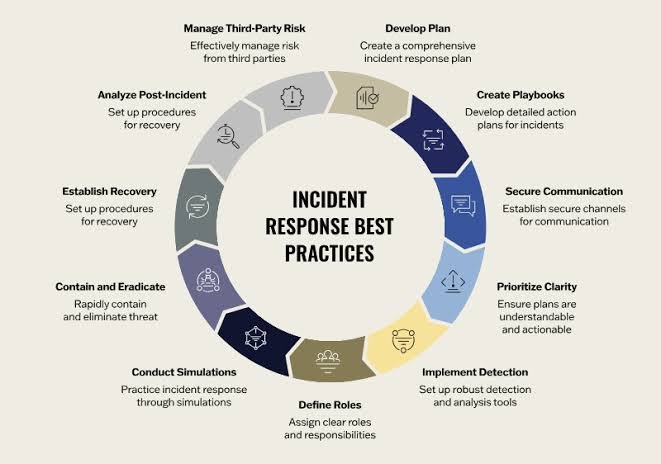
Cyberattacks have become more sophisticated, frequent, and costly than ever before. Organizations of every size—from startups and small businesses to multinational enterprises and government agencies—face threats such as ransomware, phishing, insider attacks, data breaches, supply chain compromises, denial-of-service (DoS) attacks, and zero-day vulnerabilities. Even with strong preventive security measures, no organization can eliminate risk entirely.
This is why Incident Response (IR) and Recovery have become essential components of every cybersecurity strategy. An effective incident response program helps organizations detect attacks quickly, contain damage, investigate root causes, restore affected systems, and strengthen defenses against future incidents. Without a well-prepared response plan, organizations may experience prolonged downtime, financial losses, reputational damage, regulatory penalties, and loss of customer trust.
Recovery extends beyond restoring systems from backups. It includes verifying system integrity, improving security controls, communicating with stakeholders, documenting lessons learned, and implementing long-term improvements to reduce the likelihood and impact of future incidents.
This comprehensive guide explains the complete incident response lifecycle, common cyber incidents, digital forensics, disaster recovery, business continuity, security tools, and best practices for building a resilient cybersecurity response capability.
What Is Incident Response?
Incident Response (IR) is the structured process organizations use to detect, analyze, contain, eradicate, recover from, and learn from cybersecurity incidents.
The objectives of incident response include:
- Minimize business disruption.
- Reduce financial losses.
- Protect sensitive information.
- Restore normal operations safely.
- Preserve evidence for investigation.
- Meet legal and regulatory obligations.
- Improve future security readiness.
Incident response focuses on managing the impact of an attack rather than preventing every attack from occurring.
What Is Incident Recovery?
Incident recovery is the process of restoring affected systems, applications, services, and business operations after an incident has been contained and malicious activity has been removed.
Recovery activities include:
- Restoring systems from trusted backups.
- Rebuilding compromised infrastructure.
- Validating data integrity.
- Resetting credentials where necessary.
- Monitoring for recurring threats.
- Returning business services to normal operation.
Recovery should be carefully planned to avoid reintroducing compromised systems into production.
Why Incident Response Matters
A mature incident response capability helps organizations:
- Detect attacks earlier.
- Reduce downtime.
- Limit data loss.
- Improve coordination.
- Protect customer trust.
- Support regulatory compliance.
- Reduce recovery costs.
- Strengthen long-term resilience.
Preparation often has a significant impact on the speed and effectiveness of recovery efforts.
Common Cybersecurity Incidents
Organizations may encounter incidents such as:
- Ransomware
- Malware infections
- Phishing attacks
- Business Email Compromise (BEC)
- Insider threats
- Credential theft
- Distributed Denial-of-Service (DDoS) attacks
- Data breaches
- Supply chain attacks
- Cloud security incidents
Each incident type requires an appropriate response based on its scope and impact.
The Incident Response Lifecycle
Many organizations structure incident response around six key phases.
1. Preparation
Preparation includes developing policies, procedures, tools, and training before an incident occurs.
Typical activities include:
- Creating an incident response plan.
- Defining roles and responsibilities.
- Conducting employee awareness training.
- Maintaining asset inventories.
- Implementing logging and monitoring.
- Establishing communication procedures.
- Testing backups.
- Running tabletop exercises.
Preparation is often the most important phase because it determines how effectively an organization can respond during a crisis.
2. Detection and Analysis
The goal is to identify potential security incidents as early as possible.
Detection sources may include:
- Security Information and Event Management (SIEM) platforms
- Endpoint Detection and Response (EDR) tools
- Network monitoring
- Intrusion Detection Systems (IDS)
- User reports
- Threat intelligence
- Cloud monitoring
- Identity and access logs
Analysts determine:
- Whether an incident has occurred.
- The type of attack.
- The scope of affected systems.
- Potential business impact.
Accurate analysis helps prioritize response efforts.
3. Containment
Containment aims to limit the spread and impact of the incident.
Short-term actions may include:
- Isolating compromised devices.
- Blocking malicious IP addresses.
- Disabling affected accounts.
- Restricting network access.
- Stopping malicious processes.
Long-term containment may involve rebuilding systems or implementing additional security controls before returning services to production.
4. Eradication
After containment, organizations remove the underlying cause of the incident.
Common activities include:
- Removing malware.
- Deleting unauthorized accounts.
- Applying security patches.
- Correcting misconfigurations.
- Updating firewall rules.
- Closing exploited vulnerabilities.
Eradication should include validation to ensure malicious activity has been fully removed.
5. Recovery
Recovery focuses on safely restoring business operations.
Recovery tasks include:
- Restoring systems from trusted backups.
- Rebuilding servers.
- Recovering applications.
- Validating functionality.
- Testing security controls.
- Monitoring for signs of reinfection.
Organizations should restore services gradually while closely monitoring for unusual activity.
6. Lessons Learned
Following recovery, organizations conduct a post-incident review.
Topics commonly discussed include:
- Root cause analysis.
- Timeline reconstruction.
- Response effectiveness.
- Communication performance.
- Security gaps.
- Recommended improvements.
Lessons learned strengthen future incident response capabilities.
Building an Incident Response Team
A typical incident response team may include:
Incident Response Manager
Coordinates response activities and communication.
Security Analysts
Investigate alerts and identify malicious activity.
Digital Forensics Specialists
Collect and analyze evidence while preserving forensic integrity.
IT Operations
Restore systems and maintain infrastructure.
Legal and Compliance Teams
Provide guidance on legal obligations, reporting requirements, and regulatory considerations.
Executive Leadership
Supports strategic decision-making and resource allocation.
Communications Team
Coordinates internal and external communications where appropriate.
Digital Forensics
Digital forensics helps organizations understand:
- How attackers gained access.
- What systems were affected.
- What data was accessed.
- What actions occurred.
- Whether attackers remain present.
Evidence collection should follow established procedures to preserve integrity.
Ransomware Response
When responding to ransomware:
- Isolate affected systems immediately.
- Preserve evidence.
- Identify the ransomware variant if possible.
- Assess affected data.
- Restore from trusted backups where appropriate.
- Notify relevant stakeholders according to organizational policies and legal requirements.
- Strengthen defenses before resuming normal operations.
Organizations should have predefined ransomware response procedures before an attack occurs.
Business Continuity
Business continuity planning helps organizations maintain essential operations during disruptions.
Key elements include:
- Alternative work procedures.
- Critical system prioritization.
- Backup communication channels.
- Workforce planning.
- Supplier coordination.
- Recovery priorities.
Business continuity complements incident response by focusing on maintaining operations.
Disaster Recovery
Disaster recovery focuses on restoring IT systems after significant disruptions.
Typical components include:
- Backup strategies.
- Recovery environments.
- Infrastructure restoration.
- Network recovery.
- Database restoration.
- System validation.
Recovery objectives should align with business requirements.
Recovery Metrics
Organizations often define:
Recovery Time Objective (RTO)
The target amount of time required to restore a service after an incident.
Recovery Point Objective (RPO)
The maximum acceptable amount of data loss measured by the time between backups or replication points.
These metrics help guide backup and recovery planning.
Communication During Incidents
Clear communication is critical.
Organizations should establish procedures for communicating with:
- Employees
- Customers
- Executives
- Business partners
- Regulatory authorities (where required)
- Service providers
Information shared should be accurate, timely, and consistent.
Security Tools Supporting Incident Response
Common technologies include:
- SIEM platforms
- EDR solutions
- Network Detection and Response (NDR)
- Security Orchestration, Automation, and Response (SOAR)
- Threat intelligence platforms
- Vulnerability scanners
- Backup solutions
- Identity and Access Management (IAM) systems
Technology supports incident response, but trained personnel remain essential.
AI in Incident Response
Artificial intelligence increasingly assists security teams by:
- Prioritizing alerts.
- Detecting anomalies.
- Correlating security events.
- Recommending response actions.
- Accelerating investigations.
- Summarizing incident data.
Human oversight remains important, particularly when making high-impact operational decisions.
Common Incident Response Mistakes
Organizations should avoid:
- Delayed detection.
- Poor documentation.
- Inadequate backups.
- Weak communication.
- Lack of testing.
- Failure to preserve evidence.
- Restoring compromised systems prematurely.
- Neglecting post-incident reviews.
Continuous improvement helps reduce these risks.
Best Practices
Organizations should:
- Develop a formal incident response plan.
- Conduct regular tabletop exercises.
- Maintain offline or immutable backups.
- Implement Multi-Factor Authentication (MFA).
- Keep systems updated.
- Monitor networks continuously.
- Segment critical infrastructure.
- Train employees to recognize phishing.
- Document all response activities.
- Review and improve plans after every incident.
Future Trends
AI-Assisted Security Operations
AI will continue helping security teams identify, investigate, and prioritize incidents more efficiently.
Automated Response
Automation is expected to handle more routine containment activities while leaving strategic decisions to human responders.
Cloud Incident Response
As cloud adoption grows, organizations will increasingly develop cloud-specific response procedures and monitoring capabilities.
Zero Trust Integration
Zero Trust principles will continue strengthening incident containment by limiting access based on identity, device health, and context.
Continuous Resilience
Organizations are shifting from reactive security toward cyber resilience—designing systems that can continue operating even during cyber incidents.
Incident Response Checklist
Before an incident occurs, ensure that your organization has:
- ✅ A documented incident response plan.
- ✅ Clearly defined roles and responsibilities.
- ✅ Tested backup and recovery procedures.
- ✅ Continuous monitoring and logging.
- ✅ Employee security awareness training.
- ✅ Regular vulnerability management.
- ✅ Multi-Factor Authentication (MFA).
- ✅ Secure communication procedures.
- ✅ Business continuity and disaster recovery plans.
- ✅ A process for reviewing lessons learned after incidents.
Conclusion
Cybersecurity incidents are an operational reality for organizations of every size. While prevention remains a critical objective, effective incident response and recovery determine how quickly and safely an organization can contain attacks, restore services, and protect stakeholders. A well-prepared response program combines skilled personnel, tested procedures, appropriate technologies, and clear communication to minimize disruption and strengthen long-term resilience.
Recovery should be viewed as more than simply restoring systems. It includes validating system integrity, learning from the incident, improving security controls, and preparing for future threats. As organizations increasingly adopt cloud services, artificial intelligence, and distributed work environments, incident response strategies must continue to evolve to address new risks and technologies.
By investing in preparation, regular testing, employee training, and continuous improvement, organizations can build the resilience needed to respond effectively to cyber incidents while maintaining business continuity and protecting critical assets.
Frequently Asked Questions (FAQs)
1. What is incident response in cybersecurity?
Incident response is the structured process of detecting, analyzing, containing, eradicating, recovering from, and learning from cybersecurity incidents.
2. What is the difference between incident response and disaster recovery?
Incident response focuses on managing and containing cybersecurity incidents, while disaster recovery focuses on restoring IT systems and business operations after a significant disruption.
3. Why are backups important for recovery?
Reliable backups help organizations restore data and systems after incidents such as ransomware attacks, hardware failures, or accidental data loss, reducing downtime and supporting business continuity.
4. How often should incident response plans be tested?
Organizations should test incident response plans regularly through tabletop exercises, technical simulations, and periodic reviews to ensure procedures remain effective and current.
5. Can AI replace incident response teams?
No. AI can improve detection, prioritization, and automation, but experienced cybersecurity professionals remain essential for investigation, strategic decision-making, communication, and recovery.