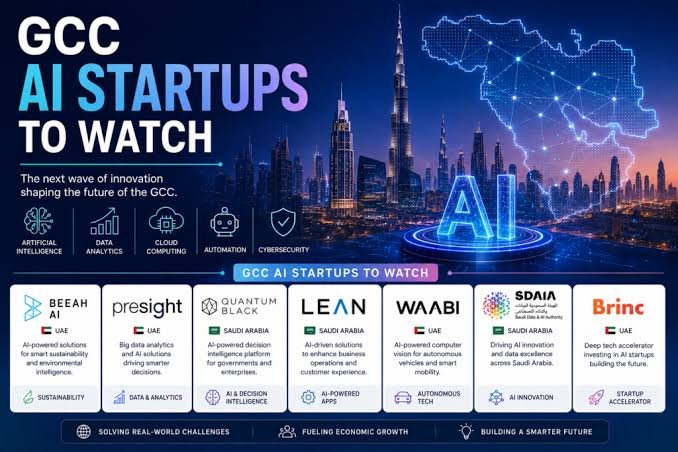
Artificial intelligence has moved from being a specialized research field to becoming one of the most influential technologies in the global economy.
Businesses are using AI to automate repetitive work, analyze data, improve customer experiences, develop software, generate content, discover new products, and solve complex problems.
At the center of this transformation are AI startups.
New companies are emerging across healthcare, finance, cybersecurity, education, robotics, software development, marketing, logistics, manufacturing, and countless other industries.
Unlike traditional software startups, many AI companies are building products around models that can understand language, analyze images, generate content, reason over information, or interact with users in increasingly sophisticated ways.
This creates enormous opportunities—but also significant challenges.
AI startups must deal with expensive computing infrastructure, rapidly changing technology, intense competition, data quality, regulation, security, talent shortages, and the challenge of turning impressive AI demonstrations into sustainable businesses.
Understanding the AI startup ecosystem provides a useful view of where artificial intelligence is heading next.
What Are AI Startups?
AI startups are companies that use artificial intelligence as a central part of their products, services, or business models.
They may build:
- AI software
- AI-powered applications
- Foundation models
- Developer tools
- AI agents
- Robotics systems
- Computer vision solutions
- AI security platforms
- Healthcare AI
- Enterprise AI
- Generative AI products
Some AI startups develop their own models, while others build applications using existing AI models and APIs.
The distinction is important because the costs, technical requirements, and competitive advantages can vary significantly.
Why AI Startups Are Growing So Quickly
Several factors are contributing to the rapid growth of AI startups.
1. Better AI Models
Modern AI models can perform tasks that previously required specialized software or significant human effort.
2. Accessible AI APIs
Developers can integrate sophisticated AI capabilities without building a model from scratch.
3. Cloud Computing
Cloud infrastructure provides startups with access to computing resources without requiring them to build massive data centers.
4. Growing Business Demand
Companies across industries are looking for ways to improve productivity and reduce operational costs using AI.
5. Investor Interest
AI has attracted significant attention from venture capital firms and technology investors.
Generative AI and the Startup Boom
Generative AI has significantly expanded the startup opportunity.
Instead of simply analyzing existing information, generative AI systems can create new content.
Applications include:
- Text generation
- Image generation
- Video creation
- Audio generation
- Code generation
- Document analysis
- Design assistance
- Research tools
This has created opportunities for startups to build specialized products around particular industries and workflows.
AI Agents and Autonomous Workflows
One of the most important areas of AI innovation is the development of AI agents.
Traditional AI applications may respond to individual prompts.
AI agents aim to go further by completing multi-step tasks.
An agent could potentially:
- Understand a goal.
- Break the goal into tasks.
- Access approved tools.
- Perform actions.
- Evaluate results.
- Continue until the objective is completed.
This could transform areas such as:
- Customer support
- Software development
- Research
- Sales
- Marketing
- Operations
- IT management
However, autonomous systems also introduce risks involving incorrect actions, excessive permissions, security, and accountability.
Vertical AI Startups
One of the strongest startup opportunities is vertical AI.
Rather than creating a general-purpose AI system, vertical AI startups focus on specific industries.
Examples include:
Healthcare AI
Medical documentation, research, scheduling, and administrative workflows.
Legal AI
Document analysis, legal research, contract review, and workflow automation.
Financial AI
Fraud detection, financial analysis, customer service, and compliance support.
Education AI
Personalized learning, tutoring, assessment, and educational content.
Manufacturing AI
Predictive maintenance, quality control, and production optimization.
The advantage of vertical AI is that startups can build deep expertise around specific workflows and customer problems.
AI Startups in Healthcare
Healthcare is one of the most promising areas for AI innovation.
Startups are exploring applications involving:
- Medical imaging
- Drug discovery
- Clinical documentation
- Patient communication
- Healthcare administration
- Personalized treatment research
- Medical research
However, healthcare AI requires careful attention to accuracy, privacy, safety, regulation, and human oversight.
In high-stakes environments, AI should support qualified professionals rather than be treated as an unquestionable authority.
AI in Cybersecurity
Cybersecurity companies are increasingly incorporating AI into their products.
AI can help security teams:
- Detect unusual behavior
- Analyze security alerts
- Identify suspicious activity
- Prioritize vulnerabilities
- Automate investigations
- Assist with incident response
At the same time, attackers can also use AI to improve phishing, social engineering, malware development, and other malicious activities.
This creates an ongoing competition between offensive and defensive uses of AI.
AI and Software Development
Software development has become another major area of AI startup innovation.
AI coding tools can help developers:
- Generate code
- Explain code
- Debug applications
- Write tests
- Refactor software
- Document projects
- Navigate large codebases
The long-term opportunity may involve AI systems that assist with larger portions of the software development lifecycle.
However, generated code still needs testing, review, security analysis, and human judgment.
AI Startups in Marketing
Marketing teams are using AI to improve:
- Content creation
- Customer segmentation
- Advertising
- Market research
- Personalization
- Customer support
- Campaign analysis
AI startups are building specialized platforms designed to automate parts of the marketing workflow.
The competitive challenge is differentiation.
If dozens of companies offer similar AI writing or marketing features, startups need strong distribution, workflow integration, proprietary data, or specialized expertise to stand out.
AI in Robotics
AI is also contributing to advances in robotics.
Modern robots can increasingly combine:
- Computer vision
- Machine learning
- Natural language
- Motion planning
- Sensor data
- Reinforcement learning
Potential applications include:
- Warehouses
- Manufacturing
- Healthcare
- Agriculture
- Logistics
- Domestic environments
The combination of AI and robotics could create some of the most significant technological changes of the coming decades.
AI Startups and Climate Technology
AI can also support climate and environmental innovation.
Potential applications include:
- Energy optimization
- Weather prediction
- Infrastructure monitoring
- Agricultural optimization
- Carbon tracking
- Renewable energy management
- Environmental modeling
Startups can use AI to process large datasets and identify patterns that may be difficult to detect using traditional approaches.
The Role of Data in AI Startups
Data is one of the most important resources for AI companies.
High-quality data can help startups develop systems that perform better in specific domains.
However, companies must consider:
- Data quality
- Data ownership
- Privacy
- Consent
- Licensing
- Security
- Regulatory requirements
Having a large dataset does not automatically create a competitive advantage.
The usefulness, uniqueness, quality, and legal basis for using the data are also important.
AI Models vs. AI Applications
AI startups can broadly be divided into different layers.
Infrastructure
Companies building computing infrastructure, model-serving systems, and AI development platforms.
Foundation Models
Companies developing large general-purpose AI models.
Developer Tools
Platforms helping developers integrate AI into applications.
AI Applications
Products that use AI to solve specific customer problems.
This layered ecosystem creates opportunities for startups at multiple levels.
What Makes an AI Startup Competitive?
Building an impressive AI demo is relatively easy compared with building a sustainable company.
Successful AI startups often need several advantages.
Strong Product
The product must solve a meaningful problem.
Distribution
The company needs an effective way to reach customers.
Technical Capability
The team must understand the technology deeply enough to build and improve the product.
Domain Expertise
Knowledge of the target industry can provide an important advantage.
Data
Proprietary or high-quality data can improve product performance.
Customer Feedback
Continuous feedback helps startups refine their products.
Business Model
The company needs a sustainable way to generate revenue.
AI Startup Funding
AI startups can attract funding from:
- Angel investors
- Venture capital firms
- Corporate investors
- Accelerators
- Government programs
- Strategic partners
Funding can help companies pay for:
- AI infrastructure
- Engineering teams
- Research
- Product development
- Sales
- Marketing
- Security
- Compliance
However, raising funding is not the same as building a successful company.
Startups eventually need to demonstrate customer demand and sustainable economics.
The Economics of AI Startups
AI applications can have higher operating costs than traditional software.
Every user interaction may require:
- Model inference
- Computing resources
- Storage
- Data processing
- API usage
This means startups need to carefully manage their infrastructure costs.
A company can grow rapidly while still losing money if the cost of serving customers is too high.
Efficient model selection, caching, infrastructure optimization, and pricing strategies can therefore become important competitive factors.
Open-Source AI Innovation
Open-source AI has become an important part of the ecosystem.
Open models can allow developers and startups to:
- Experiment
- Customize models
- Deploy systems independently
- Build specialized applications
- Reduce dependence on a single provider
Open-source approaches can accelerate innovation by allowing more developers to experiment with advanced AI technologies.
However, organizations must still evaluate security, licensing, model quality, and operational requirements.
AI Startup Challenges
AI startups face several major challenges.
High Computing Costs
Training and operating advanced models can require significant computing resources.
Intense Competition
The AI market is crowded with startups and established technology companies.
Rapid Technological Change
A product that seems innovative today may become less differentiated after a major model improvement.
Regulation
Governments are developing rules around AI safety, privacy, transparency, and responsible use.
Data Challenges
Obtaining high-quality and legally usable data can be difficult.
Trust
Customers need confidence that AI systems are accurate, secure, and reliable.
AI Hallucinations and Reliability
One major challenge for AI applications is inaccurate or fabricated output.
AI systems can sometimes produce responses that appear convincing but contain errors.
This creates particular risks in:
- Healthcare
- Finance
- Legal services
- Security
- Enterprise decision-making
AI startups must therefore build appropriate safeguards.
These may include:
- Human review
- Retrieval systems
- Source verification
- Confidence signals
- Automated testing
- Monitoring
AI Safety and Responsible Innovation
AI startups have a responsibility to consider how their technology could be misused.
Important areas include:
- Privacy
- Bias
- Security
- Transparency
- Safety
- Accountability
- Misuse prevention
Responsible AI is not simply a regulatory requirement. It can also become a competitive advantage by increasing customer trust.
The Importance of User Experience
AI technology can be technically impressive but still fail if the product is difficult to use.
Successful AI applications should focus on:
- Simple interfaces
- Clear instructions
- Fast responses
- Reliable results
- Easy onboarding
- Transparent limitations
The best AI products often make complicated technology feel simple.
AI and Small Businesses
AI startup innovation is not limited to large enterprises.
Small businesses can use AI-powered tools for:
- Customer service
- Marketing
- Sales
- Bookkeeping assistance
- Content creation
- Data analysis
- Scheduling
- Internal knowledge management
This creates opportunities for startups that develop affordable AI tools specifically for small and medium-sized businesses.
How AI Startups Can Find New Opportunities
A strong AI startup idea does not necessarily begin with:
“What can AI do?”
A better question may be:
“What expensive, repetitive, slow, or difficult problem can AI solve?”
Potential opportunities can be found by looking for workflows involving:
- Large amounts of information
- Repetitive manual work
- Expensive professional services
- Complex decision-making
- Customer support
- Document processing
- Data analysis
AI becomes more valuable when it addresses a real pain point.
The Future of AI Startup Innovation
The AI startup ecosystem will likely continue evolving rapidly.
Several areas could become particularly important.
AI Agents
Systems capable of completing multi-step tasks.
Multimodal AI
Models that understand combinations of text, images, audio, video, and other data.
Smaller AI Models
Efficient models that can operate on devices or with lower infrastructure costs.
AI Robotics
Combining intelligent software with physical machines.
Enterprise AI
AI systems designed specifically for business workflows and internal data.
AI Security
Technology designed to protect AI systems and defend against AI-powered attacks.
Personalized AI
Systems that adapt to individual users and workflows.
How to Evaluate an AI Startup
Whether you are an investor, customer, entrepreneur, or technology enthusiast, consider these questions:
What Problem Does It Solve?
Is the problem significant enough for customers to pay to solve?
Who Are the Customers?
Does the company have a clearly defined target market?
What Is the Competitive Advantage?
Can competitors easily reproduce the product?
Does the Product Work?
Look beyond demonstrations and evaluate real-world performance.
What Are the Costs?
Understand infrastructure and operating costs.
How Is Customer Data Handled?
Review privacy, security, and data practices.
Can the Business Scale?
A strong product needs a sustainable economic model.
AI Startup Trends to Watch
The following trends are likely to remain important:
- AI agents
- Vertical AI
- Generative AI applications
- AI coding tools
- Multimodal systems
- AI robotics
- AI cybersecurity
- Enterprise AI
- AI healthcare
- AI infrastructure
- Small and efficient models
- AI-powered search
- Personalized AI assistants
- Open-source AI
Conclusion
AI startups are playing a major role in transforming artificial intelligence from research technology into practical products and services.
The most exciting innovation is not necessarily coming from companies building the largest models. Many opportunities exist in specialized applications that solve specific problems for particular industries.
Healthcare, cybersecurity, software development, robotics, finance, education, marketing, manufacturing, and enterprise operations are just some of the areas where AI startups are experimenting with new ideas.
However, successful AI innovation requires more than advanced technology.
Startups need strong products, sustainable economics, reliable systems, responsible data practices, effective distribution, and a clear understanding of their customers.
As AI continues to evolve, the next generation of successful companies may be those that turn increasingly powerful AI capabilities into simple, trustworthy, and useful products that solve real-world problems.
Frequently Asked Questions
1. What is an AI startup?
An AI startup is a company that uses artificial intelligence as a core part of its product, service, technology, or business model.
2. What industries are AI startups transforming?
AI startups are active in healthcare, finance, cybersecurity, education, marketing, software development, manufacturing, robotics, logistics, and many other industries.
3. What is vertical AI?
Vertical AI refers to artificial intelligence products designed specifically for a particular industry, profession, or business workflow.
4. How do AI startups make money?
AI startups may use subscriptions, usage-based pricing, enterprise contracts, licensing, APIs, marketplace models, or other business models.
5. Why are AI startups expensive to operate?
Advanced AI applications can require significant computing, model inference, storage, data processing, and engineering resources.
6. Do AI startups need to build their own AI models?
No. Many startups build applications using existing AI models and APIs rather than developing foundation models themselves.
7. What are AI agents?
AI agents are systems designed to perform multi-step tasks by reasoning about goals, using tools, taking actions, and evaluating results.
8. What makes an AI startup successful?
Strong customer demand, a useful product, technical capability, effective distribution, sustainable economics, and a defensible competitive advantage can all contribute to success.
9. What are the biggest challenges facing AI startups?
Major challenges include competition, infrastructure costs, data access, reliability, regulation, security, talent, and rapidly changing AI technology.
10. What is the future of AI startups?
AI startups are likely to expand into areas such as AI agents, vertical AI, robotics, healthcare, cybersecurity, enterprise automation, multimodal AI, and specialized AI infrastructure.