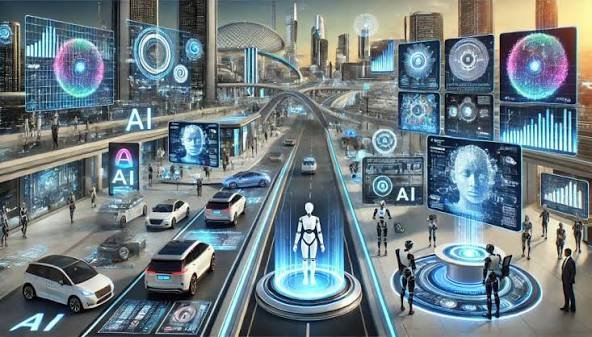
Artificial intelligence has moved from being primarily a research topic to becoming a practical technology used across businesses, consumer applications, software development, healthcare, education, cybersecurity, finance, and creative industries.
The pace of development has also changed expectations about what AI could accomplish next.
Generative AI can already produce text, images, audio, video, and software code. AI systems can analyze large datasets, interact with users through natural language, assist professionals, and increasingly perform tasks across multiple applications.
But the next phase of AI may be less about simply generating content and more about reasoning, planning, acting, and working alongside people.
The future of AI is difficult to predict precisely. Breakthroughs can happen unexpectedly, while technical limitations, regulation, economics, infrastructure, and public adoption can slow progress.
Still, several trends provide useful clues about where artificial intelligence may be heading.
What Does the Future of AI Look Like?
The future of AI is likely to involve increasingly capable systems that can understand different types of information, interact with software, perform multi-step tasks, and support people across professional and personal environments.
Instead of using separate tools for writing, research, coding, analysis, and automation, users may increasingly interact with AI systems capable of handling several of these activities within one workflow.
This could shift AI from being primarily a tool people operate toward becoming a more active digital collaborator.
However, this transition will depend on improvements in reliability, security, cost, privacy, and governance.
1. AI Agents Will Become More Capable
One of the most important developments in AI is the growth of AI agents.
Unlike a basic chatbot that responds to a prompt, an AI agent can potentially:
- Understand a goal
- Break a task into steps
- Use software tools
- Retrieve information
- Make decisions within defined boundaries
- Execute actions
- Monitor progress
- Adapt its approach
For example, instead of asking an AI system to explain how to organize a marketing campaign, a future agent could potentially help research the audience, prepare campaign materials, organize tasks, analyze performance, and suggest improvements.
The major challenge will be making these systems reliable enough to operate safely with limited supervision.
2. AI Will Become More Multimodal
AI is increasingly capable of working with multiple forms of information.
These can include:
- Text
- Images
- Audio
- Video
- Documents
- Software interfaces
- Sensor data
Future AI systems may increasingly understand these inputs together.
Imagine giving an AI assistant a product specification, a video demonstration, customer feedback, and sales data and asking it to identify potential product improvements.
Instead of treating each format separately, multimodal AI can potentially combine information across them.
3. AI Will Become More Embedded in Everyday Software
AI is increasingly being incorporated directly into applications rather than existing only as separate AI products.
Future software may include AI capabilities for:
- Writing
- Search
- Data analysis
- Customer support
- Scheduling
- Design
- Coding
- Translation
- Documentation
- Project management
This could make AI feel less like a separate technology and more like a standard software capability.
Just as cloud computing and mobile connectivity became normal components of modern applications, AI may become another fundamental layer of software.
4. AI Coding Assistants Will Transform Software Development
Software development is one of the areas where AI is already having a major impact.
AI coding systems can assist with:
- Code generation
- Debugging
- Documentation
- Testing
- Refactoring
- Code explanation
- Database queries
- API integration
The future could involve developers describing desired functionality in natural language while AI systems generate significant portions of the implementation.
However, human developers will remain important for architecture, security, system design, requirements, testing, and evaluating whether generated code actually solves the intended problem.
The role of developers may gradually shift toward orchestrating, reviewing, and designing software systems, rather than manually writing every line of code.
5. AI Could Change How People Search for Information
Traditional search requires users to:
- Enter a query.
- Review results.
- Open different websites.
- Compare information.
- Determine which sources are reliable.
AI-powered search can potentially provide a more conversational experience by summarizing information and helping users explore a topic interactively.
The future of search may therefore combine:
- Traditional web results
- AI-generated answers
- Structured data
- Real-time information
- Multimedia
- Personalized context
However, maintaining source transparency and reducing misinformation will remain critical.
6. Personal AI Assistants May Become More Useful
Future personal AI assistants could become more deeply integrated into users’ digital lives.
With appropriate permissions, an assistant might help with:
- Calendars
- Emails
- Documents
- Travel planning
- Shopping research
- Learning
- Personal organization
- Communication
- Household tasks
The biggest challenge will be trust.
An assistant that can access personal information and perform actions must have strong security, privacy controls, permission systems, and clear user oversight.
7. AI and Robotics Will Converge
AI development is increasingly connected to robotics.
Robots traditionally relied heavily on predefined instructions. More capable AI systems could allow robots to interpret natural-language commands, understand environments, and adapt to changing situations.
Potential applications include:
- Manufacturing
- Warehousing
- Agriculture
- Healthcare
- Logistics
- Home assistance
- Inspection
- Construction
The combination of AI software and physical machines could become one of the most significant technological developments of the coming decade.
8. AI Will Reshape the Workplace
AI is unlikely to affect every job in exactly the same way.
Instead, it may automate certain tasks within many different occupations.
Potentially affected activities include:
- Data entry
- Basic research
- Document processing
- Customer support
- Content drafting
- Routine analysis
- Scheduling
- Software development tasks
At the same time, AI could increase demand for roles involving:
- AI implementation
- Data management
- AI governance
- Cybersecurity
- Human-AI interaction
- AI product management
- Model evaluation
The workplace may increasingly become a combination of human workers and AI-powered systems.
9. AI Skills Will Become More Important
As AI becomes integrated into everyday software, understanding how to work with AI may become a basic professional skill.
Workers may need to understand:
- How to evaluate AI-generated information
- How to communicate effectively with AI systems
- How to verify outputs
- How to protect sensitive information
- When human judgment is necessary
- How to incorporate AI into workflows
The most valuable skill may not simply be knowing how to generate a prompt.
It may be understanding how to use AI responsibly to accomplish a real-world objective.
10. AI Will Transform Business Operations
Businesses are already experimenting with AI across multiple departments.
Marketing
AI can assist with:
- Market research
- Content creation
- Customer segmentation
- Campaign analysis
Sales
AI can support:
- Lead qualification
- Customer research
- Sales forecasting
- Communication
Customer Service
AI assistants can handle routine questions and help support agents resolve complex issues.
Finance
AI can assist with:
- Data analysis
- Forecasting
- Fraud detection
- Financial reporting
Human Resources
AI may support:
- Recruiting workflows
- Employee communications
- Training
- Workforce analytics
The biggest business opportunity may come from connecting these capabilities into complete workflows rather than deploying isolated AI tools.
11. AI Will Increase Demand for Computing Infrastructure
More capable AI systems require substantial computing resources.
The AI ecosystem depends on:
- Advanced processors
- Data centers
- Cloud infrastructure
- Networking
- Energy
- Storage
- Specialized hardware
As AI adoption grows, demand for efficient computing infrastructure is likely to remain important.
This could drive innovation in:
- AI chips
- Data-center design
- Energy efficiency
- Cooling systems
- Edge computing
- Specialized hardware
12. Smaller AI Models Will Become More Important
Large AI models receive significant attention, but smaller models can offer important advantages.
They may:
- Cost less to operate
- Run faster
- Require fewer computing resources
- Improve privacy
- Operate on local devices
- Support offline applications
This could encourage more AI processing to occur directly on smartphones, computers, vehicles, and other devices.
13. Edge AI Could Expand
Edge AI refers to processing AI workloads closer to where data is generated instead of sending everything to a remote cloud system.
Potential applications include:
- Smartphones
- Security cameras
- Vehicles
- Industrial machines
- Wearable devices
- Smart home systems
Local processing can reduce latency and may improve privacy in certain use cases.
14. AI Will Become More Personalized
Future AI systems may become better at adapting to individual users.
Personalization could involve:
- Communication preferences
- Work habits
- Knowledge levels
- Professional context
- Frequently used applications
- Personal workflows
However, personalization creates an important privacy question:
How much personal information should an AI system be allowed to remember?
Users will likely demand greater control over AI memory and personal data.
15. AI Safety Will Become a Major Priority
As AI systems become more capable, safety becomes increasingly important.
AI safety involves areas such as:
- Reliability
- Misuse prevention
- Model evaluation
- Robustness
- Human oversight
- Security
- Alignment
- Responsible deployment
Organizations developing advanced AI systems will need to consider not only what their systems can do, but also what could happen if they behave unexpectedly or are deliberately misused.
16. AI Regulation Will Continue to Develop
Governments around the world are developing different approaches to AI governance.
Regulation may address areas such as:
- Privacy
- Transparency
- Copyright
- Safety
- High-risk AI applications
- Consumer protection
- Automated decision-making
- Accountability
The challenge is balancing innovation with responsible deployment.
Overly restrictive rules could slow useful innovation, while insufficient oversight could allow harmful applications to spread.
17. AI and Cybersecurity Will Become More Closely Connected
AI will play both defensive and offensive roles in cybersecurity.
Defenders can use AI for:
- Threat detection
- Anomaly detection
- Security analysis
- Incident response
- Vulnerability prioritization
Attackers may use AI to improve:
- Social engineering
- Phishing
- Automation
- Reconnaissance
- Fraud
This creates an ongoing technological competition between attackers and defenders.
18. AI Could Transform Healthcare
Healthcare is another area where AI could have substantial long-term impact.
Potential applications include:
- Medical imaging
- Drug discovery
- Clinical documentation
- Patient monitoring
- Research
- Personalized treatment support
- Administrative automation
However, healthcare AI requires particularly strong safeguards because errors can have serious consequences.
Human medical professionals, regulatory oversight, privacy protections, and rigorous validation will remain essential.
19. AI Could Change Education
AI-powered learning systems could provide more personalized educational experiences.
Students could potentially receive:
- Customized explanations
- Interactive tutoring
- Practice exercises
- Feedback
- Language assistance
- Learning plans
Teachers could use AI for:
- Administrative work
- Lesson preparation
- Educational materials
- Student support
The challenge will be ensuring AI supports learning rather than encouraging students to avoid developing fundamental skills.
20. AI Will Influence Creative Industries
AI is already changing how people create:
- Images
- Music
- Video
- Writing
- Design
- Animation
- Games
Future creative workflows may involve humans directing AI systems that generate and refine content.
This does not necessarily mean human creativity becomes irrelevant.
Instead, the creative process could increasingly focus on:
- Ideas
- Direction
- Taste
- Storytelling
- Editing
- Curation
21. AI and Scientific Discovery
One of the most exciting long-term possibilities is AI-assisted scientific research.
AI could help researchers:
- Analyze complex datasets
- Identify patterns
- Generate hypotheses
- Simulate systems
- Search scientific literature
- Design experiments
- Discover potential materials
- Investigate biological structures
The combination of AI and scientific expertise could accelerate research in fields that require analyzing enormous quantities of information.
22. AI Agents Could Become Digital Employees
A major future possibility is the development of AI systems capable of performing complete business workflows.
Instead of simply generating a report, an AI agent might:
- Collect information.
- Analyze the data.
- Create a report.
- Send it to the appropriate team.
- Monitor responses.
- Update the report when new information becomes available.
This could make AI more similar to a digital worker than a traditional software feature.
However, organizations will need strong permission systems and oversight to prevent errors from becoming costly actions.
23. AI Will Increase the Importance of Data Quality
AI systems are heavily influenced by the data they receive.
Poor-quality data can result in:
- Incorrect outputs
- Biased decisions
- Inaccurate predictions
- Security problems
As businesses adopt AI, data governance will become increasingly important.
Organizations will need processes for:
- Data quality
- Data access
- Data privacy
- Data lineage
- Data security
24. AI Will Create New Business Models
AI could enable businesses that were previously difficult or impossible to operate.
Potential models include:
- AI-powered software
- AI agents as a service
- Personalized digital assistants
- Automated research services
- AI-enabled professional services
- Intelligent robotics
- Specialized AI applications
The cost of building software may decrease in some areas, potentially allowing smaller teams to create products that previously required much larger organizations.
25. The Cost of AI May Continue to Fall
As hardware, models, software infrastructure, and optimization techniques improve, the cost of performing certain AI tasks may decline.
Lower costs could make advanced AI capabilities accessible to:
- Small businesses
- Developers
- Students
- Independent creators
- Entrepreneurs
This could accelerate experimentation and innovation.
Predictions for the Future of AI
While no forecast is guaranteed, several developments appear plausible.
Prediction 1: AI Assistants Will Become More Action-Oriented
AI will increasingly move beyond answering questions toward completing tasks.
Prediction 2: AI Will Become a Standard Software Feature
Many applications will incorporate AI capabilities directly into their interfaces.
Prediction 3: Human-AI Collaboration Will Become Normal
People will increasingly work alongside AI systems rather than treating them as occasional tools.
Prediction 4: AI Security Will Become Essential
Organizations will need dedicated controls for protecting AI applications, data, models, and AI-enabled workflows.
Prediction 5: Smaller Models Will Expand
Efficient models will become increasingly useful for local and specialized applications.
Prediction 6: AI Regulation Will Mature
Governments will continue developing rules covering different types of AI applications.
Prediction 7: AI Agents Will Reshape Business Automation
Companies may increasingly use AI agents to coordinate multi-step workflows.
Prediction 8: AI Literacy Will Become a Core Skill
Understanding AI limitations and responsible usage may become as important as basic digital literacy.
Challenges That Could Slow AI Progress
AI development is not guaranteed to move forward at the same speed.
Several challenges could affect future progress.
Energy Consumption
Large-scale AI infrastructure requires substantial energy.
Hardware Availability
Advanced AI depends on specialized computing hardware.
Regulation
New laws may affect how AI systems can be developed and deployed.
Data Availability
High-quality training and evaluation data can be difficult to obtain.
Reliability
AI systems can still produce incorrect or misleading results.
Security
AI systems can become targets for attackers.
Public Trust
People may reject AI applications that are perceived as unsafe, invasive, or unfair.
Will AI Replace Human Jobs?
The answer is more complicated than simply saying yes or no.
AI may automate some tasks entirely while changing other jobs rather than eliminating them.
For example, a customer service employee might use AI to handle routine questions while focusing on complicated customer issues.
A software developer might use AI to generate routine code while spending more time on architecture and product decisions.
This suggests that the future of work may involve significant task transformation.
Workers who learn how to use AI effectively may be better positioned as AI becomes more widespread.
Human Skills That AI May Not Easily Replace
Even as AI becomes more capable, human skills remain valuable.
These include:
- Leadership
- Empathy
- Communication
- Judgment
- Creativity
- Relationship building
- Negotiation
- Strategic thinking
- Ethical decision-making
The most valuable future workers may be those who combine technical AI literacy with strong human capabilities.
How Businesses Can Prepare for the Future of AI
Businesses do not need to predict every AI breakthrough.
Instead, they can prepare by:
1. Experimenting Carefully
Test AI on practical problems.
2. Training Employees
Teach teams how to use AI responsibly.
3. Protecting Data
Create clear rules about what information can be used with AI tools.
4. Measuring Results
Evaluate whether AI actually improves productivity, quality, or customer outcomes.
5. Establishing Governance
Create policies for AI usage, security, privacy, and accountability.
6. Preparing for Change
AI capabilities will continue evolving, so businesses should avoid building strategies around a single tool.
How Individuals Can Prepare for the AI Future
Individuals can also take practical steps.
Learn:
- AI fundamentals
- Prompting and AI interaction
- Data privacy
- AI verification
- Automation
- Digital security
- Critical thinking
More importantly, learn how AI can be applied to your specific profession.
Knowing how to use AI within a real workflow can be more valuable than simply knowing how to use a chatbot.
Frequently Asked Questions
What is the future of AI?
The future of AI is likely to involve more capable agents, multimodal systems, AI-powered software, robotics, automation, personalized assistants, and deeper integration into business and everyday life.
Will AI become smarter than humans?
Different AI systems already outperform humans at specific tasks, but broad human-level intelligence remains a complex and debated subject. Predictions about when or whether it will occur vary considerably.
Will AI replace most jobs?
AI is more likely to automate some tasks and transform many jobs than eliminate every job. The impact will vary significantly between industries and occupations.
What will AI agents do?
AI agents may eventually handle multi-step tasks such as research, software operations, business workflows, scheduling, analysis, and automation within defined permissions.
Will AI become available on smartphones?
AI is already being integrated into many mobile devices. More processing may increasingly happen locally as device hardware and efficient AI models improve.
What industries will AI affect the most?
AI is likely to affect software, finance, healthcare, education, marketing, cybersecurity, manufacturing, transportation, media, customer service, and many other sectors.
What are the biggest risks of future AI?
Major concerns include misuse, cybersecurity threats, privacy issues, misinformation, unreliable outputs, excessive automation, concentration of power, and inadequate governance.
Will AI regulation increase?
AI regulation is likely to continue developing as governments address safety, privacy, accountability, copyright, consumer protection, and high-risk applications.
How can I prepare for the future of AI?
Develop AI literacy, learn how AI applies to your industry, improve your ability to verify AI outputs, understand data privacy, and develop skills that complement rather than compete directly with automation.
Final Thoughts
The future of AI is unlikely to be defined by one single breakthrough.
Instead, it will probably emerge from the combination of increasingly capable models, AI agents, robotics, specialized hardware, cloud infrastructure, software automation, and human expertise.
AI may become less visible as a standalone technology and more deeply integrated into the tools people use every day.
The biggest transformation may come when AI systems stop being limited to generating answers and become capable of helping people complete entire workflows.
But greater capability also creates greater responsibility.
Organizations and individuals will need to think carefully about security, privacy, reliability, transparency, and human oversight.
One thing is clear: AI is still developing, and the technologies being built today will influence how people work, learn, create, communicate, and solve problems for years to come.
The future of AI will not simply be about making machines more intelligent. It will also be about determining how humans choose to use that intelligence.