

Data has become one of the most valuable resources in the digital economy. Businesses collect information from customers, employees, website visitors, partners, and other organizations every day.
Names, email addresses, payment information, location data, account credentials, browsing activity, health-related information, and other personal details can help organizations deliver better services and make informed decisions. However, collecting and storing personal information also creates significant responsibilities.
Data breaches, unauthorized access, excessive data collection, poor security practices, and regulatory violations can result in financial losses, legal consequences, reputational damage, and a loss of customer trust.
This is why data privacy and compliance have become critical parts of modern cybersecurity.
In 2026, organizations need to think beyond simply protecting databases. They must understand what information they collect, why they collect it, where it is stored, who can access it, how long it is retained, and what happens when customers request access or deletion.
What Is Data Privacy?
Data privacy refers to the proper handling of personal information.
It involves giving individuals appropriate control and transparency over how their information is collected, processed, shared, stored, and deleted.
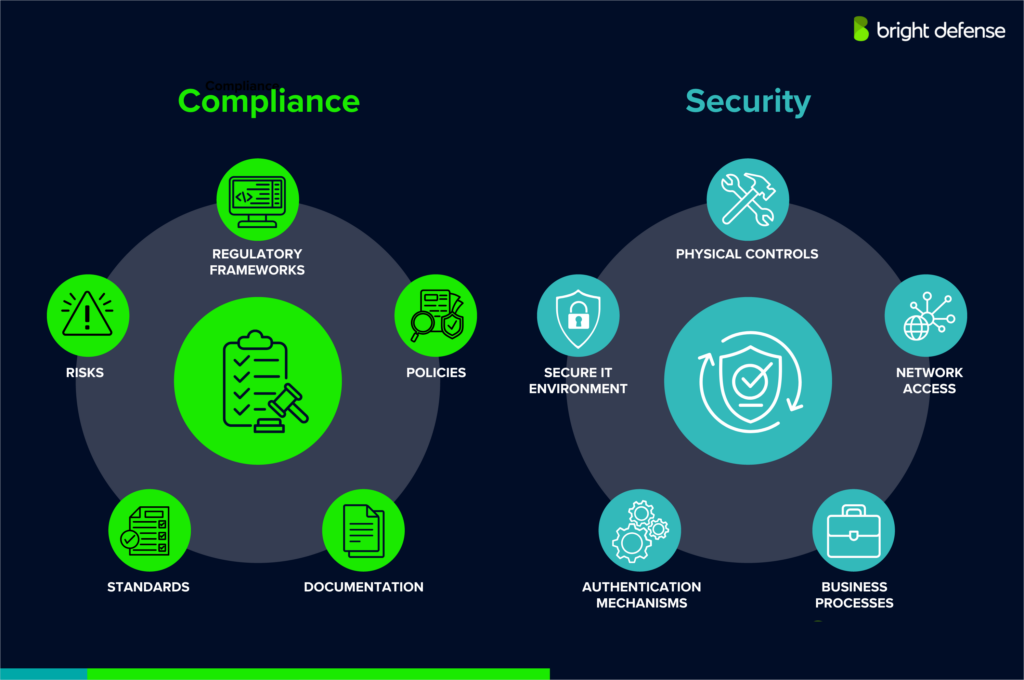
Data privacy is closely connected to cybersecurity, but the two concepts are not identical.
Cybersecurity focuses primarily on protecting systems, networks, applications, and information from unauthorized access, disruption, or attacks.
Data privacy focuses on how personal information is collected and used and whether that processing is appropriate, transparent, and lawful.
A business can therefore have strong cybersecurity controls while still having poor privacy practices.
What Is Data Compliance?
Data compliance refers to following applicable laws, regulations, contractual requirements, and organizational policies governing information.
The exact requirements depend on factors such as:
- Where an organization operates
- Where its customers are located
- What type of information it processes
- What industry it operates in
- Whether it transfers information internationally
- Whether it processes sensitive personal information
Organizations should therefore identify which privacy and data-protection requirements apply to their specific operations rather than assuming that one compliance framework covers everything.
Why Data Privacy Matters
Privacy is no longer simply an issue for legal departments.
It affects cybersecurity, product development, marketing, customer service, human resources, software engineering, and business strategy.
Poor privacy practices can lead to:
- Regulatory penalties
- Lawsuits
- Data breaches
- Customer complaints
- Loss of business
- Reputational damage
- Increased security costs
- Operational disruption
Customers are also becoming more aware of how organizations use their personal information.
Businesses that handle data responsibly can strengthen trust and differentiate themselves from competitors.
Major Data Privacy Regulations
Organizations may be subject to different privacy laws depending on their location and activities.
GDPR
The General Data Protection Regulation (GDPR) is one of the world’s most influential privacy frameworks.
It applies to organizations that fall within its scope and establishes requirements around the processing and protection of personal data.
The GDPR emphasizes principles such as transparency, purpose limitation, data minimization, accuracy, storage limitation, security, and accountability.
It also provides individuals with various rights concerning their personal data.
CCPA and CPRA
California’s privacy framework has significantly influenced discussions around consumer privacy in the United States.
The California Consumer Privacy Act and subsequent amendments provide California residents with various rights regarding personal information and place obligations on certain businesses.
Companies operating across multiple jurisdictions need to determine whether these requirements apply to their activities.
Other Privacy Frameworks
Organizations may also encounter privacy requirements under other national, regional, and sector-specific laws.
Examples include regulations governing financial information, healthcare data, children’s information, electronic communications, and data transfers.
The important lesson is that compliance requirements vary.
Personal Data vs. Sensitive Data
Not all information carries the same level of privacy risk.
Basic personal information can include details such as a person’s name or contact information.
Sensitive information may require additional protection depending on the applicable law and context.
Examples can include:
- Financial information
- Health information
- Biometric information
- Government identification information
- Precise location information
- Authentication credentials
- Certain information about children
Businesses should understand what types of data they process and apply appropriate safeguards.
The Principle of Data Minimization
One of the most effective privacy practices is simple:
Do not collect information you do not actually need.
Collecting excessive information increases the potential impact of a breach and creates additional compliance responsibilities.
For example, if a service only needs a customer’s name and delivery address to complete an order, collecting unrelated personal information may create unnecessary risk.
Data minimization can help organizations reduce their attack surface and simplify data management.
Data Mapping and Inventory
Organizations cannot properly protect information they do not understand.
A data inventory helps businesses identify:
- What personal data they collect
- Where it comes from
- Where it is stored
- Which systems process it
- Who can access it
- Which third parties receive it
- How long it is retained
- When it should be deleted
Data mapping can reveal unexpected risks.
For example, an organization may discover that customer information is being copied into spreadsheets, marketing tools, analytics platforms, cloud storage systems, and third-party applications.
Without visibility, privacy controls become difficult to enforce.
Access Control and Least Privilege
Not every employee needs access to every piece of information.
The principle of least privilege means users should receive only the access necessary to perform their responsibilities.
Organizations can strengthen this approach by implementing:
- Role-based access control
- Multi-factor authentication
- Privileged-access management
- Regular access reviews
- Strong password policies
- Automated account deprovisioning
When an employee changes roles or leaves the organization, unnecessary access should be removed promptly.
Encryption and Data Protection
Encryption can help protect information when it is stored or transmitted.
Organizations should consider appropriate encryption strategies for sensitive information, particularly when data is being transferred across networks or stored in systems that could be targeted by attackers.
However, encryption should not be treated as a complete privacy strategy.
Strong privacy protection also requires access controls, monitoring, secure development, appropriate retention policies, and employee awareness.
Data Retention and Deletion
Keeping personal information indefinitely can increase risk.
Businesses should establish appropriate retention periods based on legal, operational, and business requirements.
When information is no longer required, it should be securely deleted or otherwise handled according to applicable requirements.
A clear retention policy can help prevent organizations from accumulating unnecessary information over time.
Third-Party and Vendor Risk
Businesses increasingly depend on external service providers.
Cloud platforms, payment processors, analytics providers, marketing systems, customer relationship management platforms, and software vendors may all process personal information.
This creates another layer of privacy risk.
Organizations should evaluate vendors carefully and consider:
- What data the vendor receives
- Why the vendor needs it
- Where the data is processed
- What security controls are used
- How incidents are handled
- How data is deleted or returned
- What contractual protections exist
A company’s privacy practices can be affected by the actions of its third-party providers.
Privacy by Design
Privacy should be considered when products and systems are designed rather than added at the end of development.
This approach is often called privacy by design.
For example, developers can ask:
- Does this feature really require personal information?
- Can we achieve the same result using less data?
- Who needs access to this information?
- How long should the information be stored?
- What happens if a user requests deletion?
- How will privacy settings be communicated?
Building privacy into products from the beginning can reduce expensive changes later.
Artificial Intelligence and Data Privacy
Artificial intelligence has introduced new privacy questions.
Organizations may use AI systems to analyze customer information, automate decisions, personalize services, generate content, or support employees.
This creates important questions about:
- What data is being provided to AI systems?
- Is personal information being processed?
- Where is the information stored?
- Is the information used to train models?
- Who can access AI-generated outputs?
- Can sensitive information be accidentally exposed?
- Are automated decisions subject to additional requirements?
Businesses should establish clear policies governing the use of personal information with AI tools.
Employees should also understand what information they are permitted to enter into third-party AI systems.
Employee Privacy Awareness
Technology alone cannot solve every privacy problem.
Employees can accidentally expose information through phishing attacks, misdirected emails, insecure file sharing, weak passwords, or inappropriate use of applications.
Regular privacy and security training can help employees recognize risks.
Training should cover practical issues such as:
- Phishing
- Social engineering
- Password security
- Safe file sharing
- Data classification
- Handling sensitive information
- Reporting suspicious incidents
- Appropriate use of AI tools
A strong privacy culture requires participation throughout the organization.
Data Breach Response
Even organizations with strong controls can experience security incidents.
A data breach response plan should clearly define what happens when personal information may have been compromised.
The plan should identify:
- Who leads the response
- How the incident is contained
- How evidence is preserved
- How affected systems are investigated
- Which internal teams must be notified
- When regulators or affected individuals may need to be informed
- How the organization communicates with customers
- How corrective measures are implemented
Organizations should regularly test their incident-response procedures rather than waiting for a real breach.
Common Data Privacy Mistakes
Some privacy problems are caused by relatively simple organizational mistakes.
Common examples include:
- Collecting unnecessary information
- Keeping data longer than necessary
- Giving too many employees access
- Using unsecured spreadsheets
- Ignoring vendor risks
- Failing to document data processing
- Using unclear privacy notices
- Poorly managing consent
- Sending personal information to the wrong recipient
- Failing to remove former employees’ access
- Allowing sensitive data into unapproved AI tools
Small weaknesses can become major risks when combined.
How Businesses Can Improve Data Privacy
Organizations can take several practical steps to strengthen privacy.
1. Conduct a Data Audit
Identify what personal information exists across the organization.
2. Build a Data Inventory
Document where information is stored, processed, transferred, and accessed.
3. Review Access Permissions
Remove unnecessary privileges and regularly review high-risk accounts.
4. Strengthen Authentication
Use multi-factor authentication and stronger identity-management controls.
5. Review Vendors
Understand how third parties process and protect personal information.
6. Establish Retention Policies
Define when information should be archived or deleted.
7. Train Employees
Make privacy and cybersecurity awareness part of organizational culture.
8. Prepare for Incidents
Maintain and test a documented data-breach response plan.
9. Monitor Regulatory Changes
Privacy requirements continue to evolve, so organizations should regularly review applicable obligations.
10. Build Privacy Into New Technology
Consider privacy implications before launching new products, applications, AI systems, or data-processing processes.
The Future of Data Privacy and Compliance
Data privacy will become increasingly important as organizations collect more information and adopt technologies such as artificial intelligence, cloud computing, connected devices, and advanced analytics.
Privacy programs are also likely to become more closely connected with cybersecurity and enterprise risk management.
Instead of treating compliance as an annual checklist, organizations will increasingly need continuous processes for monitoring data, evaluating risks, managing vendors, reviewing access, and responding to incidents.
AI will also create new compliance challenges as regulators and businesses determine how privacy principles should apply to increasingly automated systems.
Conclusion
Data privacy and compliance have become fundamental parts of modern cybersecurity.
Organizations need to understand what personal information they collect, why they collect it, where it goes, who can access it, how long it is retained, and how it is protected.
Compliance should not be viewed simply as a legal obligation. Effective privacy practices can strengthen cybersecurity, reduce unnecessary risk, improve operational discipline, and build customer trust.
As businesses adopt AI, cloud services, analytics, and other digital technologies, responsible data management will become even more important.
The organizations that succeed in the future will not simply collect more data. They will learn how to use data responsibly while protecting the people behind it.
Frequently Asked Questions
What is data privacy?
Data privacy is the responsible management of personal information, including how it is collected, used, shared, stored, protected, and deleted.
What is data compliance?
Data compliance means meeting applicable laws, regulations, contractual obligations, and organizational requirements related to the handling and protection of information.
Why is data privacy important for businesses?
Strong privacy practices can help businesses reduce security risks, meet regulatory obligations, protect customers, and maintain trust.
What is data minimization?
Data minimization means collecting and processing only the personal information that is necessary for a specific and legitimate purpose.
How does AI affect data privacy?
AI can introduce additional privacy risks when personal or sensitive information is used by AI systems. Organizations should establish controls governing what data can be submitted, processed, stored, and shared through AI tools.
How can a company prepare for a data breach?
Companies should maintain an incident-response plan, establish clear responsibilities, monitor systems, protect evidence, understand notification requirements, and regularly test their response procedures.


