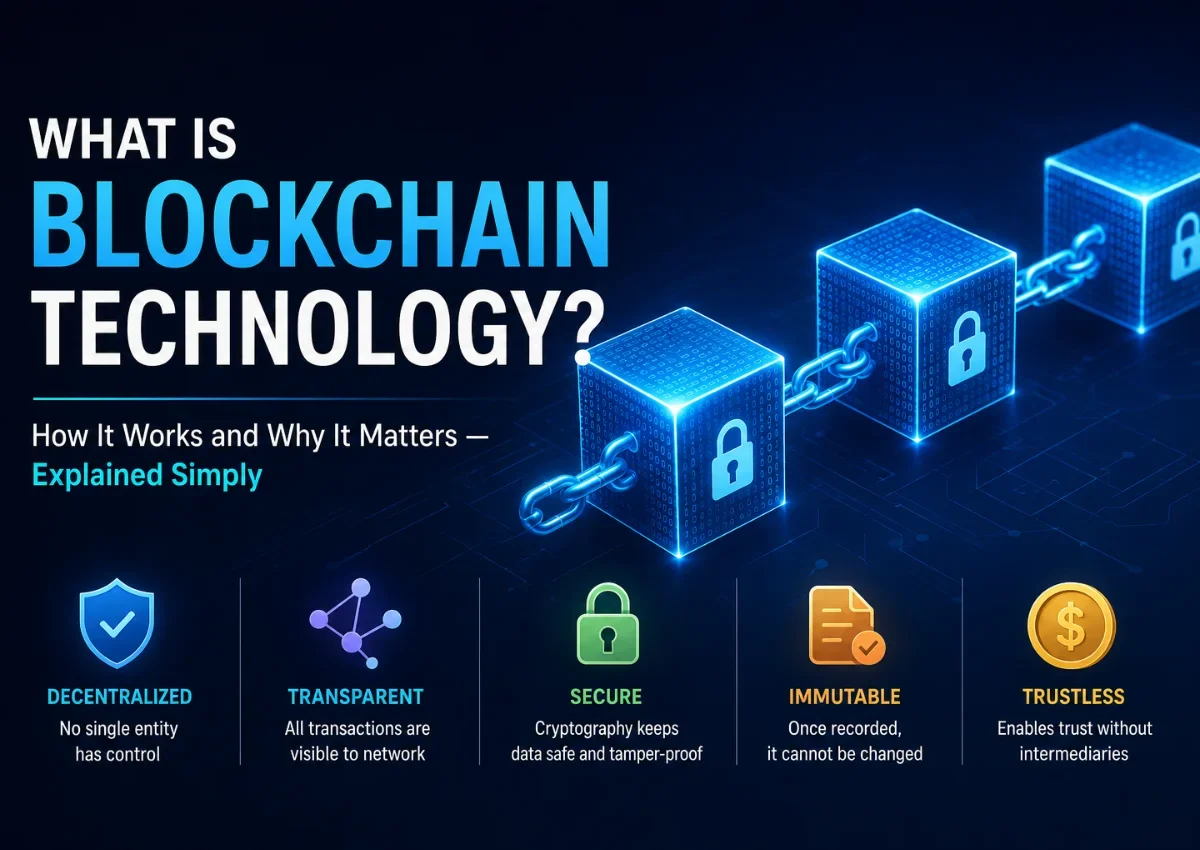
Blockchain technology has evolved from powering cryptocurrencies to becoming a foundational system for secure, transparent, and decentralized digital operations. In 2026, it is transforming industries far beyond finance—impacting supply chains, healthcare, governance, and more.
This guide breaks down blockchain technology, how it works, and why it’s one of the most important innovations of our time.
🌐 What Is Blockchain Technology?
Blockchain is a decentralized digital ledger that records transactions across multiple computers in a secure and transparent way.
Unlike traditional systems controlled by a central authority, blockchain operates on a distributed network where no single entity has full control.
Popular blockchain-based platforms like Bitcoin and Ethereum are prime examples of how this technology is used.
⚙️ How Blockchain Works
At its core, blockchain is made up of three main components:
🧱 1. Blocks
Each block contains:
- Transaction data
- A timestamp
- A unique cryptographic hash
🔗 2. Chains
Blocks are linked together in chronological order, forming a chain. Each new block connects to the previous one, making it nearly impossible to alter past records.
🖥️ 3. Network (Nodes)
Blockchain operates on a peer-to-peer network of computers (nodes) that validate and store data collectively.
🔐 Key Features of Blockchain
🔒 Decentralization
No central authority controls the system.
🛡️ Security
Cryptography ensures data integrity and protection.
👁️ Transparency
Transactions are visible and verifiable by all participants.
⛓️ Immutability
Once recorded, data cannot be altered or deleted.
💡 Types of Blockchain
🌍 Public Blockchain
Open to anyone (e.g., Ethereum)
🏢 Private Blockchain
Restricted access, used by organizations.
🤝 Consortium Blockchain
Controlled by a group of entities.
🔐 Hybrid Blockchain
Combines public and private elements.
🚀 Real-World Applications of Blockchain
💰 1. Cryptocurrency & Finance
Blockchain powers digital currencies like Bitcoin, enabling secure peer-to-peer transactions without intermediaries.
📦 2. Supply Chain Management
Companies use blockchain to track goods from production to delivery, ensuring authenticity and transparency.
🏥 3. Healthcare
Secure storage and sharing of patient records.
🗳️ 4. Voting Systems
Blockchain can improve election transparency and reduce fraud.
🧾 5. Smart Contracts
Smart contracts are self-executing agreements coded on blockchain platforms like Ethereum.
⚖️ Advantages of Blockchain
- ✅ Enhanced security
- ✅ Reduced fraud
- ✅ Faster transactions
- ✅ Lower operational costs
- ✅ Improved transparency
⚠️ Challenges of Blockchain Technology
Despite its benefits, blockchain faces several challenges:
- ⚡ Scalability issues
- 💸 High energy consumption
- ⚖️ Regulatory uncertainty
- 🧠 Lack of widespread understanding
- 🛠️ Technical complexity
🌍 Blockchain in Emerging Markets
Blockchain adoption is growing rapidly in regions like Africa.
In cities like Lagos, blockchain is being used in:
- Fintech solutions
- Cross-border payments
- Identity verification systems
🔮 The Future of Blockchain Technology
The future of blockchain is promising, with key developments including:
- 🌐 Integration with Web3
- 🤖 AI-powered blockchain systems
- 🪙 Growth of decentralized finance (DeFi)
- 🏢 Enterprise blockchain adoption
Blockchain is expected to become a core part of digital infrastructure globally.
🧠 Blockchain vs Traditional Systems
| Feature | Blockchain | Traditional Systems |
|---|---|---|
| Control | Decentralized | Centralized |
| Transparency | High | Limited |
| Security | Cryptographic | Standard security |
| Data Integrity | Immutable | Editable |
🏁 Final Thoughts
Blockchain technology is more than just a trend—it’s a transformative force reshaping how data and value are exchanged.
As industries continue to adopt decentralized solutions, understanding blockchain will be essential for businesses, developers, and individuals alike.
Whether you’re investing, building, or simply exploring, blockchain offers endless possibilities for innovation.
🔍 SEO Meta (Optional for Your Blog)
Meta Title: Blockchain Technology Explained: Benefits, Uses & Future in 2026
Meta Description: Learn how blockchain technology works, its real-world applications, benefits, and future trends in this comprehensive 2026 guide.
Keywords: blockchain technology, how blockchain works, crypto blockchain, blockchain uses, Web3, DeFi