Navigating the Digital Transformation Journey for Feed Mills
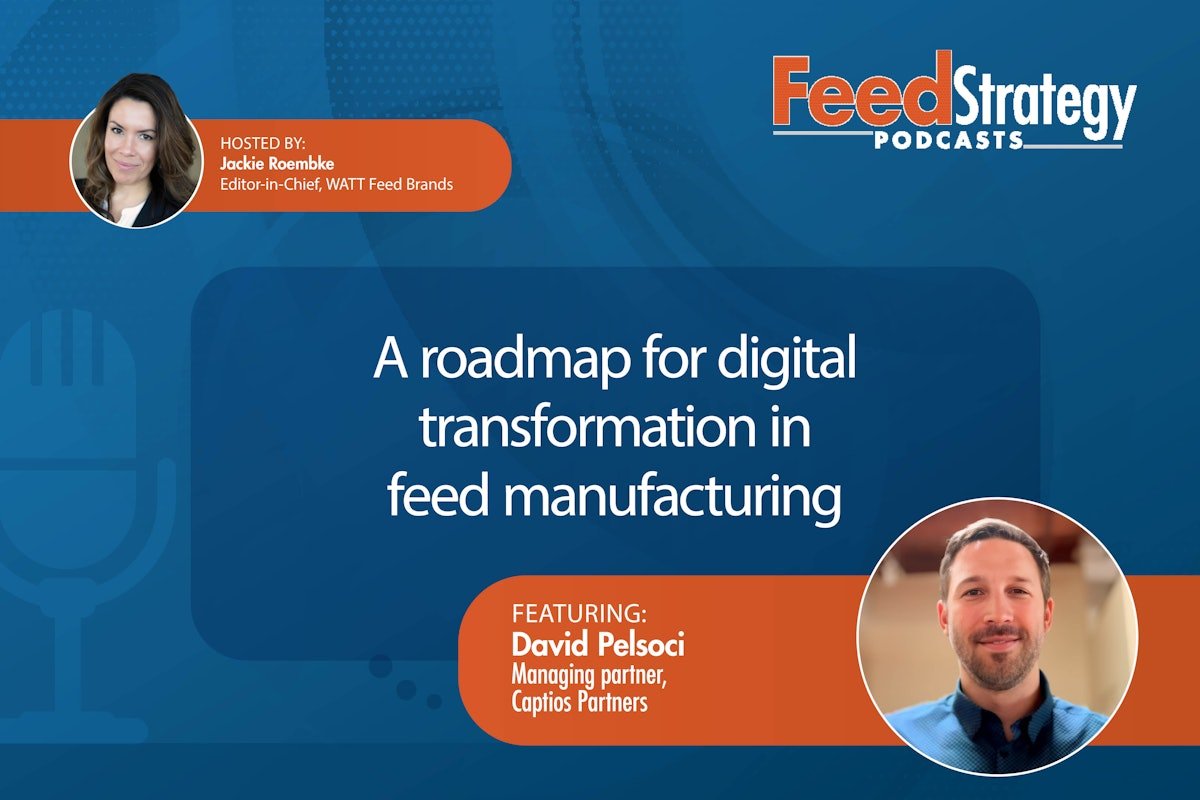
In a recent Feed Strategy Podcast episode, David Pelsoci, managing partner at Captios Partners, delved into the complexities of digital transformation in feed mills. The conversation touched on the many obstacles operators encounter when incorporating artificial intelligence (AI) and advanced technologies into their operations. He highlighted the potential of digital twins, shared practical examples of their impact on logistics costs, and discussed crucial foundational steps manufacturers must take to optimize their digital strategies.
Understanding the Digital Product Cycle
David’s Background and Captios Partners
David Pelsoci’s journey into agribusiness began with a degree in Agronomy from the University of Illinois. Initially aiming to enter grain trading, his path shifted toward implementing ERP (Enterprise Resource Planning) systems in supply chains, ultimately leading him back to agribusiness. Pelsoci founded Captios Partners to assist clients through the digital product cycle, focusing on mid-market agribusiness, which includes animal feed manufacturing.
Captios combines tech advisory services with systems integration, aiming to help clients navigate the digital landscape effectively. They work with a range of businesses, from smaller feed mills to larger operations, promoting an understanding of technology and ensuring clients don’t have to coordinate with multiple consulting firms.
The Exciting Developments in Agribusiness Technology
When discussing the most thrilling technological advancements in agribusiness, Pelsoci emphasized the transformative role of AI. As the costs of managing technology have decreased, businesses that previously lacked access to such tools can now leverage them. The intersection of data and the physical realities of agribusiness offers unique opportunities for enhanced AI solutions.
Data availability, driven by the integration of various operational aspects in the food supply chain, allows agribusiness operators to make informed decisions that were previously unimaginable.
Common Pitfalls in Digital Transformation
One of the primary mistakes Pelsoci sees among feed mill operators is the tendency to rush towards advanced technologies without laying the groundwork. He refers to this phase as the "eating-your-vegetables" stage. Operators often overlook the necessity of solidifying processes and improving data quality, critical for the successful implementation of AI technologies.
Another common error is underestimating the ongoing nature of technology investment. Pelsoci stresses that viewing digital assets as one-off projects can lead to stagnation. Continuous reinvestment and maintenance are vital for long-term success.
Moreover, many clients embark on ambitious technology projects independently, which typically results in lost momentum and trust among on-ground personnel. Pelsoci advocates for seeking guidance from experienced partners who can provide a clear direction and support.
Harnessing Digital Twins for Operational Efficiency
The discussion then transitioned to digital twins, a powerful tool for feed mill optimization. A digital twin creates a virtual representation of an operational process, which ingests varied data streams—from ERP to shop floor data—providing a comprehensive oversight of operations.
Pelsoci shared a notable example where one client leveraged a digital twin to streamline logistics flows within their animal feed operations. This enabled them to enhance delivery routes and inventory management, reducing logistics costs by up to 25%. By employing scenario analysis, clients can forecast the impacts of changes without incurring substantial losses, thus making data-informed decisions that improve throughput and yield.
The Vital Step of ERP Integration
Despite advancements, many feed mill operators still grapple with basic system integration. Pelsoci emphasizes the criticality of ensuring that physical business processes are accurately mirrored in the software environment. Effective ERP integration serves as a key precursor to higher-level analytics and AI applications.
Once the foundational systems are in place and data quality is established, operators can optimize processes and explore advanced AI solutions without the inherent risks of poor data underpinning their decisions.
The Shift from Preventative to Predictive Maintenance
Pelsoci illuminated the contrast between traditional maintenance practices and modern predictive maintenance models. Traditionally, maintenance schedules were rigid, often leading to inefficiencies and downtime. In contrast, predictive models utilize real-time data to anticipate equipment failures, allowing for dynamic scheduling that avoids production disruption.
For instance, predictive maintenance might integrate temperature and humidity data along with historical performance metrics to forecast when a component is likely to fail. This intelligent scheduling approach keeps production lines running smoothly while maximizing resource efficiency.
Metrics for Measuring Technology Impact
When it comes to demonstrating the value of digital investments, Pelsoci advocates linking technology initiatives directly to commercial outcomes. Return on investment (ROI) should be the guiding metric, assessing the financial implications of technology implementations.
He also suggests monitoring general throughput and cost per unit metrics. These indicators can help visualize improvements over time, serving as tangible evidence of technology’s efficacy in enhancing operational efficiency.
Future Technologies Shaping Feed Mills
Looking ahead, the technology landscape for feed mills will continue to evolve. At its core, Pelsoci emphasizes mastering foundational infrastructure and system integration. Once these fundamental aspects are in place, businesses can begin leveraging data platforms that provide real-time visibility into operations.
The next wave of advancements will focus on aggregating data for improved decision-making, creating a flywheel effect of optimization across the business. With this foundation, companies can experiment with AI applications tailored to improve specific operational challenges, fostering a culture of continuous improvement.
By understanding and applying these insights, feed mill operators can navigate the complexities of digital transformation more effectively, positioning their businesses for sustained growth and profitability in an increasingly competitive landscape.