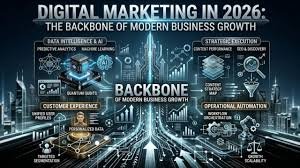
The technology industry is one of the most competitive and fast-moving sectors in the global economy. Every year, thousands of startups launch innovative products, established companies introduce new services, and emerging technologies reshape consumer expectations. In such a crowded marketplace, having a great product is no longer enough. Success increasingly depends on a company’s ability to market effectively, attract customers, build brand loyalty, and scale sustainably.
Tech marketing has evolved significantly over the past decade. Traditional advertising methods have given way to data-driven strategies powered by artificial intelligence, marketing automation, personalization, and advanced analytics. Modern technology companies must understand their audiences, deliver value-driven content, optimize customer experiences, and leverage multiple digital channels to achieve growth.
At the same time, growth strategies have become more sophisticated. Businesses are moving beyond simple customer acquisition metrics and focusing on customer retention, product-led growth, community building, referral programs, and long-term customer lifetime value. Companies that successfully combine innovative marketing with sustainable growth models often outperform competitors and establish stronger market positions.
In 2026, the rise of AI-powered marketing tools, predictive analytics, social commerce, creator partnerships, and privacy-focused advertising is transforming how technology companies engage customers. Whether you’re launching a startup, scaling a SaaS platform, growing an e-commerce technology business, or leading a digital product company, understanding modern tech marketing principles is essential for success.
This guide explores the latest trends, strategies, tools, and growth frameworks helping technology businesses acquire customers, increase revenue, and build lasting competitive advantages in an increasingly digital world.
🚀 What Is Tech Marketing?
Tech marketing refers to the strategies and tactics used to promote technology products, software solutions, digital services, and innovative platforms.
Unlike traditional marketing, tech marketing often involves:
- Complex products
- Longer buying cycles
- Technical audiences
- Data-driven decision making
- Educational content
- Digital-first channels
The goal is to communicate value, build trust, and drive customer adoption.
🎯 Why Growth Marketing Matters
Growth marketing focuses on measurable business outcomes rather than brand awareness alone.
Benefits include:
- Faster customer acquisition
- Increased revenue
- Better retention
- Improved customer experiences
- Sustainable business growth
Successful tech companies align marketing efforts directly with business objectives.
📊 Understanding the Modern Customer Journey
Today’s customer journey is more complex than ever.
Consumers typically move through several stages:
Awareness
Discovering a problem or solution.
Consideration
Researching products and alternatives.
Evaluation
Comparing features, pricing, and reviews.
Purchase
Making a buying decision.
Retention
Continuing to use the product.
Advocacy
Recommending the product to others.
Understanding each stage helps marketers create more effective campaigns.
🤖 AI-Powered Marketing
Artificial Intelligence is transforming marketing operations.
AI tools help businesses:
- Analyze customer behavior
- Generate content
- Personalize experiences
- Automate campaigns
- Predict customer needs
AI allows marketers to operate more efficiently while delivering highly targeted experiences.
Benefits of AI Marketing
🎯 Better Targeting
AI identifies ideal audiences based on behavioral data.
⚡ Faster Campaign Execution
Automation reduces manual workload.
📈 Improved Conversion Rates
Personalized content increases engagement.
💰 Better ROI
More efficient campaigns often generate stronger returns.
📚 Content Marketing Remains King
Content continues to be one of the most effective growth channels for technology businesses.
Popular content formats include:
- Blog articles
- Case studies
- Whitepapers
- Videos
- Webinars
- Podcasts
- Product tutorials
Educational content builds trust and positions companies as industry leaders.
Building an Effective Content Strategy
Understand Your Audience
Research customer pain points and goals.
Create Valuable Content
Focus on solving problems rather than selling.
Optimize for Search Engines
Use relevant keywords and SEO best practices.
Measure Performance
Track traffic, engagement, and conversions.
🔍 Search Engine Optimization (SEO)
SEO remains one of the highest-return marketing channels.
Benefits include:
- Long-term visibility
- Organic traffic growth
- Lower acquisition costs
- Increased brand credibility
Key SEO Strategies for Tech Companies
Technical SEO
Optimize website performance and structure.
Keyword Research
Target relevant search terms.
Content Optimization
Create valuable, search-friendly content.
Link Building
Earn quality backlinks from reputable sources.
📧 Email Marketing for Growth
Email marketing remains one of the most cost-effective digital marketing channels.
Benefits include:
- Direct communication
- Personalization
- Customer retention
- Lead nurturing
Effective Email Campaign Types
Welcome Sequences
Introduce new users to your brand.
Product Updates
Share new features and improvements.
Educational Campaigns
Provide valuable insights and resources.
Re-engagement Campaigns
Reconnect with inactive users.
📱 Social Media Marketing
Social media platforms continue influencing purchasing decisions.
Tech companies use social media for:
- Brand awareness
- Community building
- Product launches
- Customer engagement
Popular Social Media Strategies
Thought Leadership
Share expertise and industry insights.
Short-Form Video
Create engaging visual content.
Community Engagement
Respond to comments and conversations.
Influencer Partnerships
Collaborate with trusted creators.
🏆 Product-Led Growth (PLG)
Product-Led Growth has become a dominant growth model for SaaS and technology companies.
In a PLG strategy:
- The product drives acquisition
- Users experience value quickly
- Free trials encourage adoption
- Word-of-mouth fuels growth
Advantages of Product-Led Growth
Lower Customer Acquisition Costs
Users discover value independently.
Faster Adoption
Products demonstrate their benefits directly.
Improved Retention
Satisfied users remain engaged longer.
👥 Community-Led Growth
Technology brands increasingly invest in community building.
Benefits include:
- Customer loyalty
- User-generated content
- Product feedback
- Organic referrals
Strong communities can become powerful growth engines.
💰 Customer Retention Strategies
Acquiring customers is important, but retaining them is often more profitable.
Retention strategies include:
Excellent Customer Support
Resolve issues quickly and effectively.
Continuous Product Improvement
Regularly enhance user experiences.
Personalized Experiences
Deliver relevant recommendations and content.
Customer Education
Help users maximize product value.
📊 Growth Metrics Every Tech Business Should Track
Successful growth marketing relies on data.
Important metrics include:
Customer Acquisition Cost (CAC)
Cost of acquiring a new customer.
Customer Lifetime Value (CLV)
Revenue generated over the customer relationship.
Conversion Rate
Percentage of visitors who take desired actions.
Churn Rate
Percentage of customers who stop using the product.
Monthly Recurring Revenue (MRR)
Key metric for subscription businesses.
⚠️ Common Tech Marketing Mistakes
Avoid these common pitfalls:
❌ Focusing only on acquisition
❌ Ignoring customer retention
❌ Poor audience targeting
❌ Inconsistent branding
❌ Neglecting analytics
❌ Over-reliance on paid advertising
Balanced growth strategies typically perform best.
🌍 Emerging Marketing Trends in 2026
Several innovations are reshaping tech marketing.
🤖 Generative AI Content Creation
AI accelerates content production and personalization.
🔒 Privacy-First Marketing
Businesses must adapt to evolving privacy regulations.
📱 Social Commerce
Consumers increasingly purchase products directly through social platforms.
🎥 Interactive Video Content
Video remains one of the highest-performing content formats.
🎯 Predictive Analytics
Businesses use AI to forecast customer behavior and optimize campaigns.
🔮 The Future of Tech Marketing
The next generation of marketing will be:
- More personalized
- More automated
- More data-driven
- More customer-centric
Organizations that embrace innovation while maintaining authentic customer relationships will be best positioned for growth.
📋 Growth Strategy Checklist
Use this checklist to strengthen your marketing efforts:
✅ Define target audiences
✅ Build a content strategy
✅ Optimize for SEO
✅ Implement email marketing
✅ Leverage AI tools
✅ Track growth metrics
✅ Improve customer retention
✅ Build community engagement
✅ Test and optimize campaigns
✅ Focus on customer experience
🏁 Final Thoughts
Tech marketing and growth have become essential disciplines for modern businesses. In a competitive digital landscape, organizations must combine strong products with effective marketing strategies to attract customers, build loyalty, and achieve sustainable growth.
By leveraging AI-powered tools, content marketing, SEO, product-led growth, customer retention strategies, and data-driven decision-making, technology companies can scale more efficiently and compete more effectively. Success in 2026 will depend not only on innovation but also on the ability to understand customers, deliver value consistently, and adapt to evolving market trends.
Companies that invest in strategic marketing and long-term growth initiatives today will be better positioned to lead their industries tomorrow.