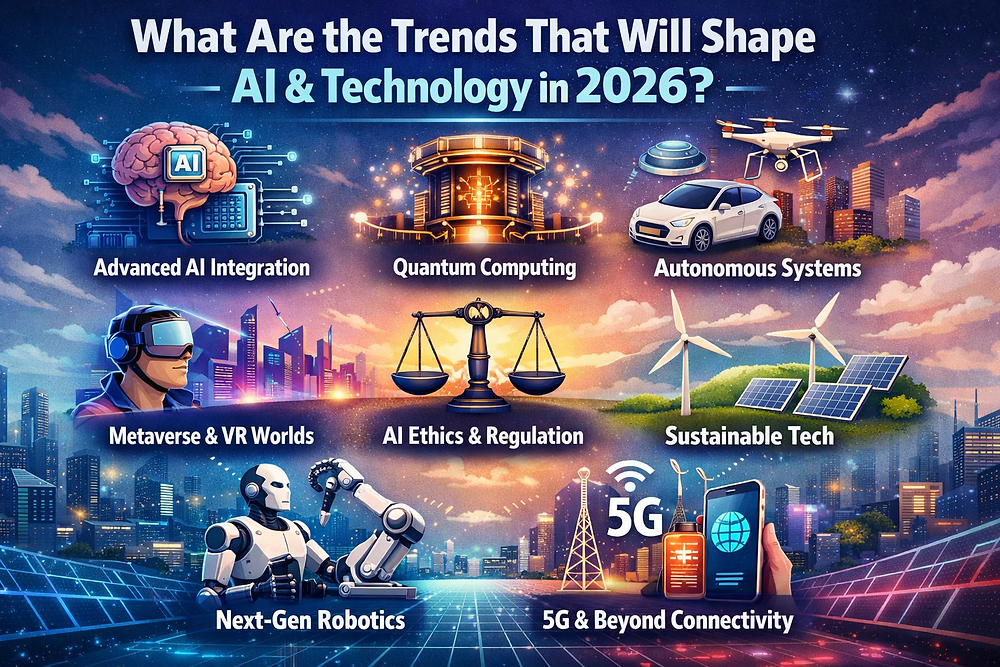
Technology is evolving at an unprecedented pace, transforming how we work, communicate, learn, shop, receive healthcare, and conduct business. Innovations that once seemed futuristic—such as generative AI, autonomous robots, spatial computing, and decentralized digital ecosystems—are becoming part of everyday life. At the same time, organizations face increasing pressure to adapt to rapid technological change while balancing security, privacy, sustainability, and ethical considerations.
For businesses, understanding emerging technology trends is no longer optional. Companies that successfully identify and adopt relevant innovations can improve operational efficiency, create better customer experiences, develop new revenue streams, and remain competitive in fast-changing markets. Individuals also benefit from staying informed, as technological advancements continue to reshape careers, education, entertainment, and personal productivity.
This comprehensive guide explores the most influential technology trends of 2026, explains their potential impact across industries, highlights practical applications, discusses implementation challenges, and examines how these innovations may shape the future of the digital economy.
Why Tech Trends Matter
Monitoring technology trends helps organizations and individuals:
- Identify new business opportunities.
- Improve productivity.
- Enhance customer experiences.
- Reduce operational costs.
- Strengthen cybersecurity.
- Support innovation.
- Prepare for workforce changes.
- Make informed investment decisions.
Organizations that adapt strategically are often better positioned to respond to evolving market conditions.
1. Artificial Intelligence Everywhere
Artificial Intelligence (AI) continues to influence nearly every industry.
AI is increasingly used for:
- Content creation
- Customer support
- Software development
- Healthcare diagnostics
- Financial analysis
- Manufacturing automation
- Fraud detection
- Personalized recommendations
- Business intelligence
Rather than replacing human expertise, AI is increasingly serving as a productivity tool that augments decision-making and automates repetitive tasks.
2. Generative AI Evolution
Generative AI has expanded beyond text generation into:
- Image creation
- Video production
- Music composition
- Software coding assistance
- Marketing content
- Product design
- Research support
- Educational tools
Organizations are adopting generative AI to improve efficiency while implementing governance to address accuracy, security, and copyright considerations.
3. AI Agents and Intelligent Automation
AI agents can perform multi-step tasks such as:
- Scheduling workflows
- Researching information
- Automating customer service
- Processing documents
- Managing repetitive business operations
These systems are expected to become more capable while still requiring human oversight for sensitive or high-impact decisions.
4. Cybersecurity Becomes AI-Powered
As cyber threats grow more sophisticated, organizations increasingly rely on AI to:
- Detect anomalies
- Analyze malware
- Identify phishing attacks
- Prioritize security alerts
- Automate incident response
- Strengthen Zero Trust security
At the same time, attackers are also experimenting with AI, making cybersecurity an ongoing technological arms race.
5. Zero Trust Security
Traditional network boundaries are fading.
Organizations increasingly verify:
- User identity
- Device security
- Access requests
- Behavioral patterns
- Risk context
Zero Trust architecture has become a foundational cybersecurity strategy for cloud-first and hybrid work environments.
6. Cloud Computing Continues to Expand
Cloud platforms remain central to digital transformation.
Current trends include:
- Multi-cloud strategies
- Hybrid cloud deployments
- Serverless computing
- Cloud-native applications
- Edge integration
- Cloud security automation
Cloud adoption supports scalability and business resilience.
7. Edge Computing
Rather than sending all data to centralized cloud servers, edge computing processes information closer to where it is generated.
Benefits include:
- Lower latency
- Faster decision-making
- Reduced bandwidth usage
- Improved reliability
- Better IoT performance
Industries such as manufacturing, healthcare, transportation, and retail increasingly use edge technologies.
8. Internet of Things (IoT)
Billions of connected devices continue expanding digital ecosystems.
Common applications include:
- Smart homes
- Industrial automation
- Connected vehicles
- Wearable health devices
- Smart agriculture
- Smart cities
Managing IoT security remains a major priority.
9. Robotics and Intelligent Machines
Modern robots now perform increasingly sophisticated tasks in:
- Manufacturing
- Warehousing
- Healthcare
- Agriculture
- Hospitality
- Logistics
Collaborative robots (“cobots”) are designed to work alongside humans, improving efficiency while supporting workplace safety.
10. Autonomous Vehicles
Autonomous technologies continue advancing in:
- Passenger transportation
- Delivery services
- Agriculture
- Mining
- Warehousing
- Industrial equipment
Many deployments still require human oversight depending on the operational environment and regulatory requirements.
11. Quantum Computing
Quantum computing has the potential to solve certain complex problems beyond the capabilities of classical computers.
Potential applications include:
- Drug discovery
- Materials science
- Financial modeling
- Logistics optimization
- Cryptography research
While progress continues, practical large-scale deployment remains an evolving field.
12. Blockchain Beyond Cryptocurrency
Blockchain technology now supports:
- Supply chain transparency
- Digital identity
- Smart contracts
- Asset tokenization
- Healthcare records
- Cross-border transactions
Organizations are exploring blockchain where distributed trust and transparency provide value.
13. Web3 Development
Web3 emphasizes greater user control over digital assets and online participation through decentralized technologies.
Areas of innovation include:
- Decentralized finance (DeFi)
- NFTs
- DAOs
- Digital identity
- Creator economies
Adoption continues alongside discussions around regulation and usability.
14. Extended Reality (XR) and Spatial Computing
Virtual Reality (VR), Augmented Reality (AR), and Mixed Reality (MR) are converging into spatial computing.
Applications include:
- Education
- Engineering
- Retail visualization
- Healthcare training
- Remote collaboration
- Entertainment
Hardware improvements continue to expand potential use cases.
15. Biotechnology and Digital Health
Technology is increasingly integrated into healthcare through:
- AI-assisted diagnostics
- Wearable monitoring
- Remote patient care
- Personalized medicine
- Genomic research
- Health data analytics
Innovation aims to improve patient outcomes while addressing privacy and regulatory considerations.
16. Sustainable Technology
Organizations are investing in technologies that reduce environmental impact.
Examples include:
- Energy-efficient data centers
- Renewable energy systems
- Carbon monitoring platforms
- Smart energy management
- Sustainable manufacturing
Technology plays an important role in supporting environmental goals.
17. Digital Twins
A digital twin is a virtual representation of a physical object, process, or system.
Industries use digital twins for:
- Predictive maintenance
- Manufacturing optimization
- Infrastructure management
- Product design
- Urban planning
Simulation enables organizations to test changes before implementing them in the real world.
18. Low-Code and No-Code Platforms
Business users increasingly build applications using visual development platforms.
Benefits include:
- Faster development
- Lower costs
- Increased accessibility
- Rapid prototyping
Professional developers remain essential for complex systems and governance.
19. Data Analytics and Business Intelligence
Organizations increasingly rely on analytics to:
- Forecast demand
- Understand customer behavior
- Optimize operations
- Improve marketing
- Support strategic planning
AI-enhanced analytics provides faster insights from growing volumes of data.
20. Digital Transformation Accelerates
Digital transformation involves integrating technology into every aspect of business operations.
Common initiatives include:
- Workflow automation
- Cloud migration
- AI adoption
- Customer experience improvements
- Digital collaboration
- Process optimization
Successful transformation requires both technology and organizational change management.
Industries Most Affected by Tech Trends
Healthcare
- AI diagnostics
- Remote care
- Medical robotics
- Digital records
Finance
- Fraud detection
- Digital payments
- Blockchain
- Automated investing
Retail
- Personalized shopping
- Inventory optimization
- AI customer service
- Smart logistics
Manufacturing
- Robotics
- Predictive maintenance
- IoT monitoring
- Digital twins
Education
- Adaptive learning
- AI tutors
- Virtual classrooms
- Immersive training
Transportation
- Autonomous systems
- Fleet optimization
- Smart infrastructure
- Predictive maintenance
Challenges of Emerging Technologies
Despite rapid innovation, organizations face several challenges:
Cybersecurity Risks
New technologies introduce additional attack surfaces that require strong security controls.
Privacy Protection
Responsible data collection, storage, and processing remain essential.
Organizations must comply with applicable privacy regulations.
Skills Gaps
Many industries require professionals with expertise in AI, cloud computing, cybersecurity, analytics, and software development.
Upskilling remains a priority.
Ethical Considerations
Organizations should evaluate:
- Algorithmic fairness
- Transparency
- Accountability
- Human oversight
- Responsible AI use
Ethical governance supports public trust.
Regulatory Compliance
Governments continue developing regulations related to AI, digital assets, cybersecurity, privacy, and emerging technologies.
Businesses should monitor regulatory developments that affect their operations.
How Businesses Can Prepare
Organizations can strengthen their readiness by:
- Monitoring technology developments.
- Investing in employee training.
- Building flexible digital infrastructure.
- Strengthening cybersecurity.
- Conducting pilot projects before large-scale adoption.
- Measuring technology outcomes.
- Developing governance frameworks.
- Aligning technology investments with business goals.
Strategic adoption often produces better results than pursuing every new trend.
Future Predictions Beyond 2026
Experts anticipate continued progress in areas such as:
- More capable AI assistants
- Human-AI collaboration
- Advanced robotics
- Quantum computing research
- Personalized healthcare
- Sustainable computing
- Decentralized identity
- Intelligent automation
- Smart infrastructure
- Autonomous enterprise operations
While timelines vary, these trends illustrate the direction of ongoing technological innovation.
Tech Trends Checklist
Before investing in emerging technologies, organizations should:
- ✅ Evaluate business objectives.
- ✅ Assess cybersecurity risks.
- ✅ Protect sensitive data.
- ✅ Develop governance policies.
- ✅ Train employees.
- ✅ Test technologies through pilot programs.
- ✅ Measure return on investment (ROI).
- ✅ Monitor regulatory developments.
- ✅ Plan for scalability.
- ✅ Continuously review technology performance.
Conclusion
Technology trends in 2026 reflect a broader shift toward intelligent, connected, and data-driven systems. Artificial intelligence, cloud computing, cybersecurity, robotics, blockchain, spatial computing, and digital transformation are reshaping industries, creating new business opportunities, and changing how people interact with technology every day.
However, adopting emerging technologies successfully requires more than purchasing new tools. Organizations must balance innovation with security, privacy, ethics, workforce development, and long-term strategy. Businesses that evaluate technologies carefully, invest in employee skills, strengthen governance, and align innovation with customer needs will be better positioned to adapt to an increasingly dynamic digital landscape.
For individuals, staying informed about technology trends can support career development and digital literacy. For organizations, understanding these trends is an essential step toward building resilient, competitive, and future-ready operations in an era of continuous technological change.
Frequently Asked Questions (FAQs)
1. What are tech trends?
Tech trends are emerging technologies, practices, and innovations that influence how individuals, businesses, and industries use technology to solve problems and create new opportunities.
2. Which technology is expected to have the greatest impact in 2026?
Artificial intelligence continues to have a broad impact across many sectors, including healthcare, finance, education, cybersecurity, manufacturing, and customer service. Other significant trends include cloud computing, robotics, and cybersecurity.
3. Why should businesses monitor technology trends?
Staying informed helps businesses identify opportunities, improve efficiency, enhance customer experiences, reduce risks, and remain competitive in rapidly evolving markets.
4. Are all emerging technologies suitable for every organization?
No. Organizations should evaluate each technology based on business objectives, technical readiness, budget, security requirements, and expected return on investment before adoption.
5. How can individuals prepare for future technology trends?
Individuals can build digital skills, stay informed about emerging technologies, pursue continuous learning, develop analytical and problem-solving abilities, and adapt to evolving workplace requirements.