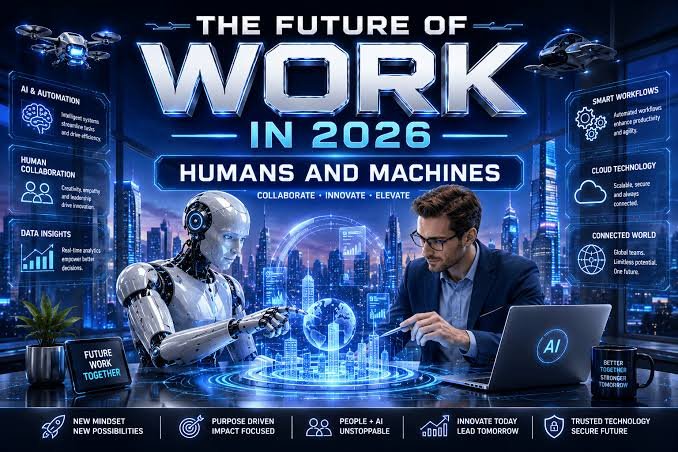
The way people work is changing faster than ever.
Artificial intelligence, automation, cloud platforms, collaboration tools, and flexible work models are transforming how employees manage tasks, communicate with colleagues, analyze information, and complete projects.
For years, workplace productivity was often measured by hours worked, meetings attended, or tasks completed. Today, businesses are increasingly asking a different question:
How can technology help people achieve better results without simply working longer hours?
That shift is important because productivity is not just about speed. Sustainable productivity involves reducing unnecessary work, improving decision-making, minimizing distractions, and giving employees better tools to focus on meaningful activities.
In 2026, AI is becoming an increasingly important part of that transformation. However, technology alone does not automatically make organizations productive. Businesses need effective processes, clear goals, good communication, and thoughtful technology adoption.
This article explores the biggest work productivity trends shaping the modern workplace and what businesses and employees can expect in the years ahead.
What Does Work Productivity Mean?
Work productivity refers to how effectively individuals or organizations turn time, resources, and effort into useful results.
A simple productivity measurement might compare:
Output ÷ Resources Used = Productivity
But modern knowledge work is more complicated.
An employee may spend eight hours working but produce significantly different results depending on:
- Tools available
- Work environment
- Communication quality
- Number of interruptions
- Task complexity
- Management practices
- Level of automation
- Employee skills
- Quality of information
This is why modern productivity strategies increasingly focus on outcomes rather than activity.
AI Is Becoming a Workplace Productivity Partner
One of the biggest workplace trends is the integration of AI into everyday workflows.
AI tools can assist with tasks such as:
- Writing
- Research
- Summarization
- Data analysis
- Brainstorming
- Customer support
- Meeting notes
- Scheduling
- Coding
- Document creation
- Translation
Instead of treating AI as a completely separate technology, businesses are increasingly incorporating it directly into existing applications and workflows.
The result is a shift from manually performing every step of a task toward human-AI collaboration.
AI Can Reduce Repetitive Work
Many employees spend significant amounts of time performing repetitive administrative activities.
Examples include:
- Copying information between systems
- Formatting documents
- Sorting emails
- Creating reports
- Scheduling meetings
- Updating spreadsheets
- Processing routine requests
Automation and AI can handle some of these activities.
This allows employees to spend more time on activities that require:
- Judgment
- Creativity
- Strategy
- Communication
- Problem-solving
- Relationship building
The productivity opportunity is therefore not simply replacing human workers.
It is reducing unnecessary manual work.
AI Agents Could Change Workplace Automation
The next stage of workplace AI is moving beyond simple chatbots and assistants toward AI agents.
An AI agent can potentially perform multiple steps toward completing a goal.
For example, instead of asking an AI system to draft a report, a future workplace agent could potentially:
- Collect information
- Analyze data
- Prepare a draft
- Identify missing information
- Create a presentation
- Send it for human approval
This could dramatically change how employees interact with software.
Instead of opening several applications and manually completing every step, workers may increasingly give systems high-level instructions.
However, organizations will need strong controls around permissions, privacy, accuracy, and human approval.
The Rise of the AI-Augmented Employee
The future workplace is unlikely to consist simply of humans or AI.
Instead, many jobs will involve AI-augmented employees.
An employee might use AI to:
- Research information faster
- Generate initial drafts
- Analyze large datasets
- Automate repetitive tasks
- Identify patterns
- Prepare meeting summaries
- Organize information
The employee remains responsible for judgment and final decisions.
This creates a new productivity model:
Human expertise + AI assistance = augmented productivity
The advantage may increasingly belong to workers who know how to use AI effectively rather than simply those who work longer hours.
Productivity Is Moving From Apps to Workflows
Organizations have accumulated hundreds of software tools.
Employees may use separate platforms for:
- Messaging
- Project management
- Documents
- Customer management
- Accounting
- Marketing
- Meetings
- File storage
The problem is that constantly switching between applications can create friction.
A major productivity trend is therefore the integration of tools into connected workflows.
Instead of moving information manually from one application to another, automation can allow systems to exchange information automatically.
No-Code and Low-Code Automation
No-code and low-code platforms are making automation more accessible.
Employees without traditional programming skills can increasingly create workflows that connect business applications.
For example:
New customer inquiry → CRM record → notification → task creation → follow-up reminder
This type of automation can save employees from repeatedly performing the same administrative steps.
As these platforms become easier to use, automation is likely to move beyond IT departments and into everyday business teams.
Meetings Are Being Reconsidered
Meetings remain one of the biggest potential sources of workplace inefficiency.
Not every discussion needs to be a meeting.
Organizations are increasingly experimenting with:
- Async communication
- Recorded updates
- Shared documents
- AI-generated meeting summaries
- Automated action items
- Shorter meetings
- Meeting-free periods
AI meeting assistants can also help summarize conversations and identify follow-up tasks.
This can reduce the need for employees to spend additional time writing notes after meetings.
The Growth of Asynchronous Work
Asynchronous work allows employees to communicate and collaborate without requiring everyone to be available simultaneously.
Instead of:
“Can we schedule a meeting?”
Teams can sometimes use:
- Written updates
- Shared project documents
- Recorded presentations
- Task-management systems
- Discussion threads
This can be particularly useful for distributed teams working across different locations and time zones.
The objective is not to eliminate meetings completely.
It is to use meetings when real-time collaboration provides genuine value.
Deep Work Is Becoming More Valuable
Modern employees face constant digital interruptions.
Notifications, email messages, instant messaging, social media, and meetings can fragment attention.
This creates a growing productivity trend toward deep work.
Deep work means dedicating uninterrupted time to cognitively demanding tasks.
Examples include:
- Writing
- Software development
- Research
- Strategic planning
- Data analysis
- Product design
Businesses can support deep work by creating periods where employees can focus without unnecessary interruptions.
Productivity and Employee Well-Being
Productivity should not mean maximizing employee workload.
A sustainable workplace recognizes that exhausted employees cannot maintain high performance indefinitely.
Technology can help reduce unnecessary work, but organizations should be careful not to use productivity tools as systems for constant employee surveillance.
A healthy productivity strategy should consider:
- Workload
- Recovery time
- Flexibility
- Autonomy
- Job satisfaction
- Communication
- Mental focus
The goal should be better work, not simply more work.
The Problem With Measuring Productivity by Activity
Traditional workplace measurement often focuses on visible activity.
Examples include:
- Hours online
- Number of emails sent
- Meetings attended
- Messages answered
- Tasks completed
But these metrics do not necessarily represent meaningful productivity.
An employee could attend ten meetings and send 100 messages without producing significant value.
Another employee might spend three hours solving an important problem and create far more value.
Modern organizations should therefore focus more on:
- Business outcomes
- Project progress
- Customer results
- Quality
- Innovation
- Revenue impact
- Problem resolution
Workplace Personalization Is Increasing
Technology is becoming more personalized.
AI systems can potentially help employees organize work according to their individual responsibilities and preferences.
For example, an AI assistant could help an employee:
- Prioritize tasks
- Summarize information
- Prepare for meetings
- Organize notes
- Find relevant documents
- Draft communications
This could create a more personalized digital workplace.
However, personalization must be balanced with privacy and security.
The Importance of Digital Skills
As technology changes workplace processes, digital skills are becoming increasingly important.
Employees may need to understand:
- AI tools
- Automation
- Data analysis
- Cybersecurity
- Cloud applications
- Digital collaboration
- Prompting
- Workflow design
Importantly, workers do not necessarily need to become software engineers.
Instead, they need enough technological understanding to use modern tools effectively.
AI Literacy Will Become a Core Workplace Skill
AI literacy is likely to become as important as basic digital literacy.
Employees need to understand that AI can:
- Make mistakes
- Produce biased results
- Generate incorrect information
- Misinterpret instructions
- Expose sensitive information if used improperly
Effective AI users know when to trust an AI system, when to verify its output, and when human judgment is necessary.
The New Importance of Human Skills
Technology is increasing the value of certain human capabilities.
As AI handles more routine tasks, uniquely human skills may become increasingly important.
These include:
- Critical thinking
- Creativity
- Leadership
- Empathy
- Negotiation
- Communication
- Strategic reasoning
- Relationship management
The future of productivity is therefore not purely technical.
Human skills remain essential.
Cybersecurity and Productivity
Cybersecurity and productivity are closely connected.
A security incident can interrupt operations, lock employees out of systems, or cause significant downtime.
Businesses should therefore integrate security into productivity strategies.
Important practices include:
- Multi-factor authentication
- Secure password management
- Software updates
- Employee security training
- Data backups
- Access controls
- Secure cloud configurations
Security should make work safer without creating unnecessary friction.
Cloud Collaboration Is Becoming Standard
Cloud-based applications allow employees to access information and collaborate from different locations.
Teams can work together on:
- Documents
- Spreadsheets
- Presentations
- Project plans
- Customer records
- Databases
Cloud collaboration also enables real-time updates and reduces the need to maintain isolated local copies of important information.
However, organizations must carefully manage permissions and sensitive data.
The Modern Digital Workspace
The workplace is becoming increasingly digital.
A modern employee may work across:
- AI assistants
- Cloud storage
- Project management platforms
- Communication applications
- CRM systems
- Automation tools
- Analytics dashboards
The challenge is preventing this technology ecosystem from becoming unnecessarily complicated.
More software does not automatically equal greater productivity.
The best digital workplace is often the one that removes friction rather than adding more tools.
Productivity Tools Need Better Integration
One major trend will be the movement toward integrated productivity ecosystems.
Instead of using isolated applications, businesses will increasingly connect:
AI + Automation + Data + Collaboration + Business Applications
For example:
A customer submits a request → AI categorizes it → automation assigns it → CRM updates → employee receives a notification → AI prepares a response.
This creates a connected workflow rather than a series of disconnected manual tasks.
The Importance of Data in Productivity
AI and automation depend heavily on data.
Businesses with fragmented, inaccurate, or poorly organized data may struggle to achieve the productivity improvements promised by AI.
Organizations should therefore pay attention to:
- Data quality
- Data accessibility
- Data security
- Data governance
- Data integration
Clean data creates a stronger foundation for automation and AI.
Productivity Analytics Are Becoming More Advanced
Organizations can now collect large amounts of information about workflows.
Analytics can identify:
- Bottlenecks
- Delays
- Repetitive processes
- Customer-service patterns
- Resource usage
- Project performance
However, companies need to use productivity analytics responsibly.
There is a major difference between analyzing process efficiency and continuously monitoring individual employees.
The former can improve workflows.
The latter can damage trust if implemented poorly.
Flexible Work Is Becoming More Mature
Remote and hybrid work have moved beyond being temporary responses to workplace disruption.
Many organizations now treat flexibility as part of their broader operating model.
Technology enables employees to collaborate from different locations.
However, successful flexible work requires more than video conferencing.
Organizations need:
- Clear communication
- Defined responsibilities
- Reliable documentation
- Strong cybersecurity
- Effective project management
- Trust
- Measurable outcomes
The Office May Become More Collaborative
As routine individual work becomes increasingly digital and remote-friendly, physical offices may evolve.
Rather than requiring employees to spend every day at desks, offices may increasingly focus on:
- Team collaboration
- Workshops
- Brainstorming
- Training
- Relationship building
- Social interaction
The office can become a place designed primarily for activities that benefit from physical presence.
Automation Will Change Job Responsibilities
Automation does not necessarily eliminate an entire job.
More often, it changes the tasks within a role.
For example, a marketing employee may spend less time:
- Formatting reports
- Creating basic summaries
- Sorting customer information
And more time:
- Developing campaigns
- Understanding customers
- Making strategic decisions
- Testing new ideas
The job changes rather than disappearing completely.
This is why workforce reskilling will be important.
Productivity and the Four-Day Workweek
Another major workplace discussion is whether technology can enable employees to accomplish the same amount of valuable work in fewer hours.
AI and automation could potentially reduce administrative workloads.
However, technology alone cannot guarantee a shorter workweek.
Organizations need to redesign processes, eliminate unnecessary work, and focus on outcomes.
The real question is not:
“How many hours can employees work?”
It is:
“How much valuable work can the organization accomplish sustainably?”
The Biggest Productivity Challenges Ahead
Despite technological improvements, businesses will continue to face productivity challenges.
Information Overload
Employees have access to more information than ever.
Finding the right information can become harder rather than easier.
Tool Overload
Too many applications can create complexity.
AI Reliability
AI outputs still require appropriate verification.
Cybersecurity
More connected systems create more potential attack surfaces.
Change Fatigue
Employees may struggle when organizations constantly introduce new technologies.
Poor Processes
Automating a bad process can simply make a bad process faster.
How Businesses Can Improve Productivity in 2026
Businesses can start with several practical steps.
1. Audit Existing Workflows
Identify repetitive and unnecessary tasks.
2. Reduce Unnecessary Meetings
Determine which meetings could become asynchronous updates.
3. Introduce AI Where It Creates Real Value
Do not adopt AI simply because it is fashionable.
4. Automate Repetitive Processes
Look for workflows that require frequent manual data entry.
5. Improve Documentation
Make important information easy to find.
6. Train Employees
Give workers the skills needed to use new technologies effectively.
7. Protect Business Data
Ensure productivity improvements do not create new security risks.
8. Measure Outcomes
Focus on meaningful business results instead of superficial activity metrics.
A Practical Productivity Framework
Organizations can use a simple five-step approach:
Identify
Find the tasks consuming unnecessary time.
Simplify
Remove unnecessary steps.
Automate
Use software or AI for repetitive activities.
Augment
Use AI to help employees make better decisions and produce better work.
Measure
Evaluate whether the change actually improved results.
This prevents businesses from adopting technology without understanding its impact.
Top Work Productivity Trends to Watch
The most important trends include:
- AI-powered workplace assistants
- Autonomous AI agents
- Workflow automation
- No-code and low-code tools
- Asynchronous collaboration
- AI-powered meeting management
- Personalized digital workspaces
- Outcome-based productivity measurement
- Hybrid work optimization
- Greater emphasis on employee well-being
- AI literacy and workforce reskilling
- Integrated productivity ecosystems
Future Predictions for Work Productivity
AI Will Become Less Visible
Instead of opening a separate AI application, employees will increasingly interact with AI directly inside the tools they already use.
Workflows Will Become More Autonomous
AI agents will increasingly perform multi-step tasks with human supervision.
Skills Will Matter More Than Tools
Knowing how to think critically and design effective workflows may become more valuable than knowing how to operate a specific application.
Companies Will Measure Outcomes More Carefully
Businesses will gradually move away from measuring productivity through simple activity metrics.
Human Judgment Will Remain Essential
AI can automate many processes, but important decisions will continue to require human responsibility and oversight.
The Future of Work Productivity
The future workplace will probably not be defined by a single technology.
Instead, productivity will emerge from the combination of:
AI + Automation + Human Expertise + Better Processes + Data + Collaboration
The most successful organizations will not necessarily be those with the largest number of AI tools.
They will be the organizations that know where technology should be used and where humans should remain in control.
Technology should remove unnecessary friction while giving employees more time to focus on meaningful work.
Conclusion
Work productivity is entering a new era.
AI, automation, cloud collaboration, digital workflows, and flexible work are changing how organizations define and measure productivity.
The biggest opportunity is not simply allowing employees to complete more tasks.
It is allowing them to spend less time on repetitive administrative work and more time on activities that require creativity, judgment, strategy, and human connection.
At the same time, businesses need to avoid the temptation to measure productivity through constant surveillance or endless activity.
The future of work should focus on outcomes, efficiency, employee well-being, and sustainable performance.
As AI becomes increasingly integrated into everyday software, the most productive workplace may ultimately be one where technology works quietly in the background, removing repetitive tasks while people focus on the work that matters most.
Frequently Asked Questions
What are the biggest work productivity trends in 2026?
Major trends include AI assistants, AI agents, workflow automation, asynchronous collaboration, hybrid work, productivity analytics, no-code automation, and greater focus on employee well-being.
How is AI improving workplace productivity?
AI can help employees with tasks such as research, writing, summarization, data analysis, meeting notes, customer support, and repetitive administrative work.
Will AI replace employees?
AI may automate certain tasks and change job responsibilities, but many roles will continue to require human judgment, creativity, communication, leadership, and expertise.
What is an AI agent?
An AI agent is a system designed to perform multiple actions toward a goal rather than simply generating a single response. In workplaces, agents could potentially automate more complex workflows under appropriate human supervision.
How can businesses improve productivity?
Businesses can audit workflows, eliminate unnecessary tasks, automate repetitive processes, reduce unnecessary meetings, improve documentation, train employees, and measure meaningful outcomes.
Is remote work more productive than office work?
There is no universal answer. Productivity depends on the type of work, organization, management practices, technology, employee preferences, and collaboration requirements.
Why is employee well-being important for productivity?
Excessive workload and constant interruptions can reduce focus and contribute to burnout. Sustainable productivity requires balancing performance with reasonable workloads and effective working conditions.
What skills will be important for future productivity?
Critical thinking, AI literacy, communication, creativity, data analysis, problem-solving, adaptability, and workflow-design skills are likely to become increasingly valuable.