

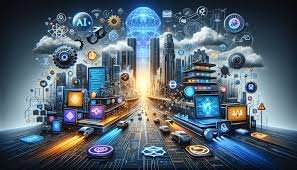
The web has come a long way since the early days of static websites and simple online interactions. What began as a tool for sharing information has evolved into a vast digital ecosystem that powers communication, commerce, education, entertainment, healthcare, and nearly every aspect of modern life. Today, billions of people rely on the internet daily, making the web one of humanity’s most transformative inventions.
However, the internet as we know it is once again undergoing a significant transformation. Emerging technologies such as Artificial Intelligence (AI), Web3, blockchain, decentralized applications, virtual reality (VR), augmented reality (AR), edge computing, and advanced cloud infrastructure are redefining how people interact with digital content and services. At the same time, increasing concerns around privacy, cybersecurity, digital identity, and data ownership are shaping the direction of future web development.
The next generation of the web will likely be more intelligent, immersive, decentralized, and user-centric than ever before. Websites and applications will become increasingly personalized, capable of understanding user intent and adapting experiences in real time. AI assistants may replace traditional search methods, while immersive environments could blur the lines between physical and digital experiences.
Businesses, developers, marketers, and consumers must understand these changes to remain competitive and prepared for the opportunities and challenges ahead. The future web will not simply be faster—it will fundamentally change how we access information, communicate, conduct business, and engage with technology.
In this article, we explore the technologies, trends, and predictions shaping the future of the web and what they mean for organizations and individuals in the years ahead.
🚀 The Evolution of the Web
To understand the future, it’s important to examine how the web has evolved.
Web 1.0: The Read-Only Era
The first generation of the internet primarily consisted of static websites where users consumed information.
Characteristics included:
- Limited interaction
- Static content
- Basic navigation
- Simple online publishing
Web 2.0: The Social and Interactive Web
Web 2.0 transformed the internet into a platform for collaboration and user-generated content.
Key developments included:
- Social media
- Blogging platforms
- Online communities
- Cloud applications
- E-commerce growth
This era shifted users from passive consumers to active participants.
Web 3.0: The Decentralized Web
Web3 introduces concepts focused on:
- User ownership
- Decentralization
- Blockchain technology
- Digital identities
- Smart contracts
The goal is to reduce dependence on centralized platforms and provide users with greater control over their digital assets and data.
🤖 Artificial Intelligence Will Power the Future Web
Artificial Intelligence is rapidly becoming the foundation of modern digital experiences.
AI is already transforming:
- Search engines
- Content creation
- Customer support
- Personalization
- Software development
- Business automation
Future websites will increasingly function as intelligent systems rather than static platforms.
AI-Powered Experiences
Modern web applications are becoming capable of:
- Understanding user intent
- Predicting behavior
- Delivering personalized recommendations
- Automating interactions
- Generating dynamic content
This shift creates more efficient and engaging online experiences.
🔍 The Future of Search
Search technology is evolving beyond traditional keyword-based queries.
Users increasingly expect direct, conversational answers rather than long lists of links.
Conversational Search
AI-powered assistants are making search more natural.
Benefits include:
- Faster information retrieval
- Personalized responses
- Improved accessibility
- Better user experiences
Search engines are becoming answer engines.
Multimodal Search
Future search systems will process:
- Text
- Images
- Video
- Audio
- Voice commands
This allows users to interact with the web in more intuitive ways.
🌐 Decentralization and Web3
One of the most discussed trends in the future of the internet is decentralization.
Web3 aims to give users greater control over:
- Personal data
- Digital identities
- Financial transactions
- Online assets
Benefits of Decentralized Systems
Enhanced Ownership
Users maintain greater control over their information and digital assets.
Reduced Dependence on Intermediaries
Transactions can occur directly between participants.
Increased Transparency
Blockchain technology provides verifiable records.
New Economic Models
Creators can monetize content without relying solely on centralized platforms.
🔒 Privacy and Data Ownership
Privacy concerns continue to influence web development.
Consumers are increasingly demanding:
- Greater transparency
- Data ownership
- Stronger privacy protections
- Reduced tracking
Privacy-First Design
Future web platforms are expected to prioritize:
- User consent
- Secure data storage
- Transparent data practices
- Privacy-enhancing technologies
Organizations that respect privacy will likely gain greater consumer trust.
🕶️ Immersive Internet Experiences
The web is moving beyond traditional screens.
Technologies such as AR, VR, and Mixed Reality are creating new possibilities.
Virtual Environments
Future applications may include:
Virtual Workspaces
Teams collaborating in immersive environments.
Virtual Shopping
Consumers exploring products in 3D.
Digital Events
Interactive conferences and experiences.
Education and Training
Hands-on virtual learning environments.
These innovations may significantly reshape online interactions.
☁️ Edge Computing and Faster Connectivity
Future web applications will require faster and more responsive infrastructure.
What Is Edge Computing?
Edge computing processes data closer to users rather than relying solely on centralized data centers.
Benefits include:
- Reduced latency
- Improved performance
- Better scalability
- Enhanced user experiences
This technology will support real-time applications and immersive experiences.
📱 Mobile-First and Device-Agnostic Web Design
Mobile devices continue to dominate internet usage globally.
Future web experiences must support:
- Smartphones
- Tablets
- Wearables
- Smart TVs
- AR/VR devices
Consistency across platforms will become increasingly important.
🔐 Cybersecurity in the Future Web
As digital ecosystems become more complex, cybersecurity becomes even more critical.
Future security strategies will emphasize:
- Zero Trust architecture
- AI-powered threat detection
- Identity-based security
- Continuous monitoring
Emerging Security Trends
Passwordless Authentication
Biometrics and passkeys may replace traditional passwords.
AI Security Systems
Automated detection and response capabilities.
Decentralized Identity
Giving users more control over authentication.
Security will become deeply integrated into web infrastructure.
👤 Digital Identity and Authentication
Managing online identity is becoming increasingly important.
Future identity systems may include:
- Self-sovereign identity
- Blockchain verification
- Biometric authentication
- Portable digital credentials
Users may eventually control a unified identity across multiple platforms.
💰 The Future of Digital Commerce
E-commerce continues evolving rapidly.
Future trends include:
AI Shopping Assistants
Personalized product recommendations and support.
Immersive Shopping Experiences
Virtual product exploration and demonstrations.
Decentralized Payments
Blockchain-based transaction systems.
Hyper-Personalization
Customized shopping experiences based on user behavior.
🎥 Content Creation in the Future Web
Content creation is becoming increasingly AI-driven.
Future content ecosystems may feature:
- AI-generated articles
- Personalized media
- Interactive storytelling
- Real-time content adaptation
Creators will have access to more powerful tools than ever before.
🌱 Sustainable Web Technologies
Environmental sustainability is becoming a priority.
Future web initiatives focus on:
- Energy-efficient data centers
- Sustainable cloud computing
- Optimized software architectures
- Reduced digital carbon footprints
Technology providers are investing heavily in greener infrastructure.
📊 Key Trends Shaping the Future of the Web
Several trends are expected to dominate the next decade.
🤖 AI-First Internet Experiences
AI will become deeply integrated into every digital interaction.
🌐 Decentralized Applications (dApps)
Blockchain-powered applications will continue expanding.
🕶️ Immersive Web Experiences
AR and VR technologies will gain wider adoption.
🔒 Privacy-Centric Platforms
User privacy will become a competitive differentiator.
📡 Hyper-Connected Ecosystems
Devices, applications, and services will work together seamlessly.
⚠️ Challenges Facing the Future Web
Despite exciting innovations, challenges remain.
Cybersecurity Threats
Sophisticated attacks continue evolving.
Privacy Concerns
Balancing personalization and privacy remains difficult.
Regulatory Complexity
Governments are increasing oversight of digital platforms.
Digital Inequality
Access to advanced technologies remains uneven globally.
Ethical AI Development
Organizations must address fairness, transparency, and accountability.
Addressing these challenges will be essential for sustainable growth.
🔮 Predictions for the Next Decade
AI Will Become the Primary Interface
Many users may interact with AI assistants instead of traditional websites.
Digital Ownership Will Increase
Users will gain more control over their data and digital assets.
The Internet Will Become More Immersive
Virtual and augmented reality experiences will become mainstream.
Personalized Experiences Will Dominate
AI will tailor content and services to individual users.
Security and Privacy Will Drive Innovation
Future platforms will prioritize trust and protection.
📋 How Businesses Can Prepare
Organizations should begin preparing now by:
✅ Investing in AI technologies
✅ Prioritizing cybersecurity
✅ Enhancing privacy practices
✅ Exploring immersive technologies
✅ Adopting scalable cloud infrastructure
✅ Monitoring Web3 developments
✅ Focusing on customer experience innovation
Early adoption can provide significant competitive advantages.
🏁 Final Thoughts
The future of the web is being shaped by a powerful combination of Artificial Intelligence, decentralization, immersive technologies, advanced connectivity, and evolving consumer expectations. The next generation of the internet will likely be smarter, faster, more personalized, and more interactive than anything we’ve experienced before.
While challenges such as privacy, cybersecurity, regulation, and digital accessibility remain important, the opportunities created by these innovations are enormous. Businesses that embrace emerging technologies and adapt to changing user expectations will be best positioned to succeed in the evolving digital landscape.
As the web continues its transformation, one thing is clear: the internet of tomorrow will not simply be an improved version of today’s web—it will be a fundamentally different digital experience that reshapes how people connect, create, learn, work, and interact with the world.