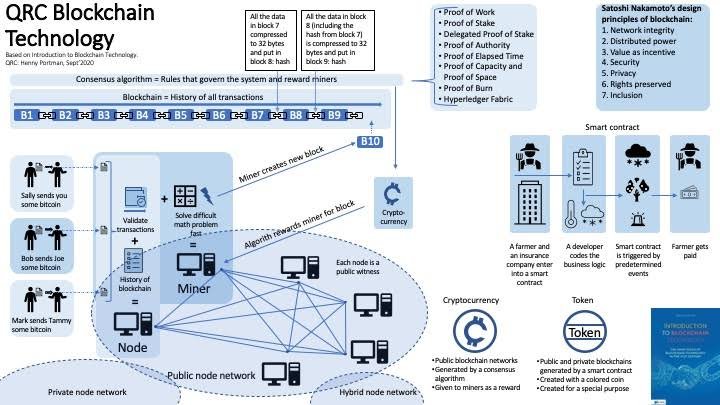
Blockchain technology has evolved from being the foundation of cryptocurrencies into one of the most significant technological innovations of the digital age. Originally introduced to support Bitcoin in 2009, blockchain is now transforming industries including finance, healthcare, logistics, cybersecurity, real estate, gaming, government, and supply chain management.
Unlike traditional databases controlled by a single organization, blockchain uses a decentralized ledger where data is distributed across multiple computers. This architecture increases transparency, improves security, reduces the need for intermediaries, and creates systems that are more resistant to tampering.
Today, blockchain powers cryptocurrencies, decentralized finance (DeFi), digital identity systems, non-fungible tokens (NFTs), enterprise applications, tokenized assets, and decentralized autonomous organizations (DAOs). Governments and businesses are also exploring blockchain to improve efficiency, reduce fraud, and enhance trust in digital transactions.
This comprehensive guide explains how blockchain works, explores its key components, examines practical use cases, discusses security and scalability, and looks ahead at how blockchain technology is likely to shape the future.
What Is Blockchain Technology?
Blockchain is a distributed digital ledger that records transactions across a network of computers.
Instead of storing records in a single centralized database, blockchain distributes identical copies of the ledger to participating network nodes.
Each transaction is grouped into a block, verified by the network, and permanently linked to previous blocks using cryptographic techniques.
This creates a chronological and tamper-resistant record of transactions.
Why Blockchain Matters
Blockchain addresses several limitations of traditional systems by providing:
- Greater transparency
- Enhanced security
- Reduced reliance on intermediaries
- Improved traceability
- Better data integrity
- Increased automation through smart contracts
- More resilient distributed systems
These features make blockchain valuable far beyond digital currencies.
Key Components of Blockchain
Blocks
A block contains a collection of verified transactions.
Each block typically includes:
- Transaction data
- Timestamp
- Cryptographic hash
- Reference to the previous block
Linking blocks together forms the blockchain.
Hashing
Hashing converts data into a unique string of characters.
Even a small change in the input produces a completely different hash, helping detect tampering.
Hashes play a central role in maintaining blockchain integrity.
Nodes
Nodes are computers that participate in the blockchain network.
They help:
- Store copies of the ledger
- Validate transactions
- Share information
- Maintain network reliability
The number and distribution of nodes contribute to decentralization.
Distributed Ledger
Every participating node maintains a synchronized copy of the blockchain ledger.
This shared record improves transparency and reduces dependence on a central authority.
How Blockchain Works
A simplified blockchain transaction follows these steps:
- A user initiates a transaction.
- The transaction is broadcast to the network.
- Nodes verify the transaction according to network rules.
- Verified transactions are grouped into a block.
- The block is added to the blockchain after consensus is reached.
- The updated ledger is shared across participating nodes.
Once confirmed, blockchain records are generally designed to be resistant to unauthorized modification.
Decentralization
Traditional systems rely on centralized organizations to manage data.
Blockchain distributes responsibility across many participants.
Benefits include:
- Reduced single points of failure
- Improved availability
- Greater transparency
- Enhanced resilience
The degree of decentralization varies among blockchain networks.
Consensus Mechanisms
Consensus mechanisms help network participants agree on the validity of transactions.
Proof of Work (PoW)
Participants compete to solve complex mathematical problems to validate new blocks.
Characteristics:
- High security
- Significant energy consumption
- Well-established model
Proof of Stake (PoS)
Validators are selected based on factors such as the amount of cryptocurrency they have committed (staked) to support the network.
Characteristics:
- Lower energy usage
- Faster validation
- Growing adoption across many blockchain networks
Other Consensus Models
Some blockchain networks use alternative approaches, including:
- Delegated Proof of Stake (DPoS)
- Proof of Authority (PoA)
- Proof of History (PoH)
- Byzantine Fault Tolerance (BFT)-based methods
The choice depends on the network’s goals and design.
Public vs. Private Blockchains
Public Blockchains
Anyone can typically participate in validating transactions and viewing the ledger.
Advantages:
- Transparency
- Open participation
- Broad decentralization
Private Blockchains
Access is restricted to authorized participants.
Advantages:
- Greater control
- Higher privacy
- Faster performance in certain enterprise scenarios
Organizations often use private or permissioned blockchains for internal operations.
Smart Contracts
Smart contracts are self-executing programs stored on a blockchain.
They automatically perform predefined actions when specified conditions are met.
Potential applications include:
- Payments
- Insurance claims
- Supply chain automation
- Digital agreements
- Asset transfers
Smart contracts can reduce manual processes and improve efficiency.
Decentralized Applications (dApps)
Decentralized applications operate on blockchain networks rather than relying entirely on centralized servers.
Examples include:
- Decentralized exchanges
- Blockchain games
- NFT marketplaces
- Lending platforms
- Governance systems
dApps often integrate smart contracts to automate business logic.
Blockchain Security
Blockchain incorporates several security features.
These include:
- Cryptographic hashing
- Distributed storage
- Consensus mechanisms
- Immutable transaction history
- Digital signatures
Although blockchain itself is designed with strong security principles, applications built on top of it can still contain vulnerabilities if not developed securely.
Enterprise Applications of Blockchain
Blockchain adoption extends beyond cryptocurrencies.
Supply Chain Management
Blockchain improves product traceability by recording movement across supply chains.
Potential benefits:
- Reduced fraud
- Better inventory tracking
- Improved transparency
Healthcare
Healthcare organizations are exploring blockchain for:
- Medical record management
- Secure data sharing
- Drug traceability
- Identity verification
Patient privacy and regulatory compliance remain critical considerations.
Financial Services
Financial institutions investigate blockchain for:
- Cross-border payments
- Asset tokenization
- Trade finance
- Settlement processes
- Identity management
Government Services
Governments may use blockchain to support:
- Digital identity
- Public records
- Licensing
- Voting research
- Land registration
Adoption varies by jurisdiction and regulatory framework.
Real Estate
Blockchain can support:
- Property records
- Smart contracts
- Transaction transparency
- Tokenized ownership models
Implementation depends on legal and regulatory requirements.
Advantages of Blockchain
Blockchain offers several potential benefits.
Transparency
Participants can often verify transactions recorded on the ledger.
Security
Cryptographic methods and distributed validation help protect blockchain data.
Efficiency
Automation and reduced reliance on intermediaries may improve operational efficiency.
Traceability
Transaction histories help track assets across their lifecycle.
Reliability
Distributed infrastructure reduces dependence on individual servers.
Challenges of Blockchain
Despite its strengths, blockchain also faces challenges.
Scalability
Some blockchain networks process fewer transactions per second than traditional payment systems.
Ongoing research aims to improve throughput and efficiency.
Energy Consumption
Certain consensus mechanisms, particularly Proof of Work, require significant computing resources.
Many newer blockchain networks are exploring more energy-efficient alternatives.
Regulation
Legal and regulatory frameworks continue to evolve across different countries.
Organizations should remain informed about applicable laws.
User Experience
Wallet management, private key security, and blockchain terminology can present challenges for new users.
Improving usability remains an active area of development.
Blockchain and Cryptocurrency
Blockchain serves as the underlying technology for many cryptocurrencies.
It enables:
- Recording transactions
- Preventing double-spending
- Verifying ownership
- Supporting decentralized financial systems
While cryptocurrencies are a major blockchain application, blockchain technology has many uses beyond digital assets.
Blockchain and Web3
Web3 refers to a vision of a more decentralized internet built using blockchain technologies.
Common Web3 components include:
- Digital wallets
- Smart contracts
- Decentralized applications
- Tokenized assets
- Decentralized identity
- Community governance
Web3 continues to evolve alongside advances in blockchain infrastructure.
Blockchain and Artificial Intelligence
AI and blockchain can complement each other in several ways.
Potential applications include:
- Verifiable AI data provenance
- Secure model sharing
- Automated smart contract execution
- Transparent audit trails
- Trusted data exchange
Combining these technologies may support more transparent and accountable digital systems.
Future Trends in Blockchain
Several developments are expected to shape blockchain adoption.
Layer-2 Scaling Solutions
Additional technologies are improving transaction speed and reducing costs while maintaining connections to underlying blockchain networks.
Tokenization
Organizations are increasingly exploring the tokenization of real-world assets such as real estate, financial instruments, and digital collectibles.
Enterprise Adoption
Businesses continue to investigate blockchain for supply chain management, identity verification, and secure data sharing.
Cross-Chain Interoperability
Future solutions aim to improve communication and asset transfers between different blockchain networks.
Sustainable Blockchain
Greater emphasis is being placed on energy-efficient consensus mechanisms and environmentally responsible blockchain infrastructure.
Best Practices for Blockchain Adoption
Organizations considering blockchain should:
- Clearly define business objectives.
- Evaluate whether blockchain is the appropriate solution.
- Understand regulatory requirements.
- Prioritize cybersecurity.
- Train employees.
- Test solutions thoroughly before deployment.
- Monitor performance continuously.
- Plan for future scalability.
Blockchain Technology Checklist
Before implementing blockchain:
- ✅ Identify the business problem.
- ✅ Determine whether decentralization adds value.
- ✅ Choose an appropriate blockchain model.
- ✅ Understand consensus mechanisms.
- ✅ Prioritize security and privacy.
- ✅ Plan for scalability.
- ✅ Ensure regulatory compliance.
- ✅ Develop governance processes.
- ✅ Test smart contracts carefully.
- ✅ Monitor and update the system regularly.
Conclusion
Blockchain technology has grown from its origins in cryptocurrency into a versatile platform for secure, transparent, and decentralized digital systems. Its ability to create tamper-resistant records, automate agreements through smart contracts, and support distributed applications has opened new possibilities across finance, healthcare, supply chain management, government services, and many other industries.
While challenges such as scalability, regulation, and usability remain, ongoing innovation continues to improve blockchain performance and accessibility. As organizations explore practical applications beyond digital currencies, blockchain is increasingly becoming part of the broader digital transformation landscape.
Understanding blockchain’s strengths, limitations, and real-world use cases enables individuals and businesses to make informed decisions about when and how to adopt this evolving technology.
Frequently Asked Questions (FAQs)
1. What is blockchain technology?
Blockchain is a distributed digital ledger that records transactions across multiple computers, creating a secure, transparent, and tamper-resistant record without relying on a single central authority.
2. How is blockchain different from a traditional database?
Traditional databases are typically controlled by a central organization, while blockchain distributes copies of the ledger across participating nodes and uses consensus mechanisms to validate changes.
3. What are smart contracts?
Smart contracts are self-executing programs stored on a blockchain that automatically perform predefined actions when specified conditions are met.
4. Is blockchain only used for cryptocurrencies?
No. Blockchain is also used in supply chain management, healthcare, identity verification, digital assets, enterprise systems, government services, and many other applications.
5. What are the main benefits of blockchain?
Key benefits include enhanced transparency, strong data integrity, improved traceability, reduced reliance on intermediaries, increased automation through smart contracts, and resilient distributed systems.