
The evolution of blockchain technology has introduced a revolutionary concept in how organizations are structured and governed—Decentralized Autonomous Organizations (DAOs).
Unlike traditional organizations that rely on centralized leadership, DAOs operate through smart contracts and community-driven decision-making. This new model is reshaping how people collaborate, invest, and manage resources globally.
In this guide, we’ll explore what DAOs are, how they work, their benefits, challenges, and why they are considered the future of decentralized governance.
What Is a DAO?
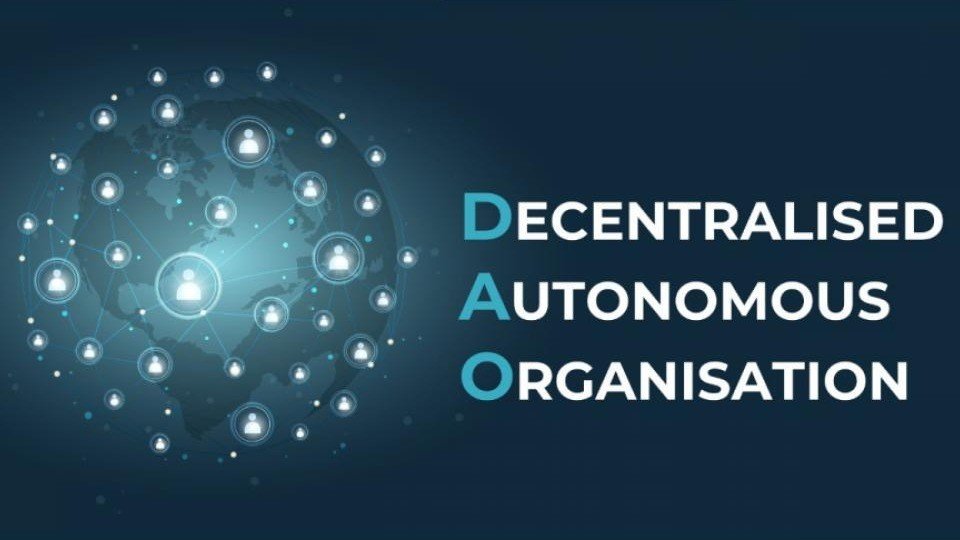
A DAO is an organization governed by rules encoded as smart contracts on a blockchain, allowing participants to collaborate without centralized control.
Most DAOs are built on platforms like Ethereum, which supports programmable smart contracts.
Key Features of DAOs
Decentralization
No single entity controls the organization.
Transparency
All transactions and decisions are recorded on the blockchain.
Automation
Smart contracts execute predefined rules automatically.
Community Governance
Members vote on decisions using governance tokens.
How DAOs Work
Smart Contracts
Define rules and automate operations.
Governance Tokens
Grant voting power to members.
Proposals & Voting
Members submit and vote on decisions.
Treasury Management
Funds are controlled collectively.
Types of DAOs
Protocol DAOs
Manage blockchain protocols.
Investment DAOs
Pool funds to invest in projects.
Social DAOs
Build communities around shared interests.
Service DAOs
Offer decentralized services.
Grant DAOs
Fund innovation and development.
Benefits of DAOs
Transparency
All actions are visible on-chain.
Global Participation
Anyone can join from anywhere.
Trustless System
No need for intermediaries.
Efficiency
Automated processes reduce overhead.
Challenges of DAOs
Regulatory Uncertainty
Legal frameworks are still evolving.
Security Risks
Smart contract vulnerabilities.
Governance Inefficiencies
Decision-making can be slow.
Token Concentration
Large holders can influence decisions.
Real-World Examples
MakerDAO
A decentralized finance platform.
Uniswap DAO
Governs a decentralized exchange.
ConstitutionDAO
A community-driven initiative.
DAO vs Traditional Organizations
| Feature | DAO | Traditional Organization |
|---|---|---|
| Control | Decentralized | Centralized |
| Transparency | High | Limited |
| Decision-Making | Community-driven | Management-driven |
| Trust | Code-based | Authority-based |
Use Cases of DAOs
DeFi Platforms
Managing financial services without banks.
Venture Funding
Pooling capital for investments.
Community Governance
Managing online communities.
Open-Source Projects
Funding and coordinating development.
Future of DAOs
Increased Adoption
More industries exploring DAO models.
Improved Governance Models
Better voting systems and frameworks.
Integration with Traditional Businesses
Hybrid structures combining DAOs and corporations.
Regulatory Clarity
Governments creating clearer guidelines.
How to Get Started with DAOs
Learn the Basics
Understand blockchain and smart contracts.
Join Existing DAOs
Participate in communities.
Acquire Tokens
Gain voting power.
Contribute
Engage in discussions and proposals.
Final Thoughts
DAOs represent a fundamental shift in how organizations operate, offering transparency, decentralization, and community-driven governance. While challenges remain, their potential to reshape industries is undeniable.
As blockchain technology evolves, DAOs could become a standard model for collaboration, investment, and innovation.
The future of organizations may be decentralized—and DAOs are leading the way.
SEO FAQs
Q: What is a DAO?
A decentralized organization governed by smart contracts.
Q: How do DAOs work?
Through blockchain-based voting and automation.
Q: Are DAOs legal?
Regulations vary by country.
Q: What are examples of DAOs?
MakerDAO and Uniswap DAO.