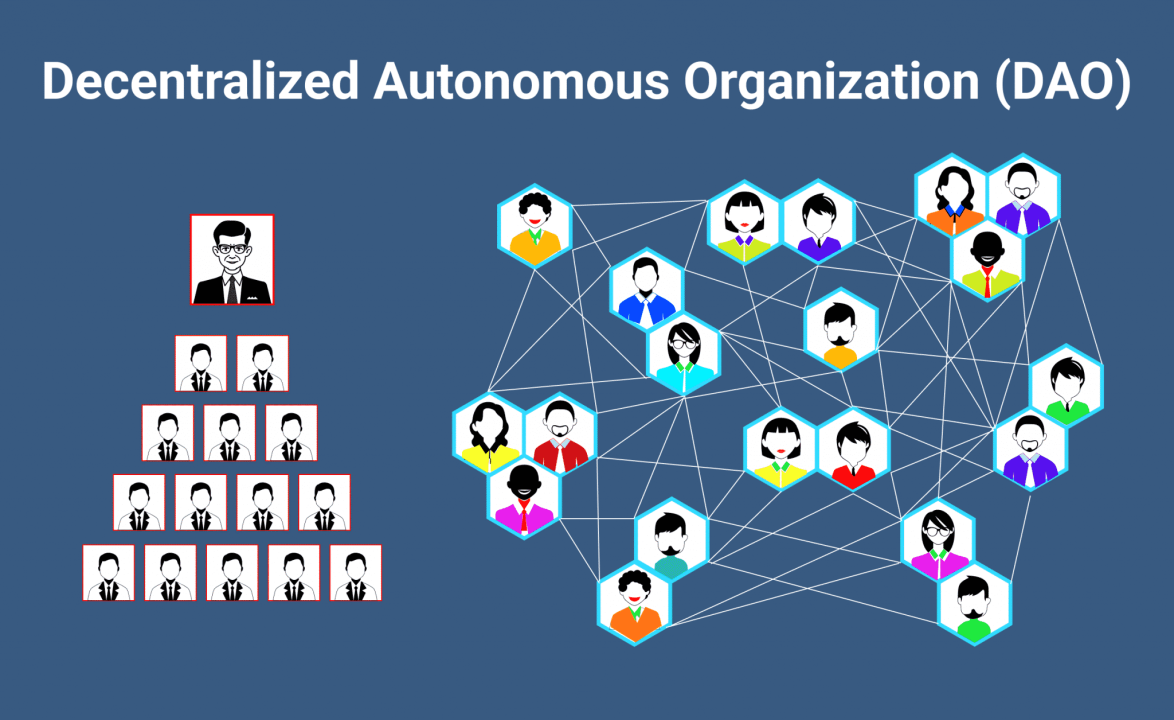
The rise of blockchain technology has introduced new ways of organizing people, capital, and decision-making. One of the most innovative developments in this space is the Decentralized Autonomous Organization (DAO).
DAOs are redefining how communities collaborate, make decisions, and manage resources—without relying on traditional leadership structures.
In this guide, we’ll explore what DAOs are, how they work, real-world examples, benefits, risks, and how you can get involved.
What Is a DAO?
A Decentralized Autonomous Organization (DAO) is a blockchain-based organization governed by smart contracts and community voting rather than a central authority.
Most DAOs operate on networks like Ethereum, where rules are encoded into transparent, immutable smart contracts.
How DAOs Work
Smart Contracts
These are self-executing programs that define the rules and operations of the DAO.
Governance Tokens
Members hold tokens that give them voting power on proposals.
Community Voting
Decisions are made collectively by token holders.
Treasury Management
Funds are stored in a shared wallet controlled by the DAO.
Key Features of DAOs
Decentralization
No central authority—power is distributed.
Transparency
All transactions and decisions are recorded on the blockchain.
Global Participation
Anyone can join from anywhere.
Automation
Smart contracts execute decisions automatically.
Popular DAO Examples
MakerDAO
Manages the DAI stablecoin system.
Uniswap
A community-governed decentralized exchange.
Aave
A DAO for lending and borrowing crypto assets.
ConstitutionDAO
A group formed to bid on a copy of the U.S. Constitution.
Types of DAOs
Protocol DAOs
Govern DeFi platforms.
Investment DAOs
Pool funds to invest in assets.
Grant DAOs
Fund projects and innovation.
Social DAOs
Focus on communities and networking.
Collector DAOs
Purchase NFTs and digital assets.
Benefits of DAOs
Transparency and Trust
Open governance builds credibility.
Community Ownership
Members have a direct stake.
Efficiency
Automated decision execution.
Borderless Collaboration
Global participation without barriers.
Risks and Challenges
Smart Contract Vulnerabilities
Bugs can lead to financial loss.
Governance Issues
Low participation or token concentration.
Regulatory Uncertainty
Laws around DAOs are still evolving.
Security Risks
Hacks and exploits can occur.
The Role of Smart Contracts
Smart contracts are the backbone of DAOs. They:
- Execute decisions automatically
- Enforce rules without intermediaries
- Ensure transparency and trust
Platforms like Solidity are commonly used to build DAO smart contracts.
How to Join a DAO
Step 1: Get a Crypto Wallet
Use wallets like MetaMask.
Step 2: Buy Governance Tokens
Acquire tokens required for participation.
Step 3: Join the Community
Participate in discussions (Discord, forums).
Step 4: Vote on Proposals
Use tokens to influence decisions.
Step 5: Contribute
Add value through skills or investments.
DAO Governance Models
Token-Based Voting
Voting power depends on token ownership.
Quadratic Voting
Balances influence among participants.
Delegated Voting
Members assign voting power to others.
DAOs vs Traditional Organizations
| Feature | DAOs | Traditional Organizations |
|---|---|---|
| Control | Decentralized | Centralized |
| Transparency | High | Limited |
| Participation | Open | Restricted |
| Decision Speed | Automated | Slower |
| Trust Model | Code-based | Authority-based |
The Future of DAOs
Integration with DeFi
DAOs will power decentralized finance ecosystems.
Legal Recognition
Governments may establish DAO-friendly regulations.
Enterprise Adoption
Businesses may adopt DAO structures.
Improved Governance Models
More fair and efficient voting systems.
Cross-Chain DAOs
Operate across multiple blockchains.
Best Practices for DAO Participation
Do Your Research
Understand the project before joining.
Evaluate Governance Structure
Check how decisions are made.
Secure Your Assets
Protect your wallet and keys.
Stay Active
Participate in discussions and voting.
Diversify Investments
Avoid putting all funds in one DAO.
Final Thoughts
DAOs represent a revolutionary shift in how organizations are structured and governed. By combining blockchain technology with community-driven decision-making, they offer a transparent, efficient, and inclusive alternative to traditional systems.
As the crypto space continues to evolve, DAOs are likely to play a central role in shaping the future of decentralized collaboration and finance.
SEO FAQs
Q: What is a DAO in crypto?
A decentralized organization governed by smart contracts and community voting.
Q: How do DAOs make decisions?
Through proposals voted on by token holders.
Q: Are DAOs safe?
They can be secure but are subject to smart contract and governance risks.
Q: Can anyone join a DAO?
Yes, most DAOs are open to global participants.